


Expert tips
Arctic birds
Of Svalbard
Arctic tern
Svalbard Bird Photography – Species Guide

Svalbard is one of the world's best destinations for Arctic bird photography, with an impressive diversity of seabirds, waterfowl, and shorebirds. While only a limited number of species nest in this high Arctic archipelago, many appear in spectacular numbers during the breeding season, creating great photographic opportunities.

Ole J Liodden | Published: Jun 26, 2025 | 10 min read
Last Update: Apr 27, 2026
Bird Species of Svalbard
This guide covers 30 bird species you can photograph in Svalbard, designed for wildlife photographers planning a bird photography expedition to the area. Each species profile includes habitat information, seasonal timing, behavior notes, and photography tips to help you capture stunning images of Arctic seabirds, waterfowl, and shorebirds in their natural environment.
Choose a bird species from the menu above to go directly to the bird you are interested to learn more about them.
Arctic Skua
Stercorarius parasiticus
Population: 500,000 | Weight: 0.3-0.7 kg | Wingspan: 107-125 cm | IUCN Status: Least Concern
The Arctic skua (Parasitic jaeger) is a migratory seabird that breeds in the Arctic and winters at sea in the tropics and southern oceans. In Svalbard, Arctic skuas breed in single pairs on the coastal tundra throughout most of the archipelago, though they are rare in the north-eastern regions.
The breeding population in Svalbard is estimated at approximately 1,000 pairs.
Where and when to photograph Arctic Skua
Arctic skuas are usually found in areas where other seabirds gather. These congregations often occur in front of bird cliffs inhabited by Black-legged kittiwakes or Thick-billed murres (Brünnich's guillemots), or at sea where seabirds are foraging. These areas provide a wealth of potential food sources for skuas, as they can intercept adults flying back to their colonies with fresh food for their chicks.
The best places to photograph Arctic skuas are within the fjords, particularly in front of large glaciers. The skuas often perch on icebergs or smaller drifting ice, waiting for gulls or other seabirds to catch a fish before quickly intercepting them with aggressive aerial attacks. Many birds are forced to surrender their catch to avoid injury, choosing instead to search for a new meal. Skuas often chase gulls in pairs or groups of three or four, making this parasitic behaviour difficult to follow and capture with your camera.
Arctic skuas can also be photographed near Longyearbyen on the tundra along the roads into Adventdalen and Bjørndalen. Several pairs of Arctic skuas breed in these areas and can be photographed perched on stones or flying past. As they are in breeding territory, it is vital to show respect and maintain a distance to avoid disturbing them; they will defend their nesting sites seriously and may attack if you get too close.
The Arctic skua arrives at its breeding grounds in early June and departs Svalbard by late August or September. Consequently, they cannot be photographed during the winter, but are present throughout the spring, summer, and autumn. If you have the opportunity to join an expedition ship around Svalbard between June and September, you are almost guaranteed to see and photograph Arctic skuas.
Arctic Tern
Sterna paradisaea
Population: 2,000,000 | Weight: 0.1 kg | Wingspan: 65–77 cm | IUCN Status: Least Concern
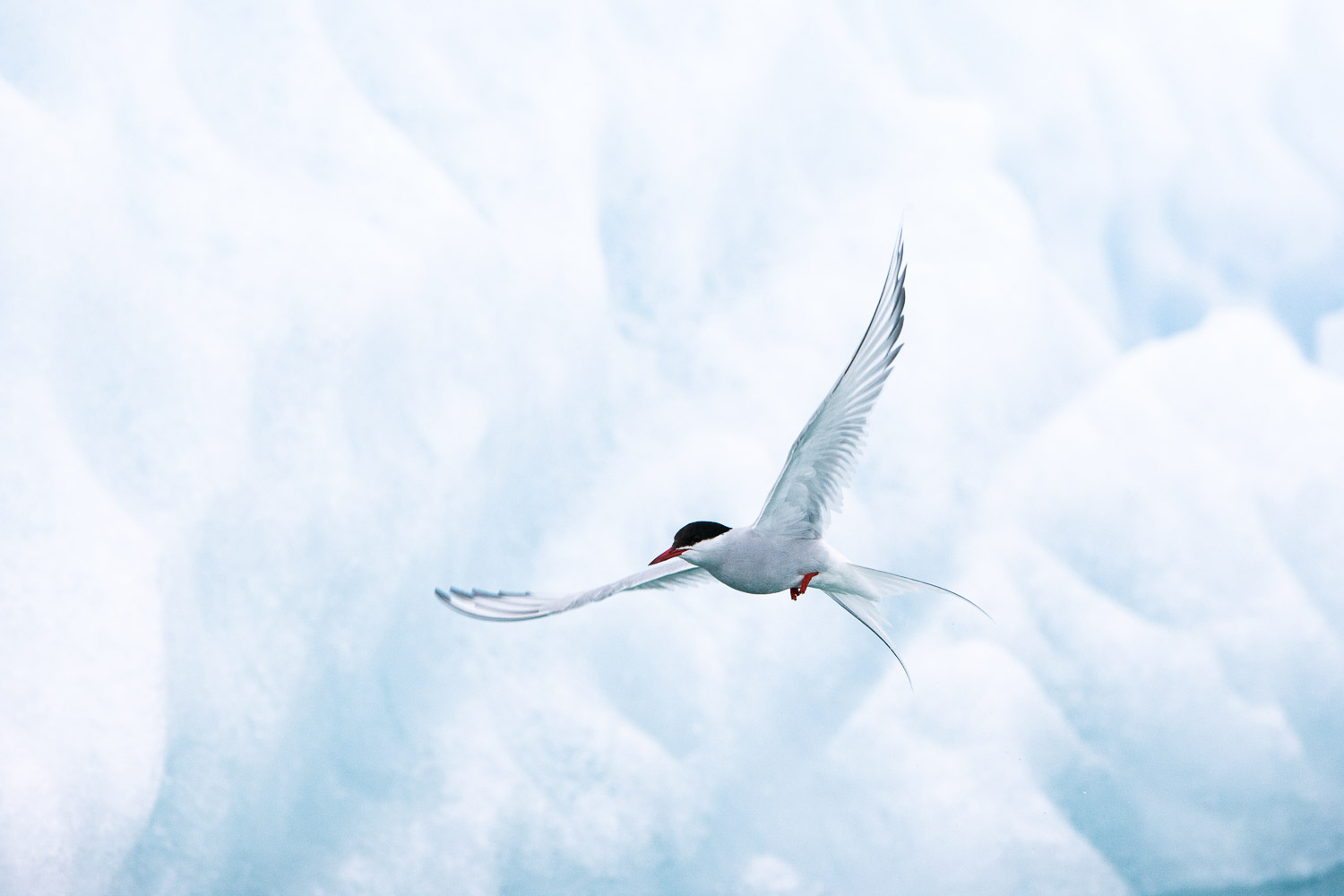
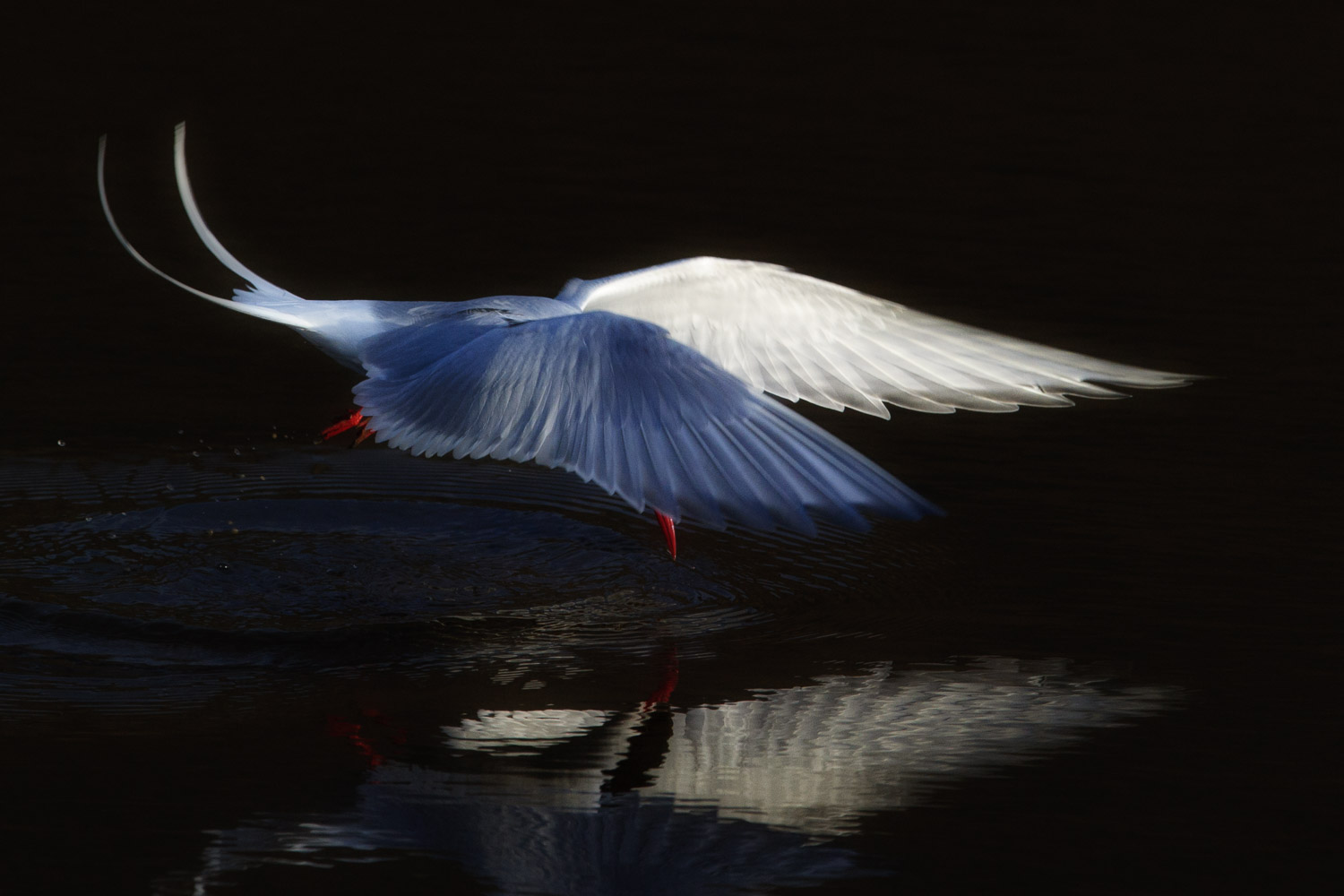
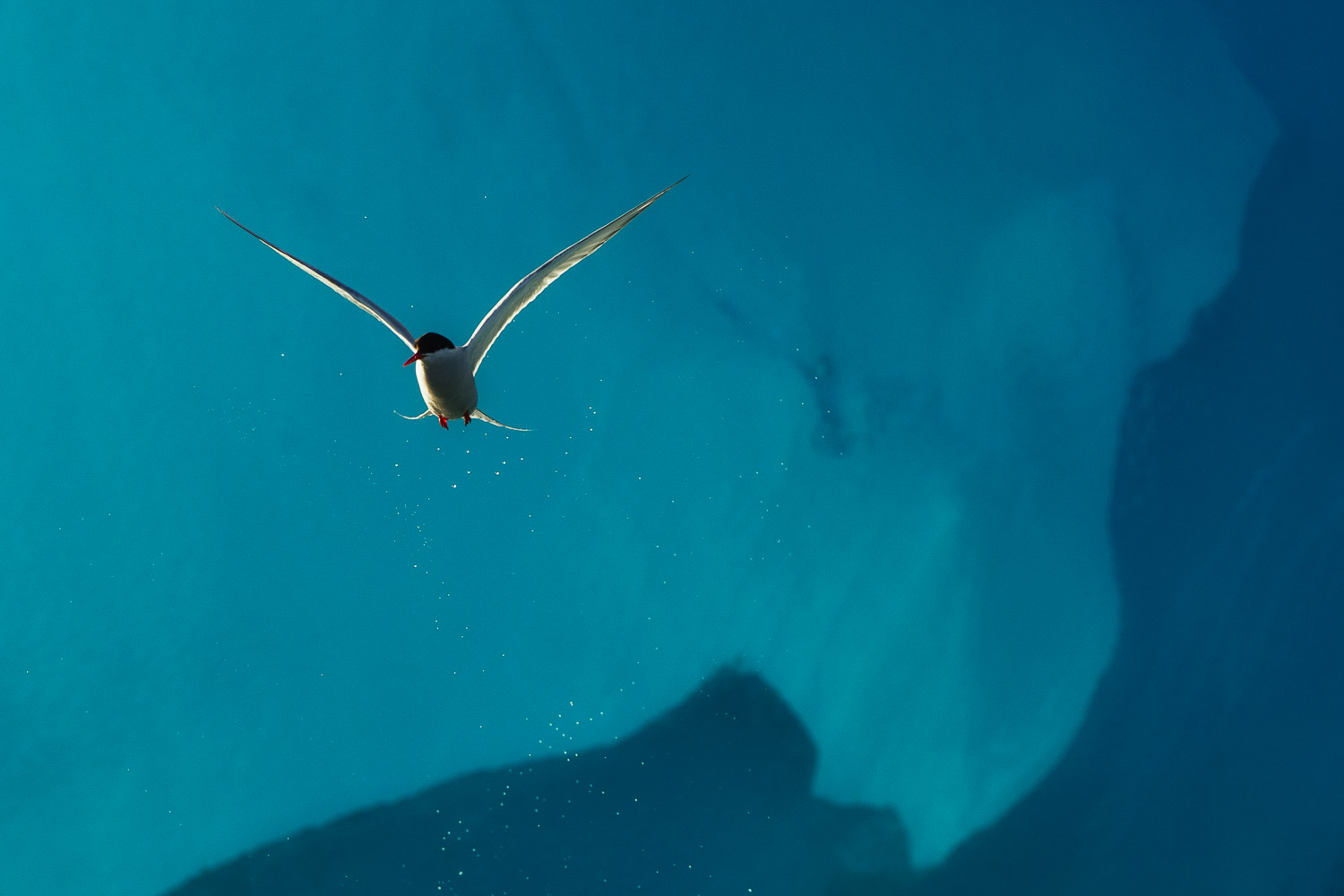
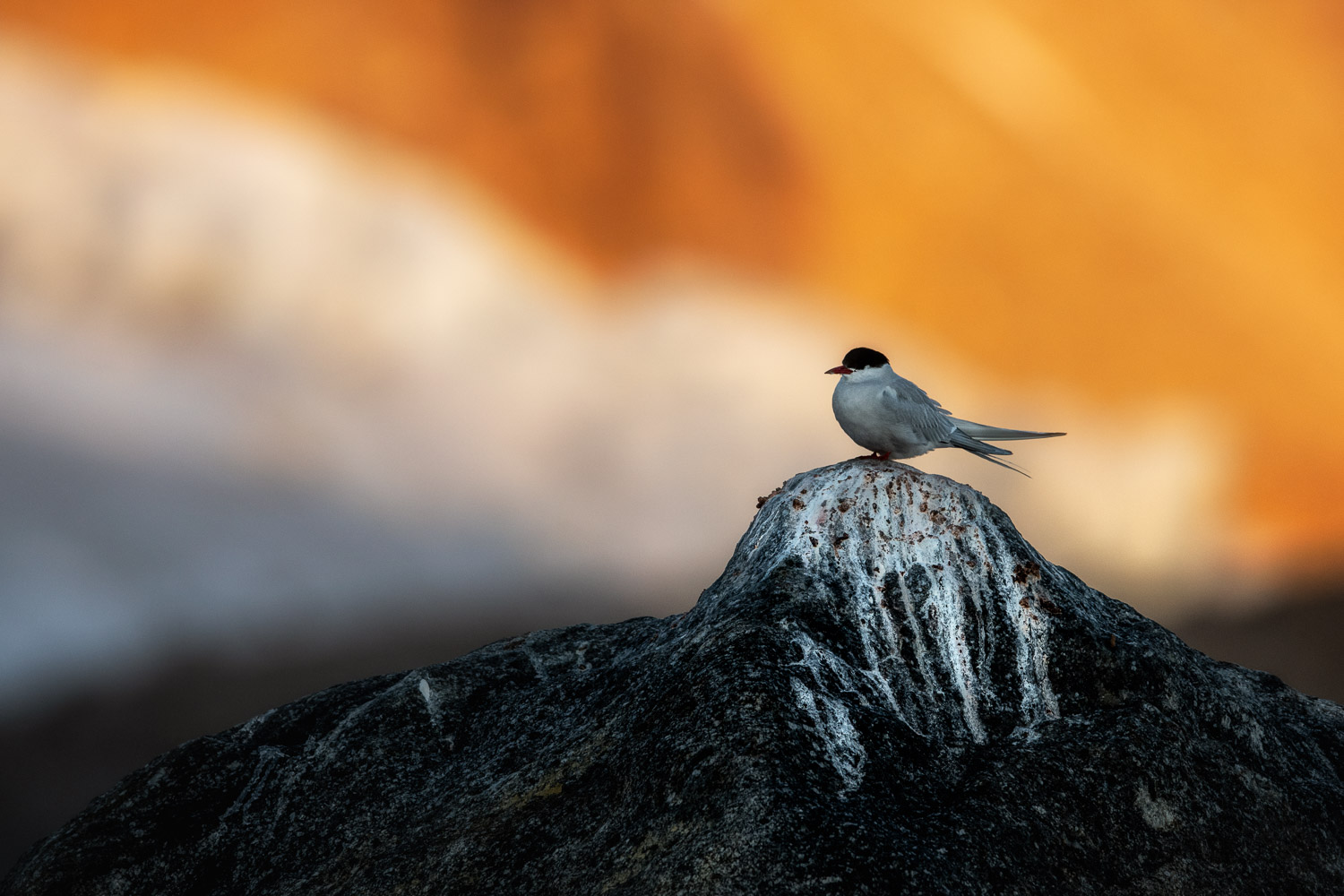
The Arctic tern holds the record for the longest migration of any bird in the world. It breeds in the Arctic and spends the winter (summer in the southern hemisphere) in Antarctica, travelling around 17,000 km one way. With a lifespan of up to 25 years, an Arctic tern can cover an astonishing 850,000 km during its lifetime, mainly through migration. Nearly 10,000 breeding pairs nest in Svalbard, usually in open colonies. The Arctic tern experiences more daylight hours in a year than any other animal species.
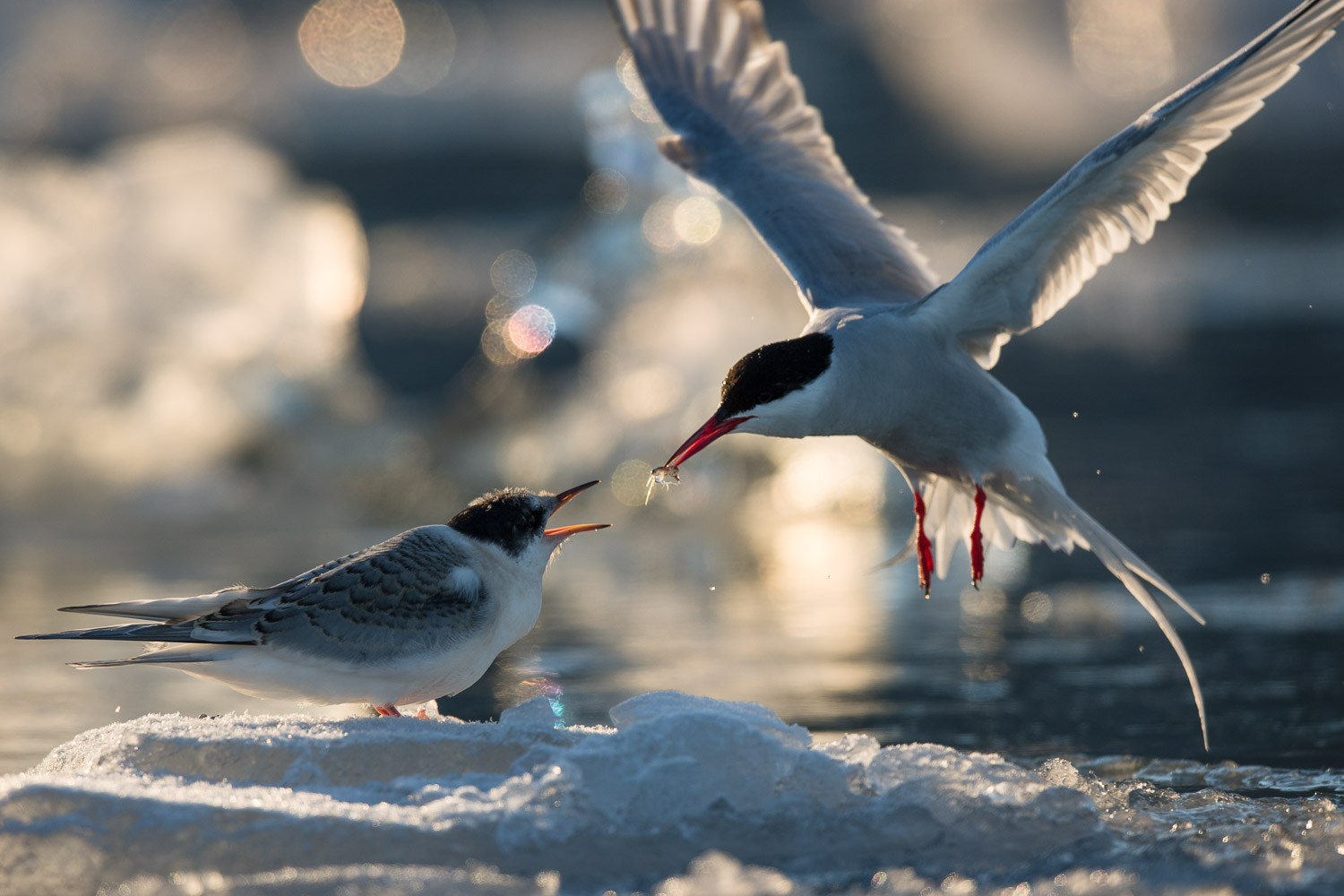
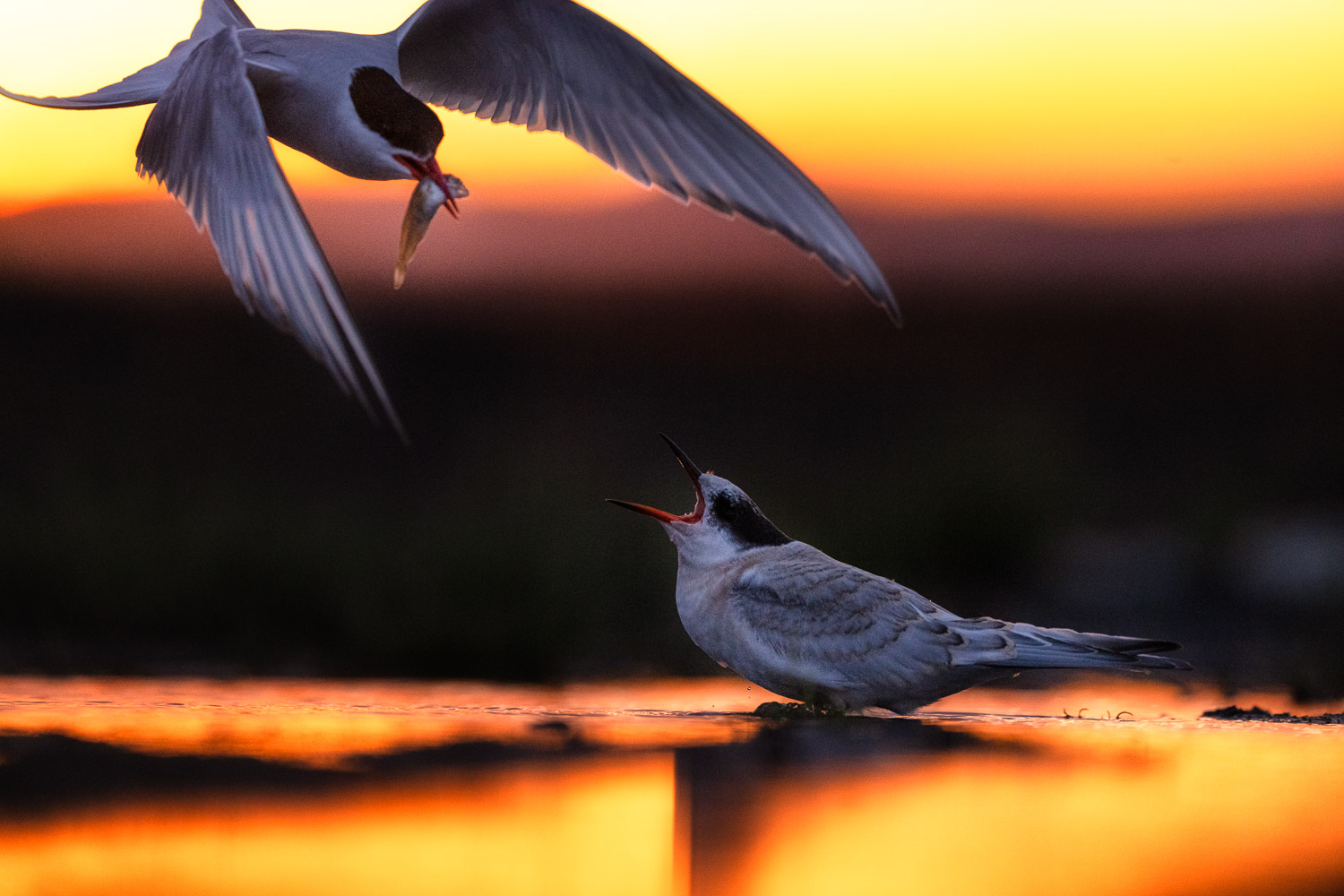
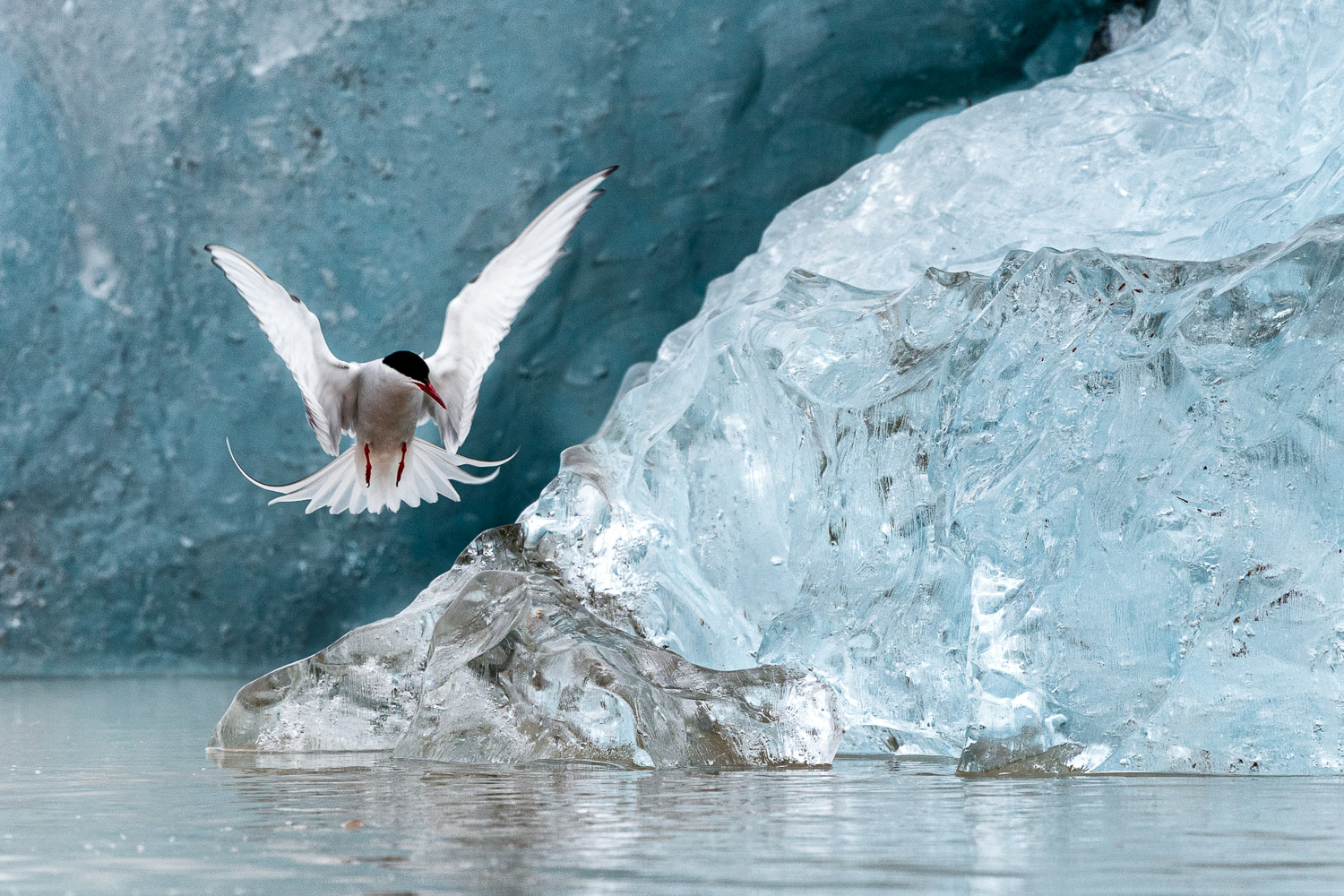
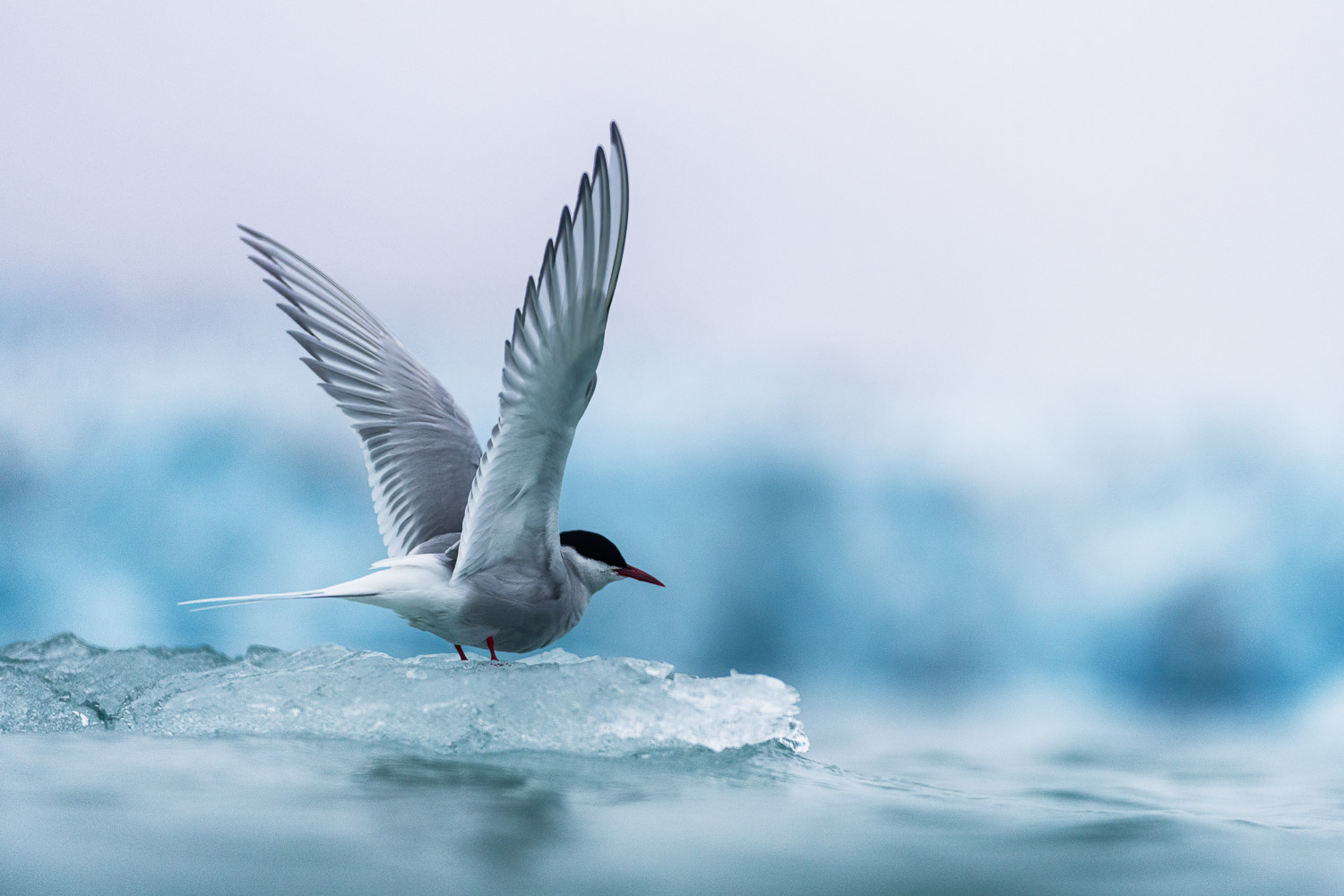
Where and when to photograph Arctic Terns
Arctic terns are among the easiest Arctic birds to photograph in Svalbard. They breed almost everywhere along the coastline — on small islands, along rivers, and on the tundra not far from the sea. They can also nest close to buildings and are often seen and photographed within Longyearbyen itself, or within walking distance of the town or the airport.
Although Arctic terns may breed close to Longyearbyen, they are not tolerant of Arctic foxes, birds of prey, or humans coming too close to their nesting sites. They will attack any intruder with serious aggression, so pay attention and keep a respectful distance to avoid stressing the birds or getting yourself into trouble.
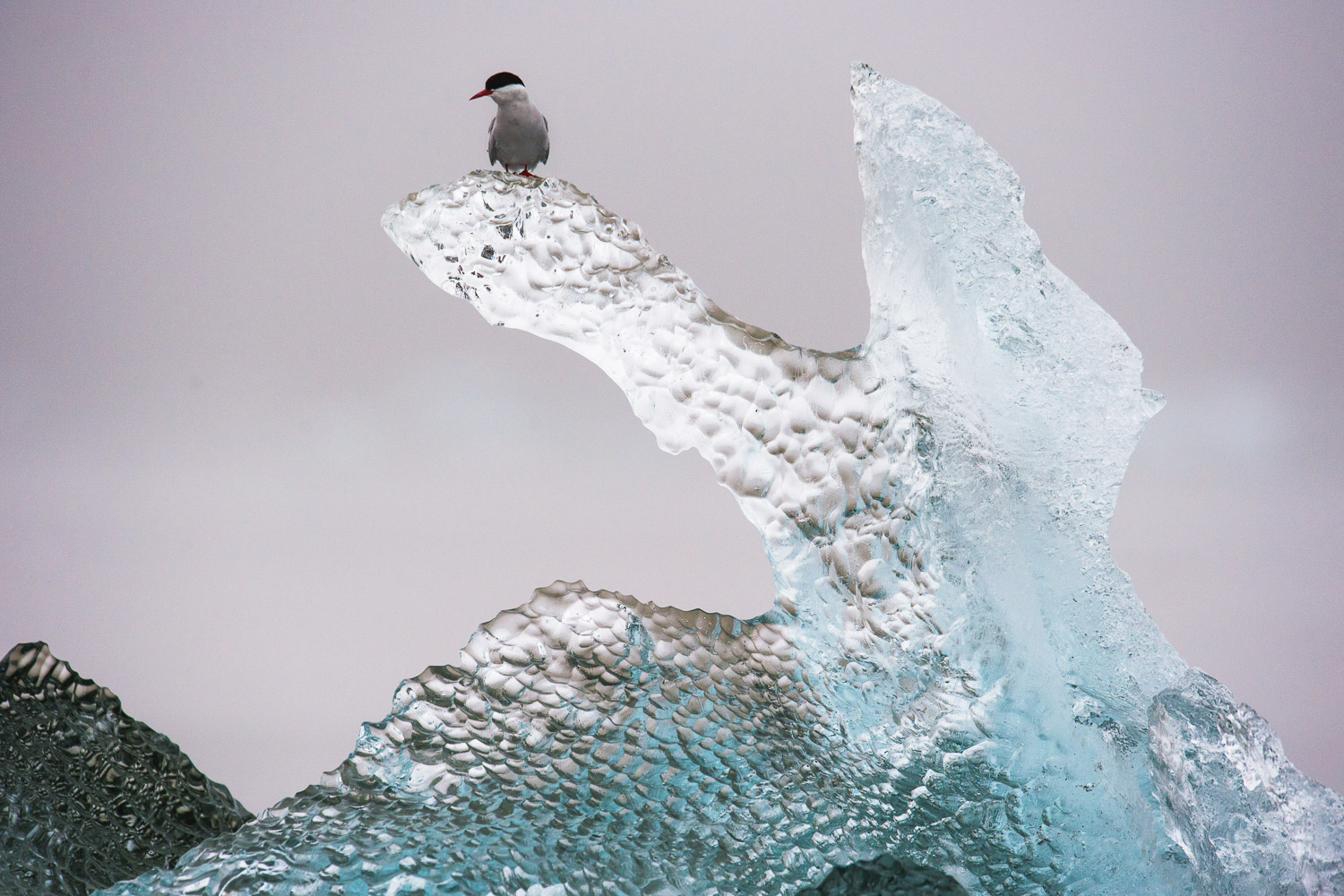
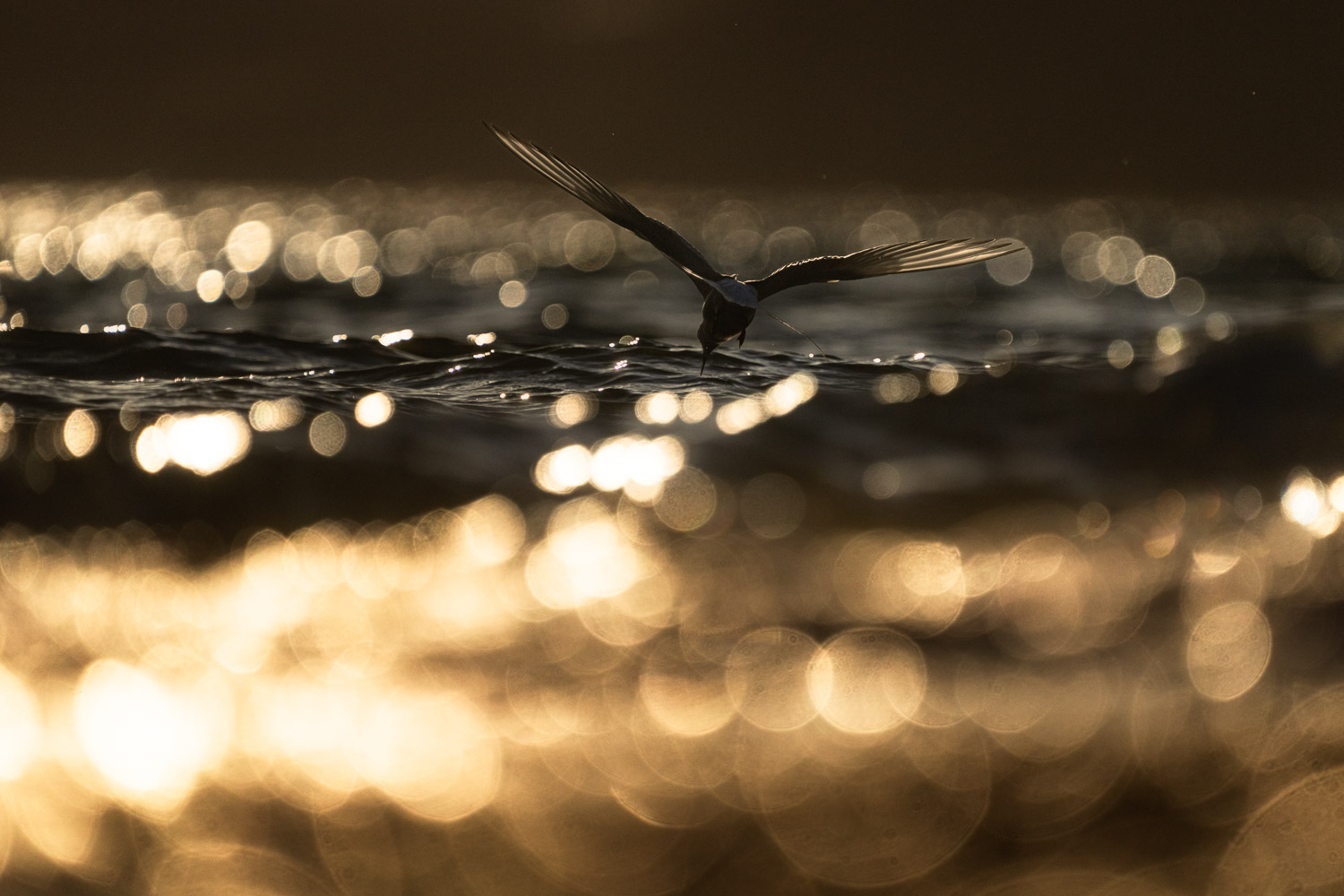
Outside Longyearbyen, Arctic terns are numerous in many of the fjords around Spitsbergen and all the way north‑east to Storøya and Kvitøya. They can be wonderful to photograph when perching on blue glacier ice or fishing along the shoreline in the midnight sun. As the birds are generally very tolerant — except at their nesting sites — Arctic terns are among the most rewarding Arctic species to photograph.
Arctic terns return from Antarctica at the end of May, and both adults and juveniles can remain in Svalbard until mid‑September before beginning their southward migration. During this period there are excellent opportunities to photograph Arctic terns almost anywhere along the coastline of the Svalbard archipelago.
Atlantic puffin
Fratercula arctica
Population: 13,000,000 | Weight: 0.3–0.6 kg | Wingspan: 47–63 cm | IUCN Status: Vulnerable
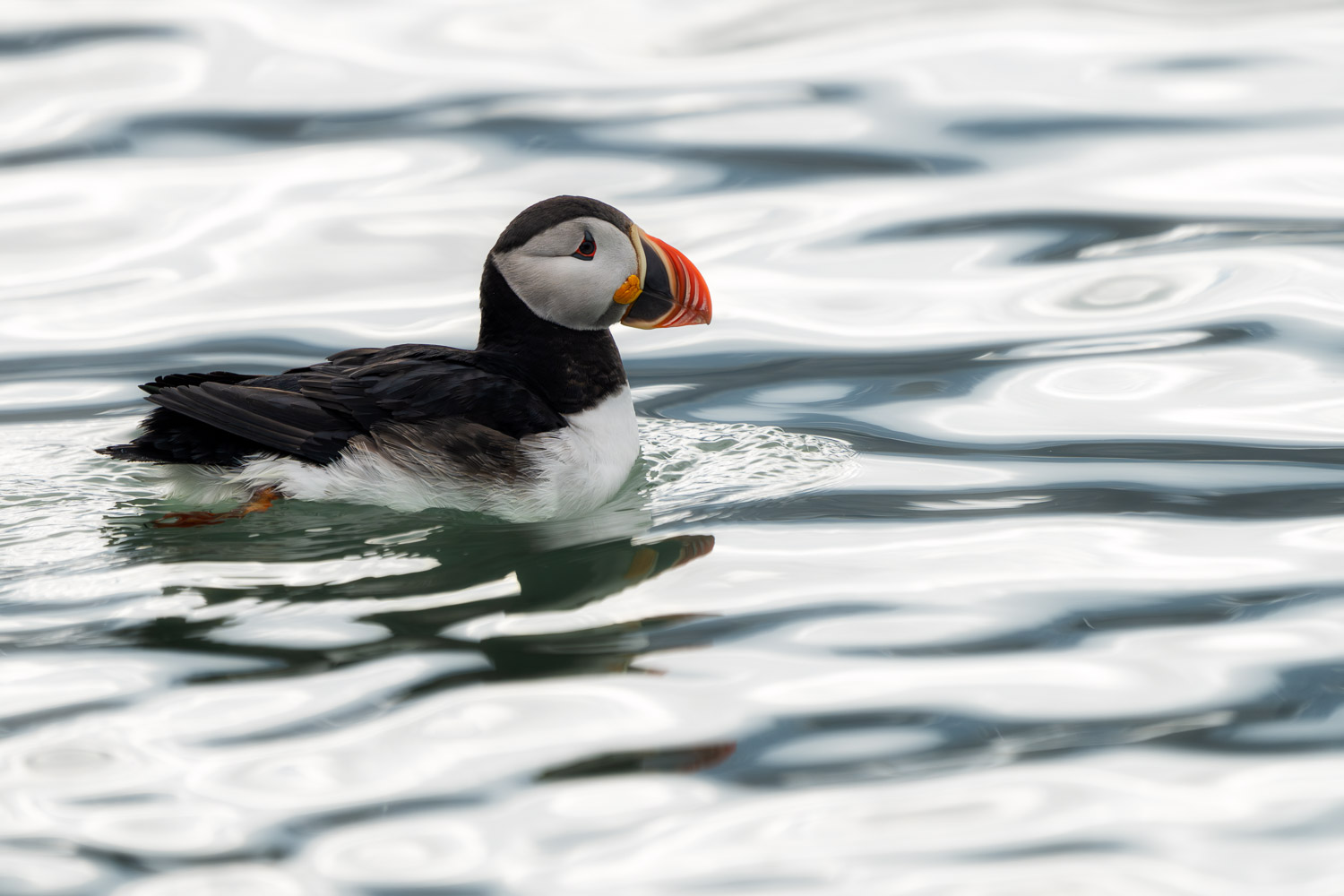
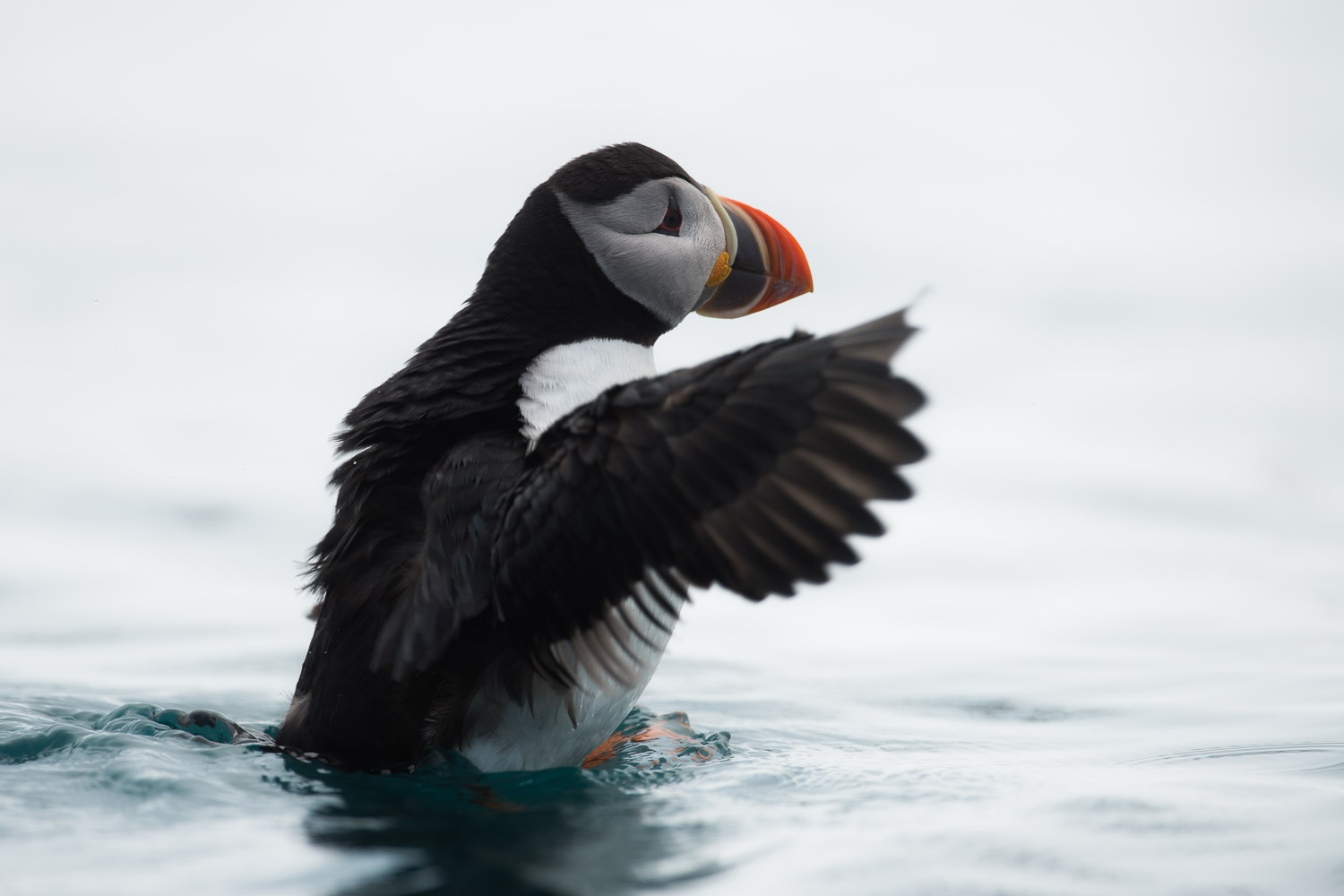
Atlantic puffins are famous for their colourful bills and are among the most popular birds to photograph in Svalbard. They are the only puffin species breeding in the North Atlantic Ocean; the two other related puffins - Tufted puffin and Horned puffin - are found only in the north-eastern Pacific (mainly Alaska).
Atlantic puffins usually dig burrows for their nests, but in Svalbard, the ground is frozen year-round (permafrost), so they breed instead along the coast in cracks and crevices in the mountains. As a result, large puffin colonies are never found in Svalbard.
The Atlantic puffin population in Svalbard is estimated at approximately 10,000 breeding pairs, with colonies primarily located on Bjørnøya and the west coast of Spitsbergen.
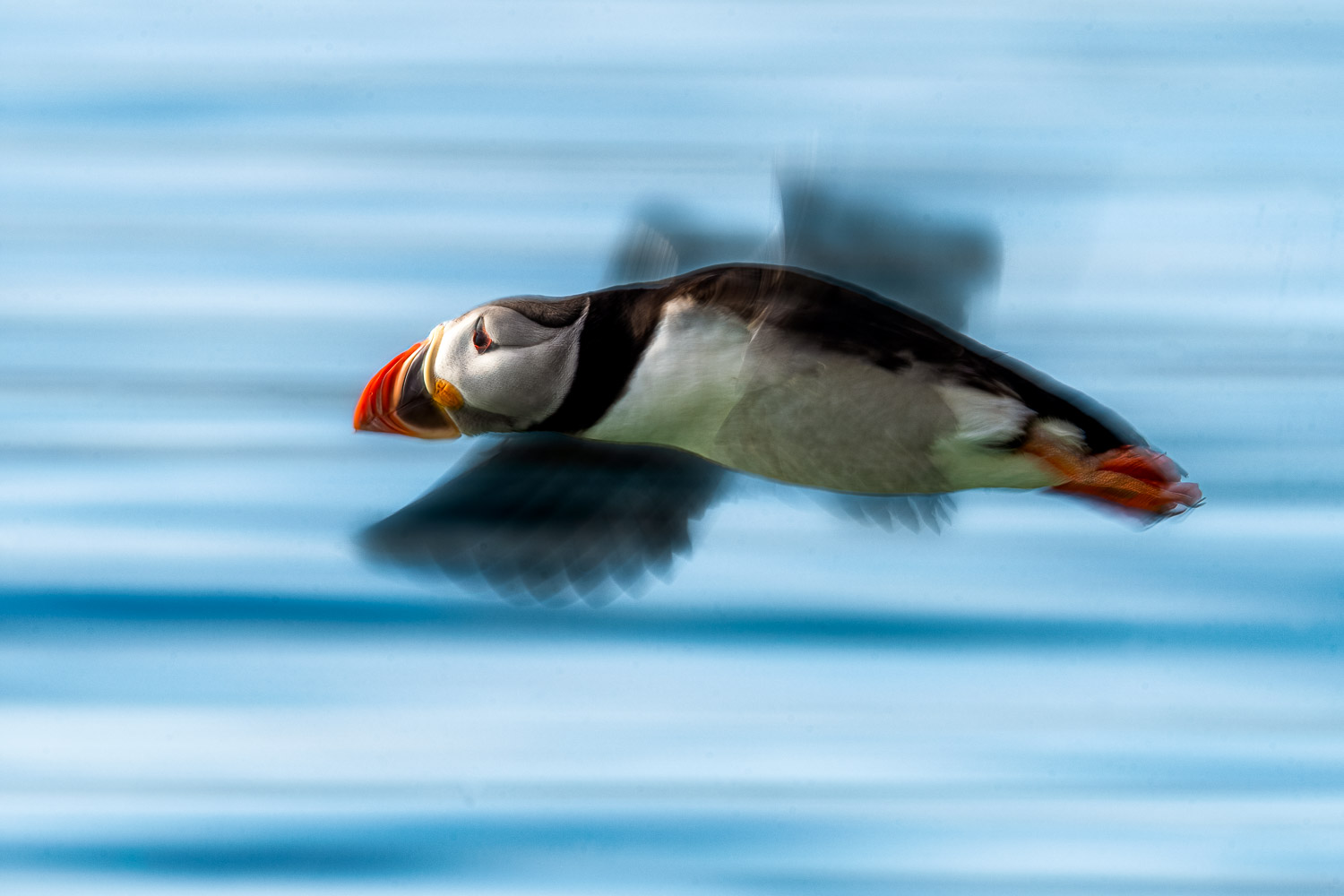
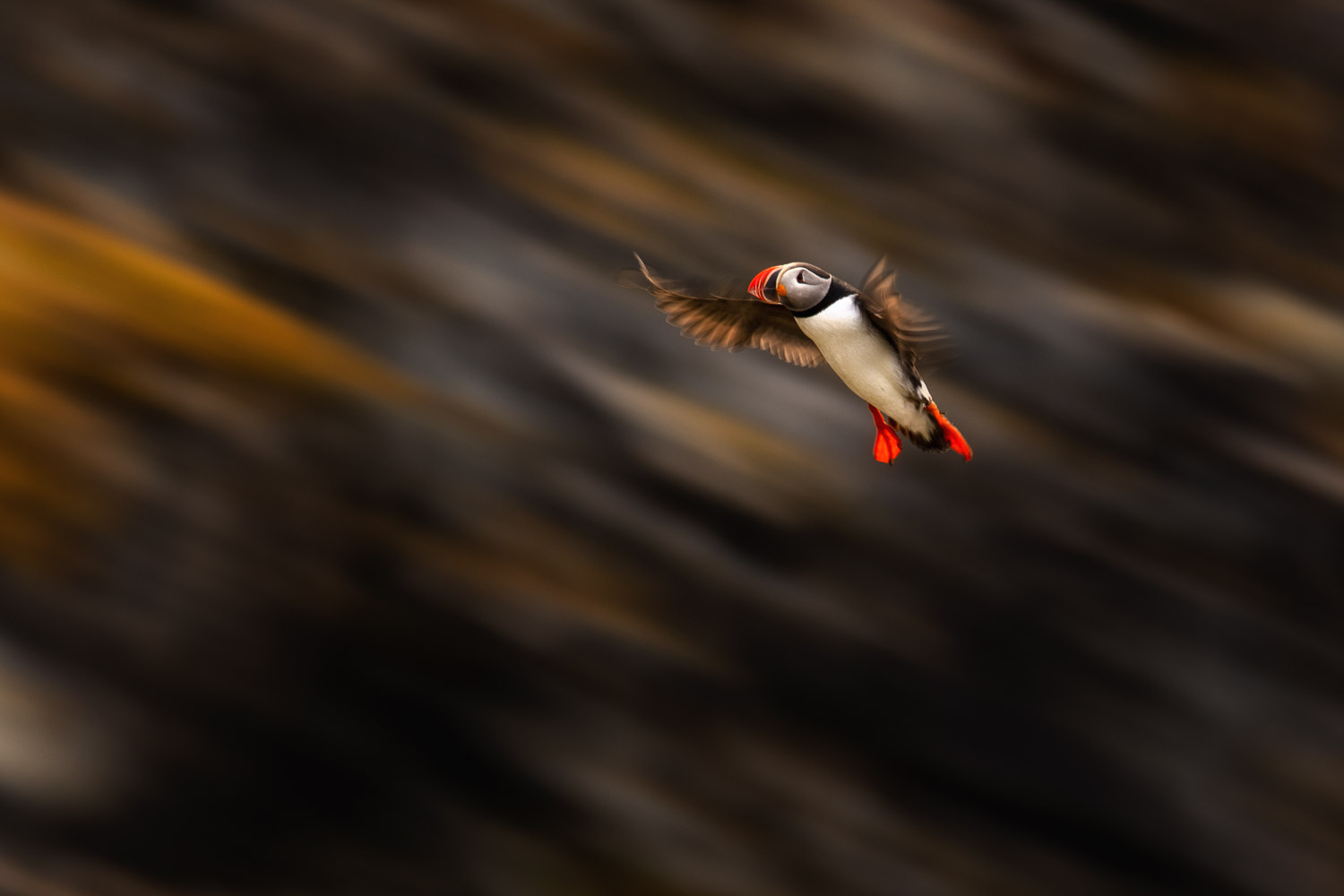
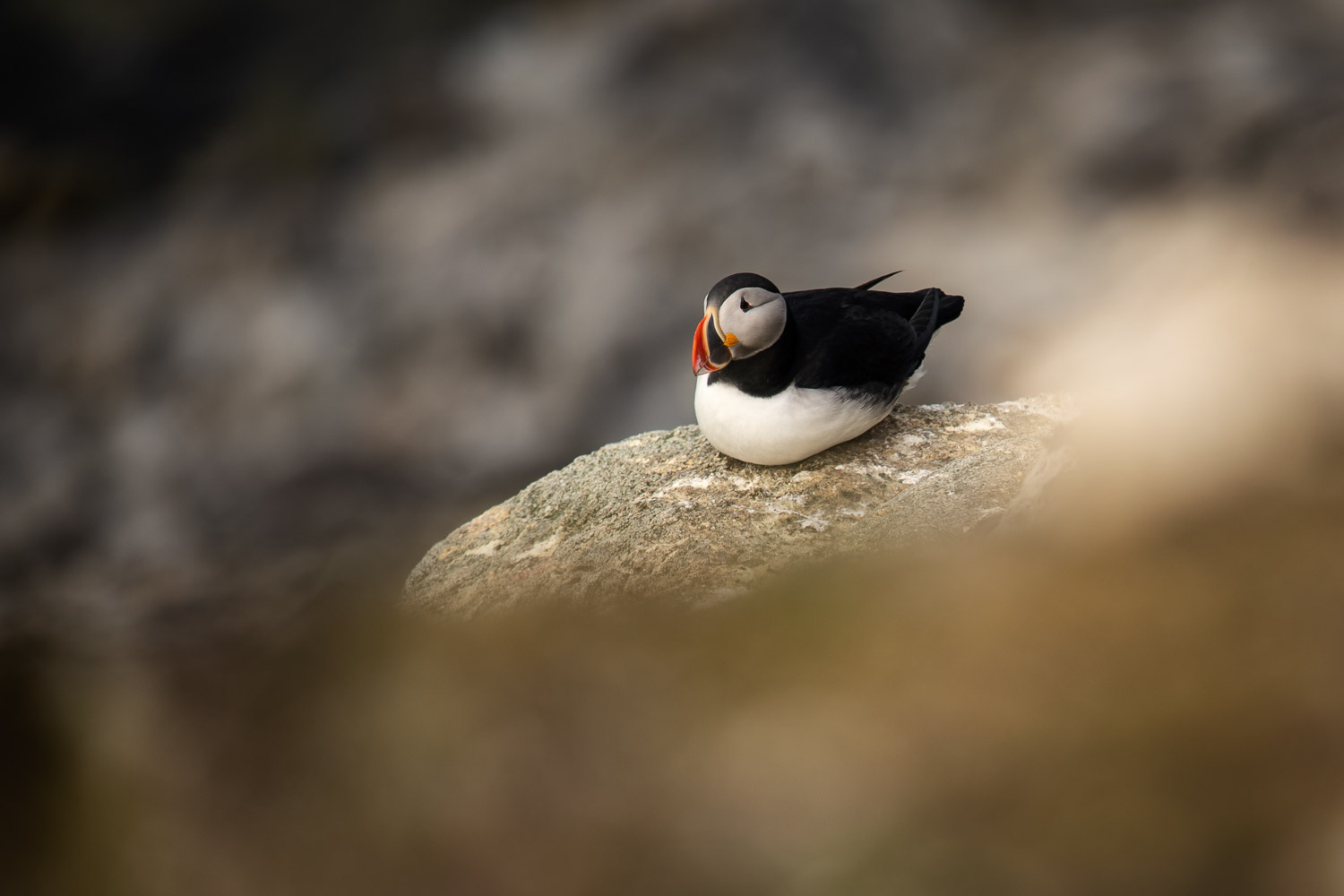
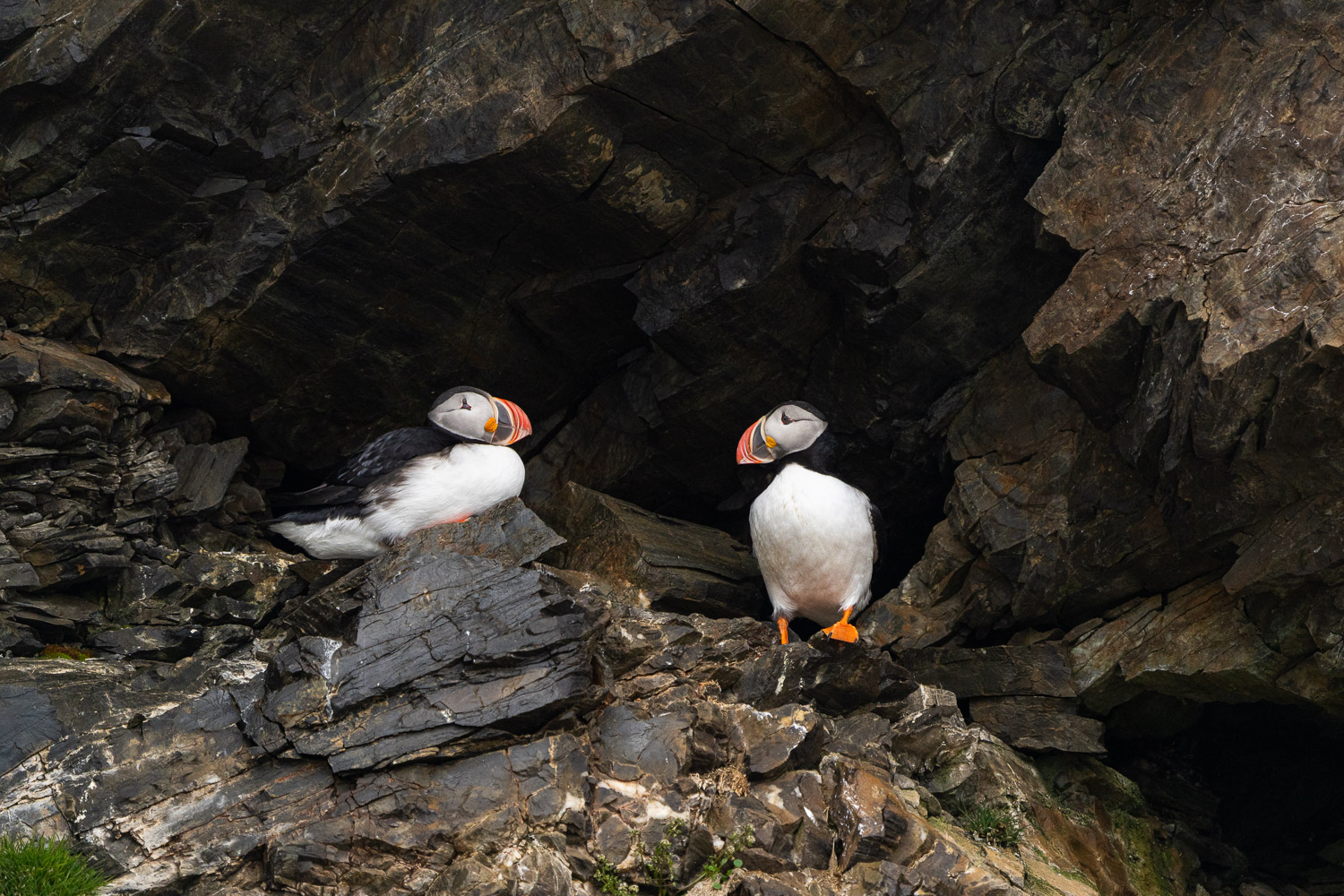
Where and when to photograph Atlantic Puffins
Most puffins in Svalbard are found in the western and northern parts of Spitsbergen, with small colonies located in several fjords, such as Krossfjorden. Since Atlantic puffins are only found around specific breeding sites, it is important to join a boat trip or ship expedition with guides who know exactly where to find them – you will not find puffins close to Longyearbyen.
Atlantic puffins are mainly seen near their nesting areas, often in flight or at sea only a few hundred metres away. They do not fly all the way to the pack ice to forage, preferring to stay relatively local. This means that if you are not within one or two kilometres of a nesting colony, the chances of seeing or photographing them are low.
The best time to photograph Atlantic puffins is from mid-May to the beginning of September during the breeding season. Outside of this period, they are unlikely to be found near the Svalbard archipelago, as they spend their time in the Barents Sea and the North Atlantic. Peak season is in June, July, and August, when adult birds are most active around the colonies. When puffins fly towards their nests, they often make several attempts to land, giving photographers multiple opportunities to capture the same bird in flight as it approaches or leaves the nesting area.
Black guillemot
Cepphus grylle
Population: 1,000,000 | Weight: 0.3–0.5 kg | Wingspan: 52–58 cm | IUCN Status: Least Concern
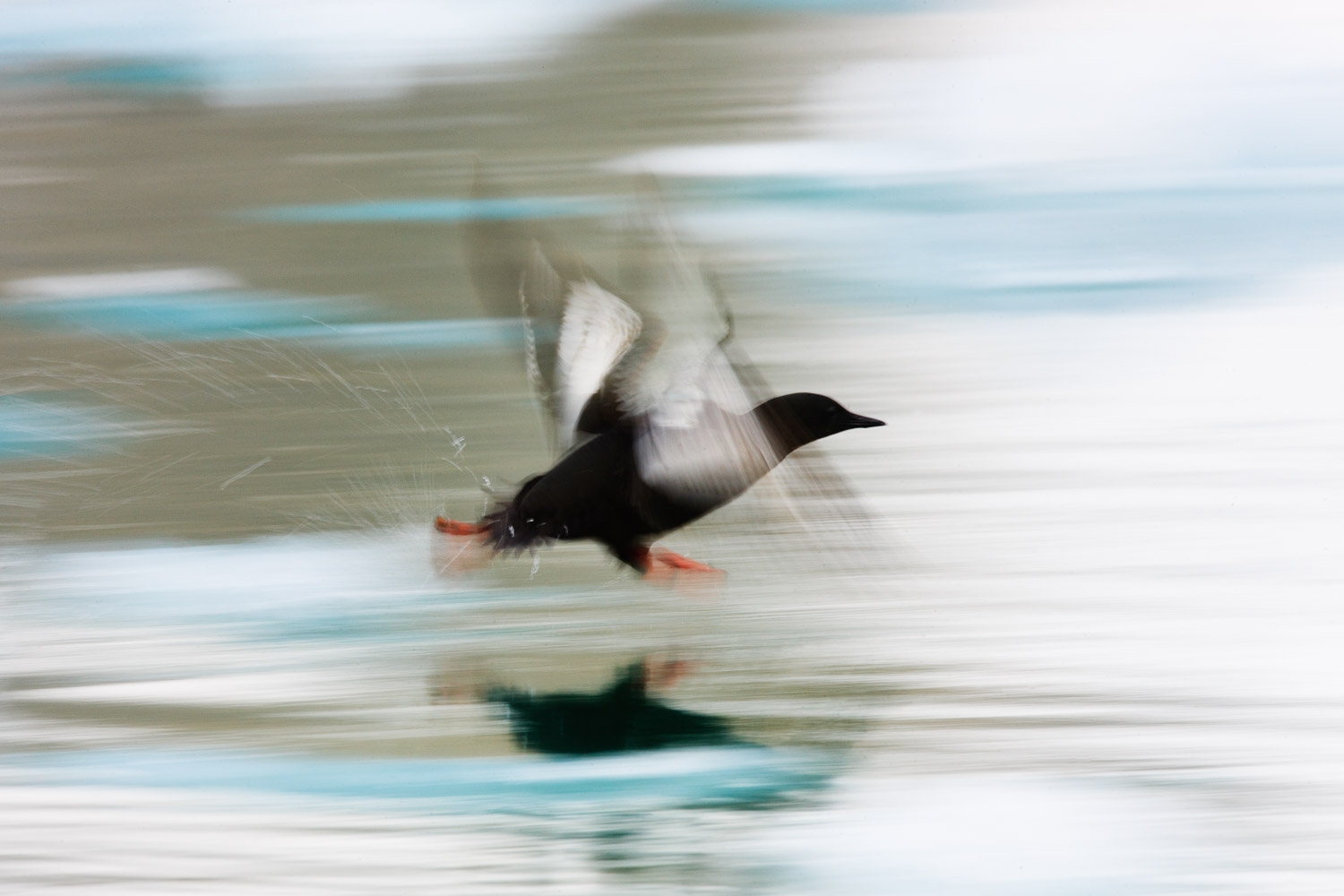
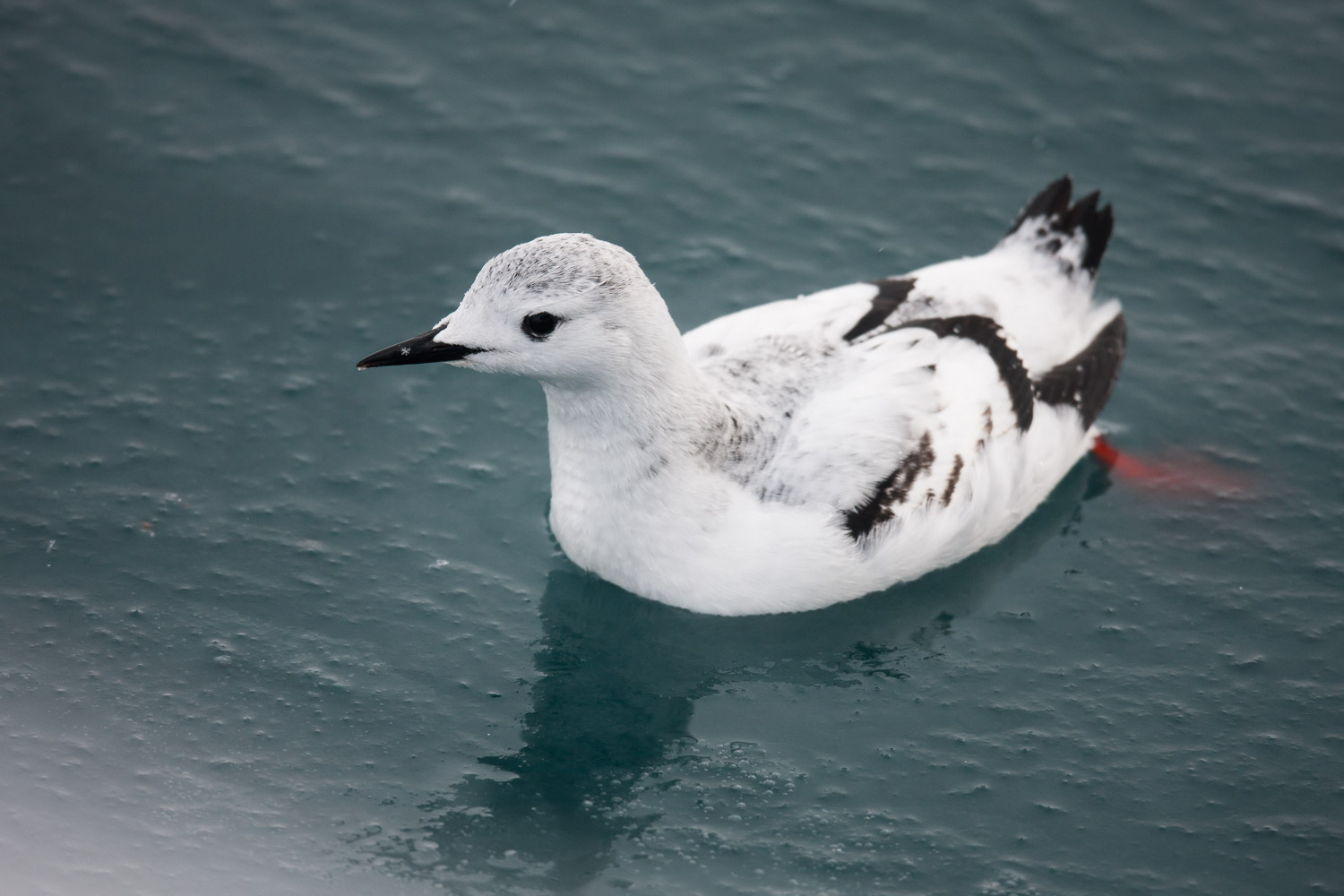
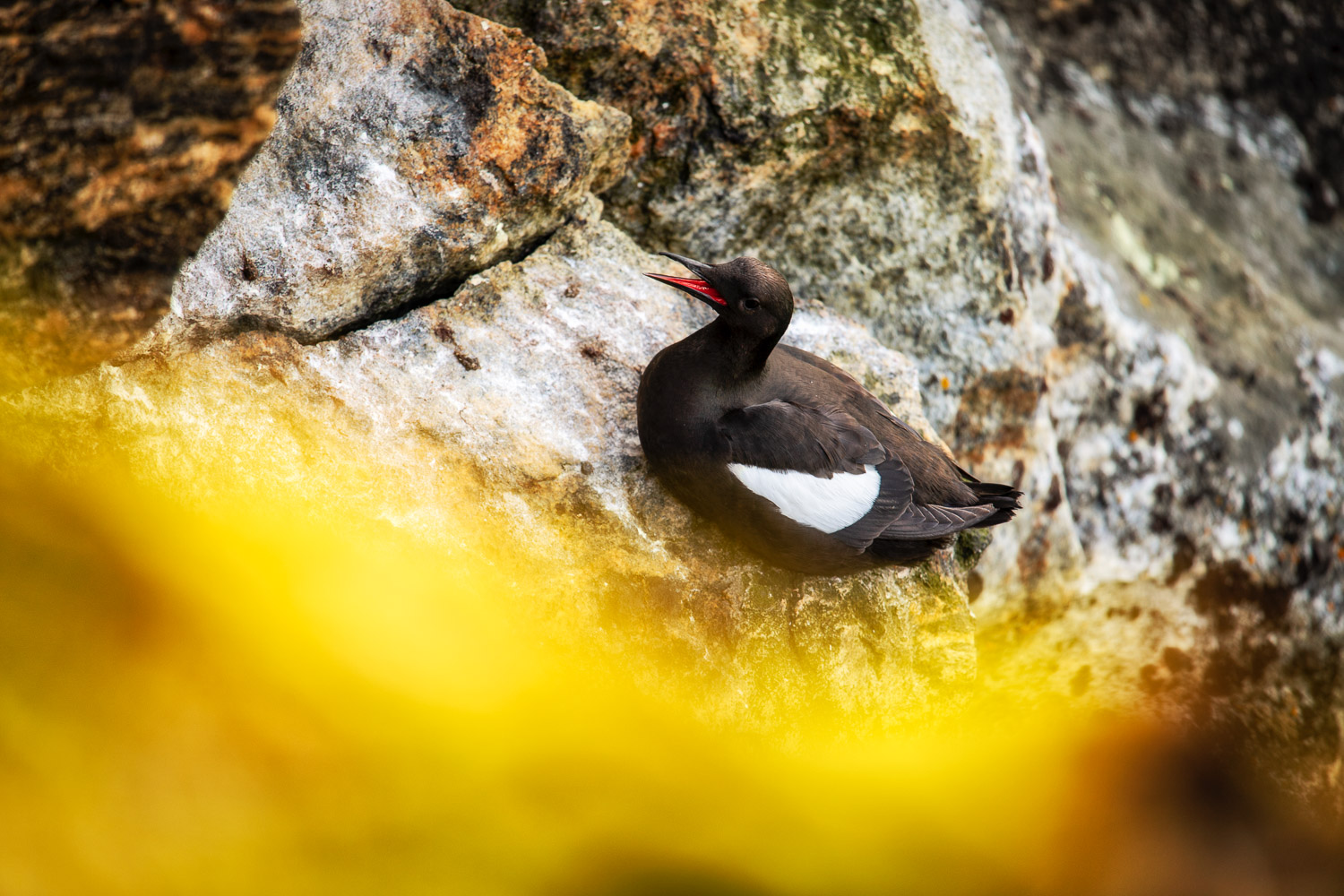
The Black guillemot is a medium-sized auk found in Svalbard year-round wherever there is open water. However, most birds that breed in Svalbard probably winter near the ice edge off the archipelago and in the Greenland and Barents Seas. They breed in small, scattered, loose colonies along the coast and on islands, but single nests can also be found several kilometres inland.
The black guillemot population in Svalbard is estimated at approximately 20,000 to 35,000 breeding pairs.
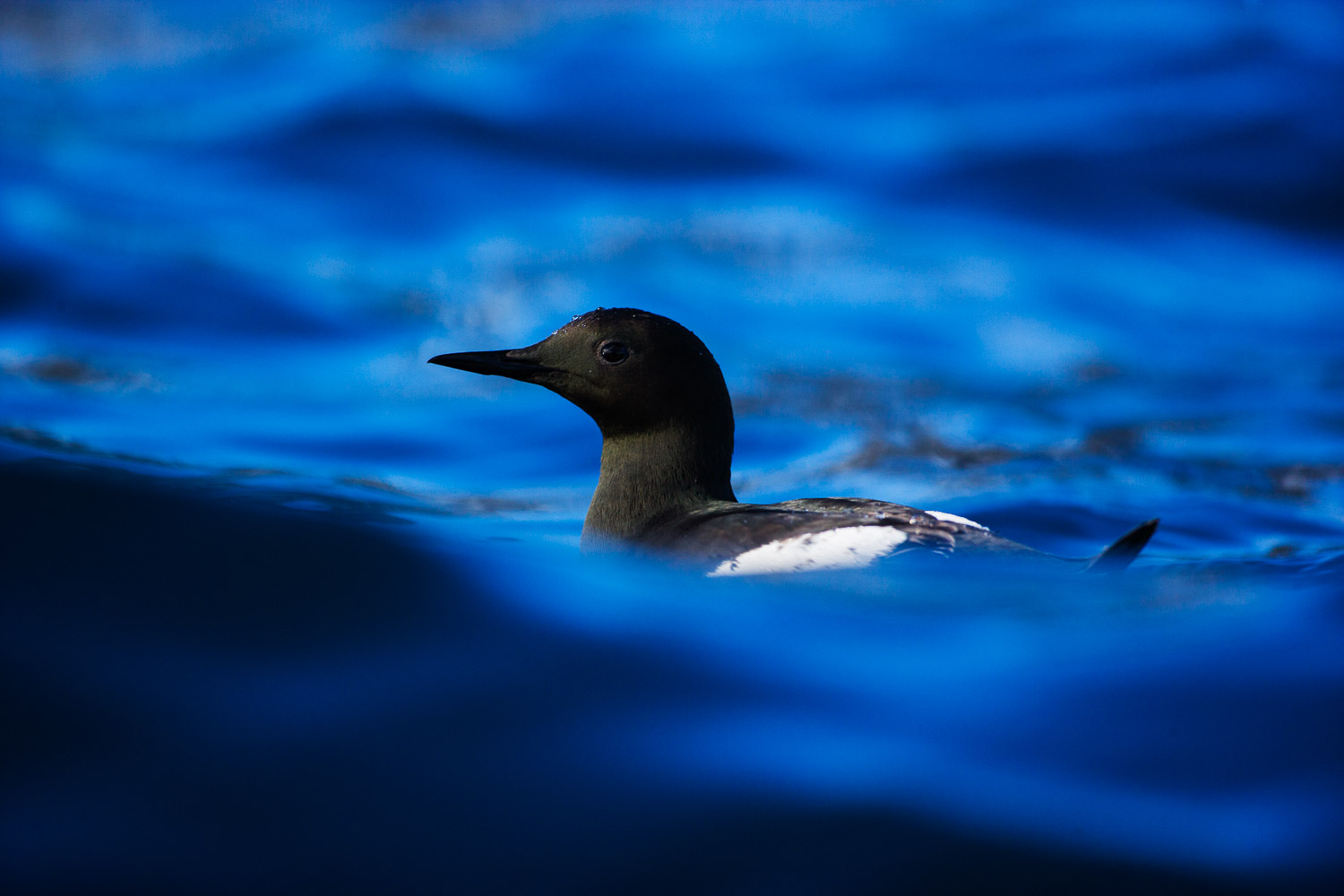
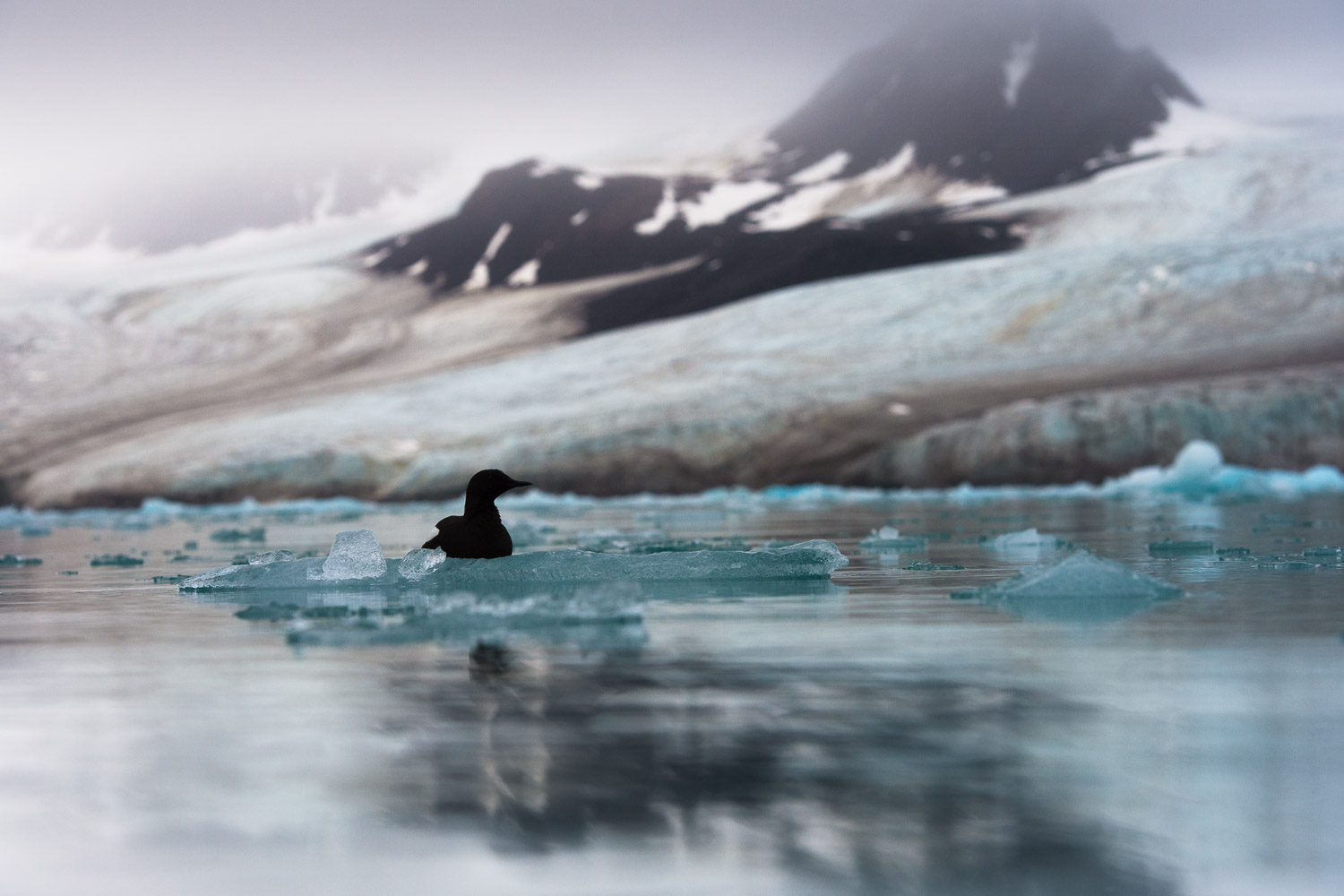
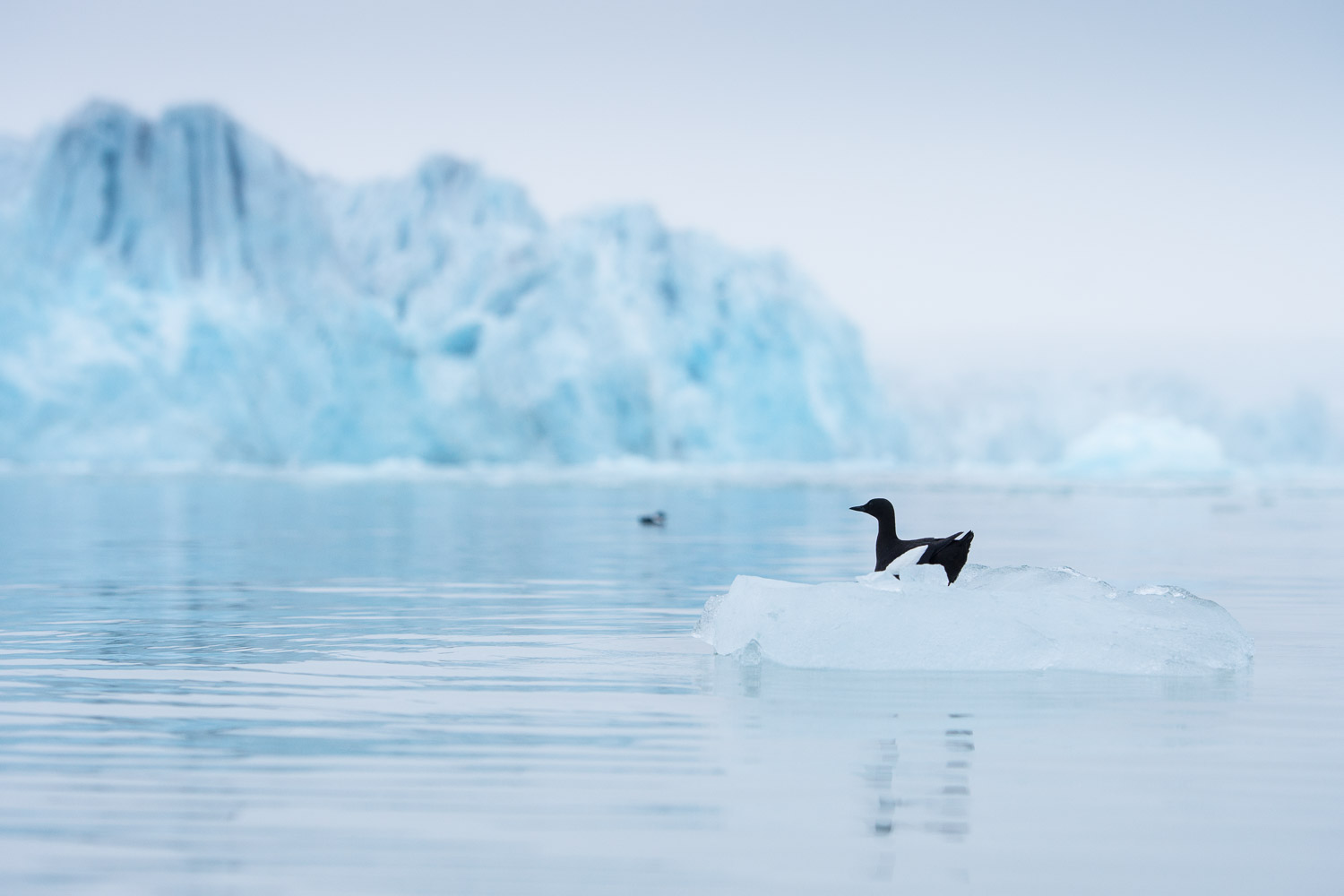
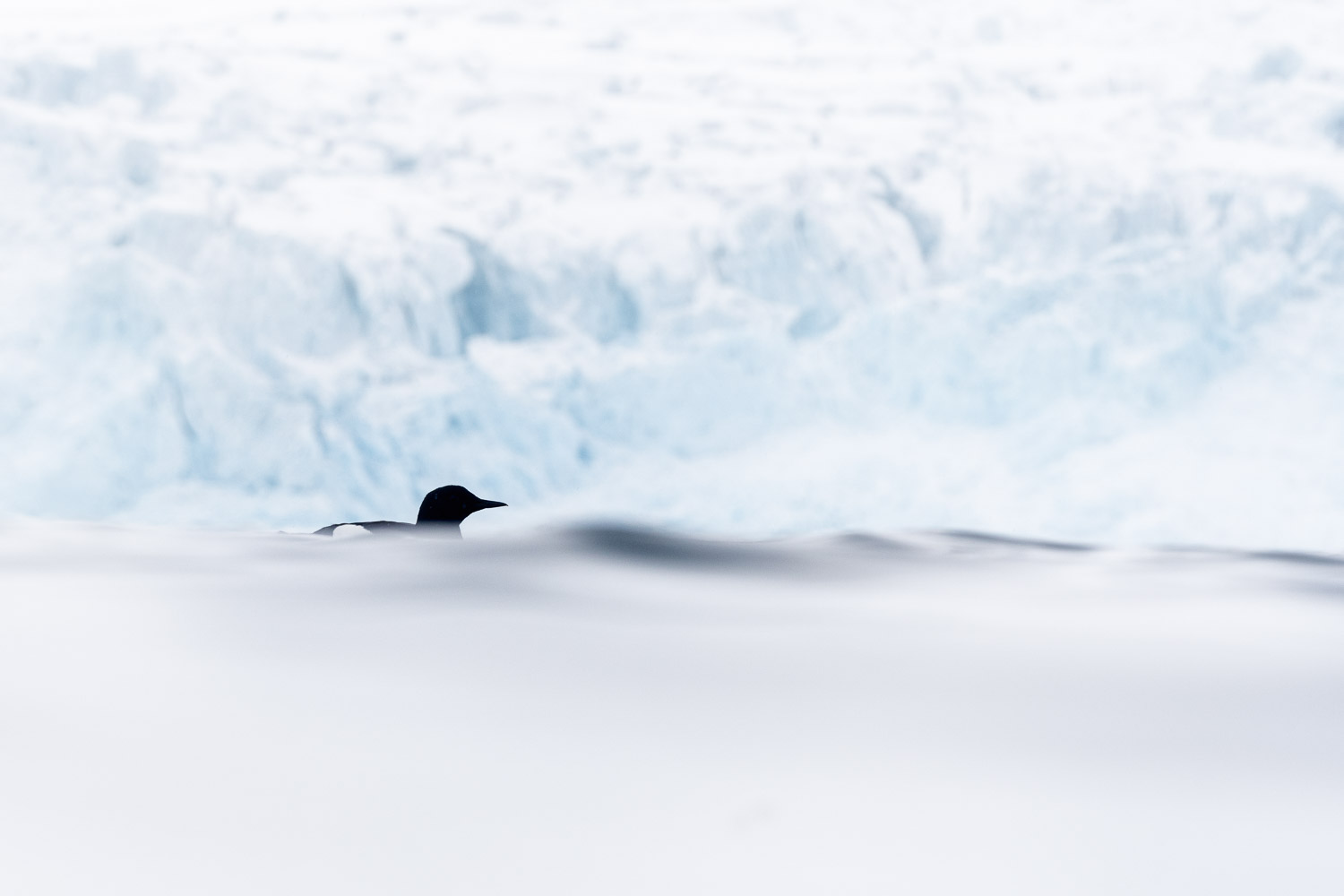
Where and when to photograph Black guillemot
Black guillemots can be seen in most coastal areas in Svalbard — even in Adventfjorden, where Longyearbyen is located. They breed in small colonies in areas with rocks and boulders, and with close access to shallow coastal feeding areas. This makes most of the coastal archipelago in Svalbard very suitable for Black guillemots.
The most secure areas for observing and photographing Black guillemots are in the many fjords of Svalbard. These are more sheltered from waves and wind, and it is very common to see guillemots resting or fishing at sea, or in flight quite low above the surface. It is also possible to photograph Black guillemots in the drifting pack ice, but they seem to prefer the outer areas of the pack ice with less dense sea ice.
Black guillemots return early to their breeding areas in March and form groups of 10–100 birds, where you can observe and photograph courtship and pair-bonding. These gatherings occur at sea in ice-free fjords, and with small Zodiac boats it is possible to photograph these birds from a low level. When the mountains and glaciers are included in the background, this can result in great images.
Peak times for photographing Black guillemots are June, July and August, when they are very active fishing for food and commuting to nest sites with fresh fish for their chicks. Especially when resting at sea, sometimes close to their breeding site, they can be easy to photograph and may even approach the Zodiac.
Black-legged kittiwake
Rissa tridactyla
Population: 15,000,000 | Weight: 0.3–0.5 kg | Wingspan: 91–105 cm | IUCN Status: Vulnerable
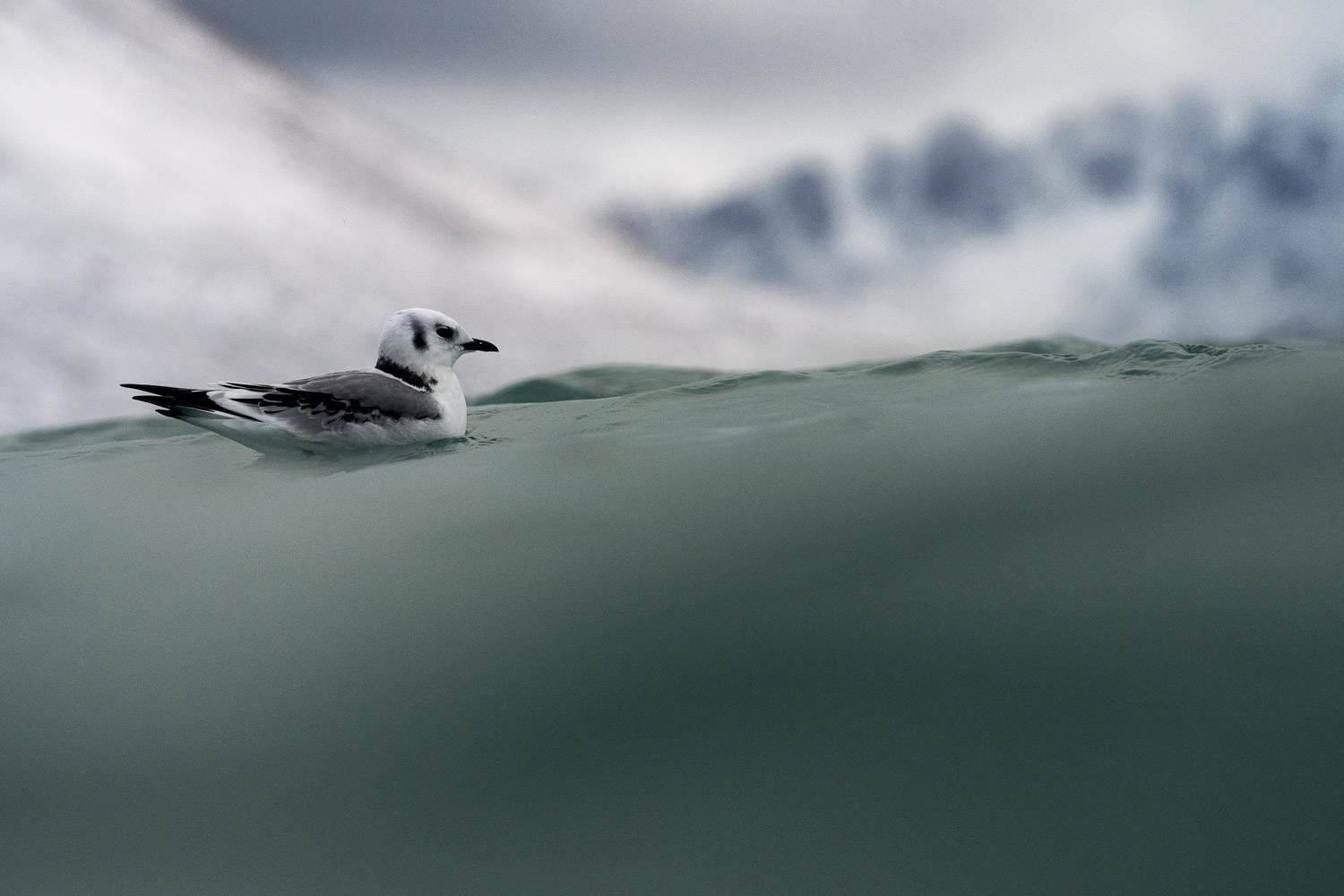
Black-legged kittiwakes breed in colonies, with the largest in Svalbard at Hopen, hosting about 46,000 pairs. Along with its red-legged relative in the Pacific, it is the only gull species with just three toes (most birds have four).
The Black-legged kittiwake population in the North East Atlantic has declined by as much as 60% between 1980 and 2010 and continues to decrease, making it one of the most threatened bird species in Europe.
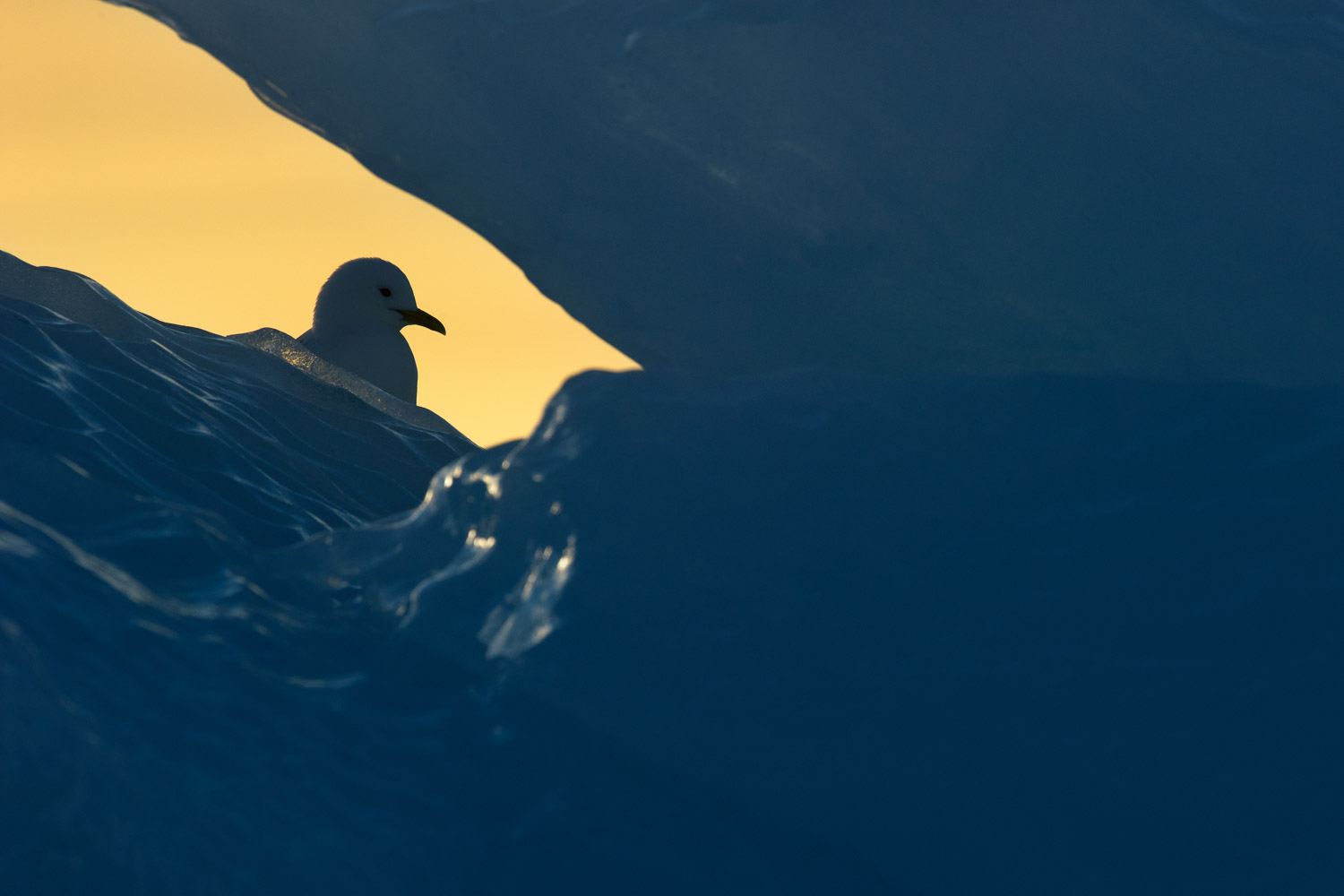
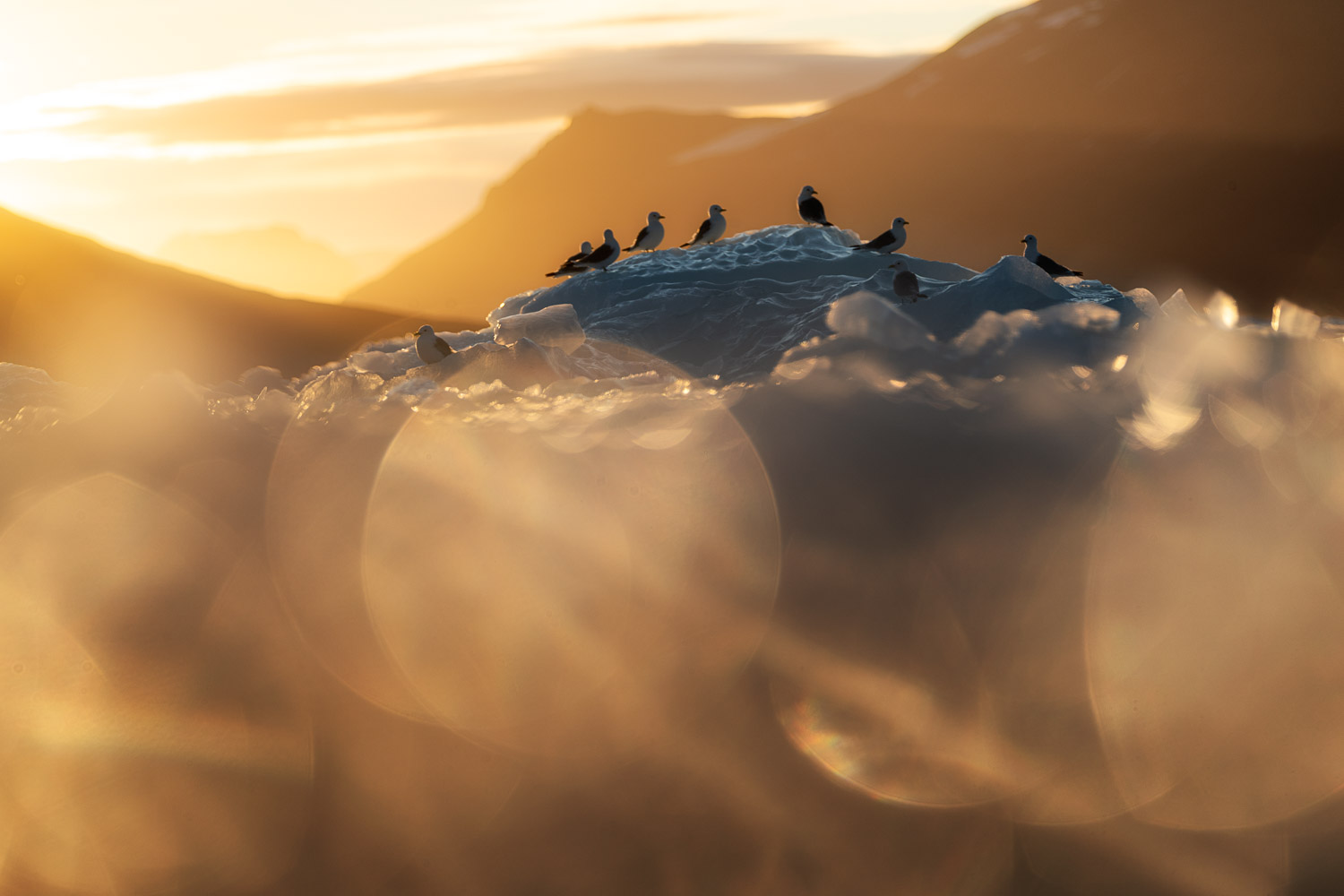
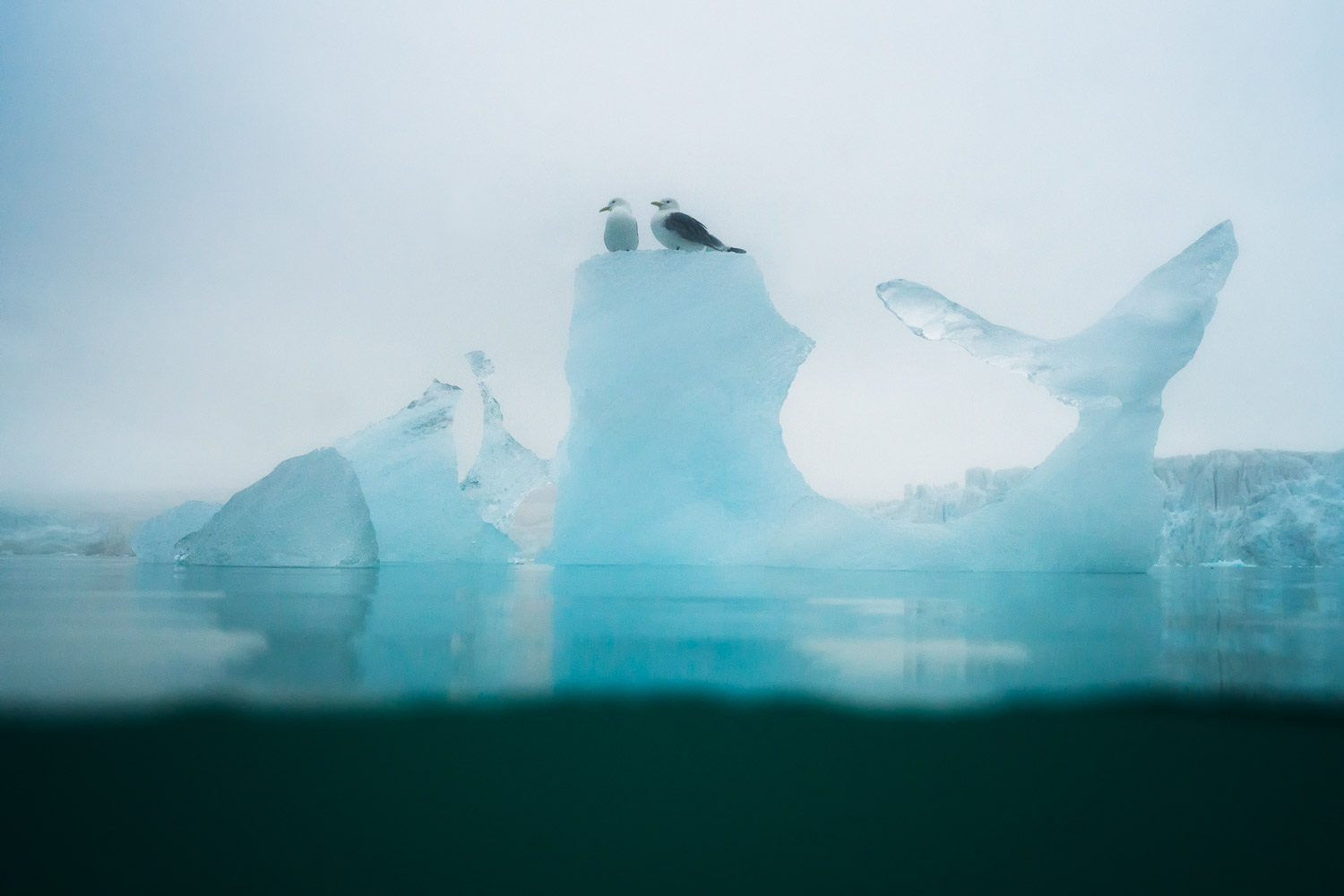

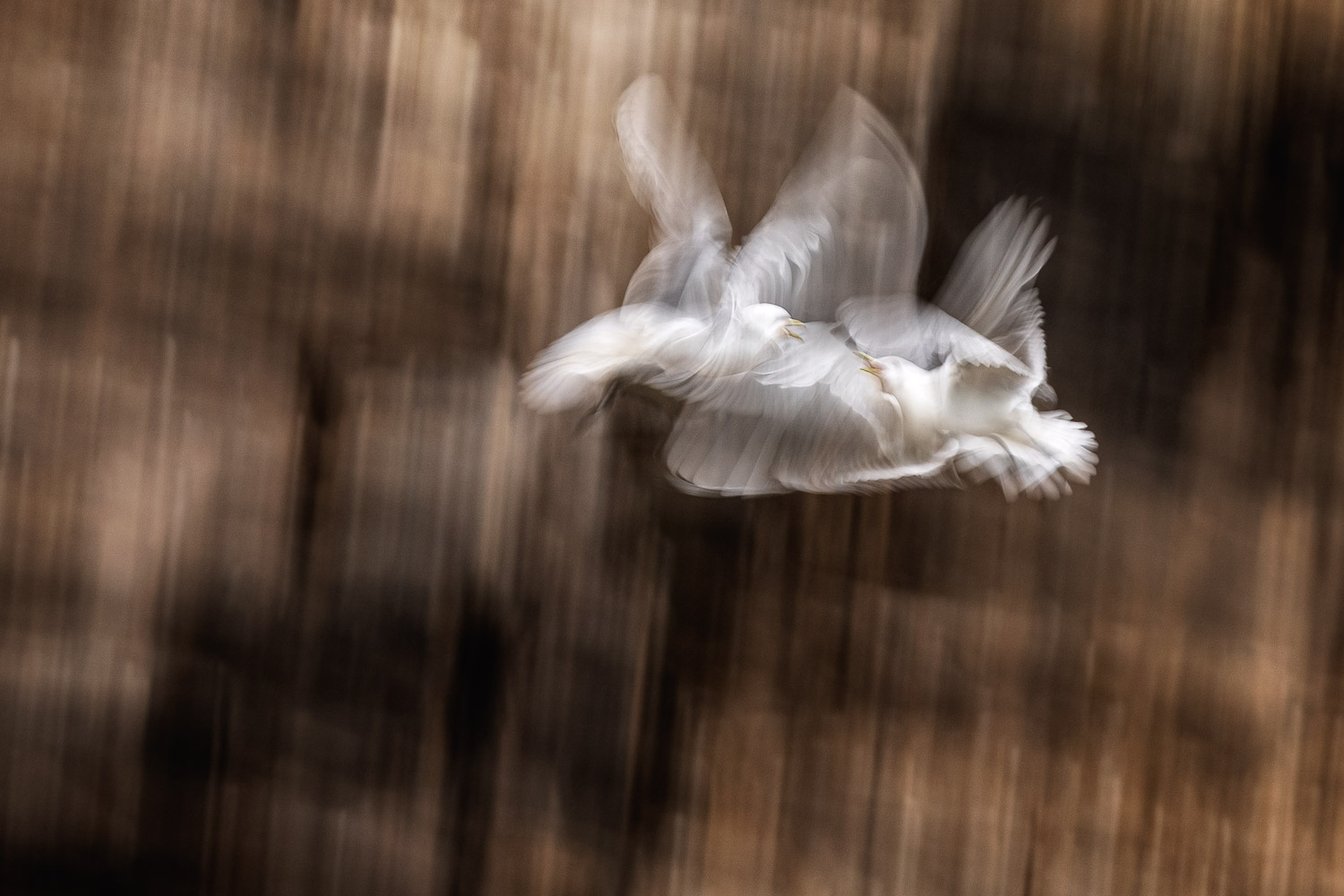

Where and when to photograph Black-Legged Kittiwake
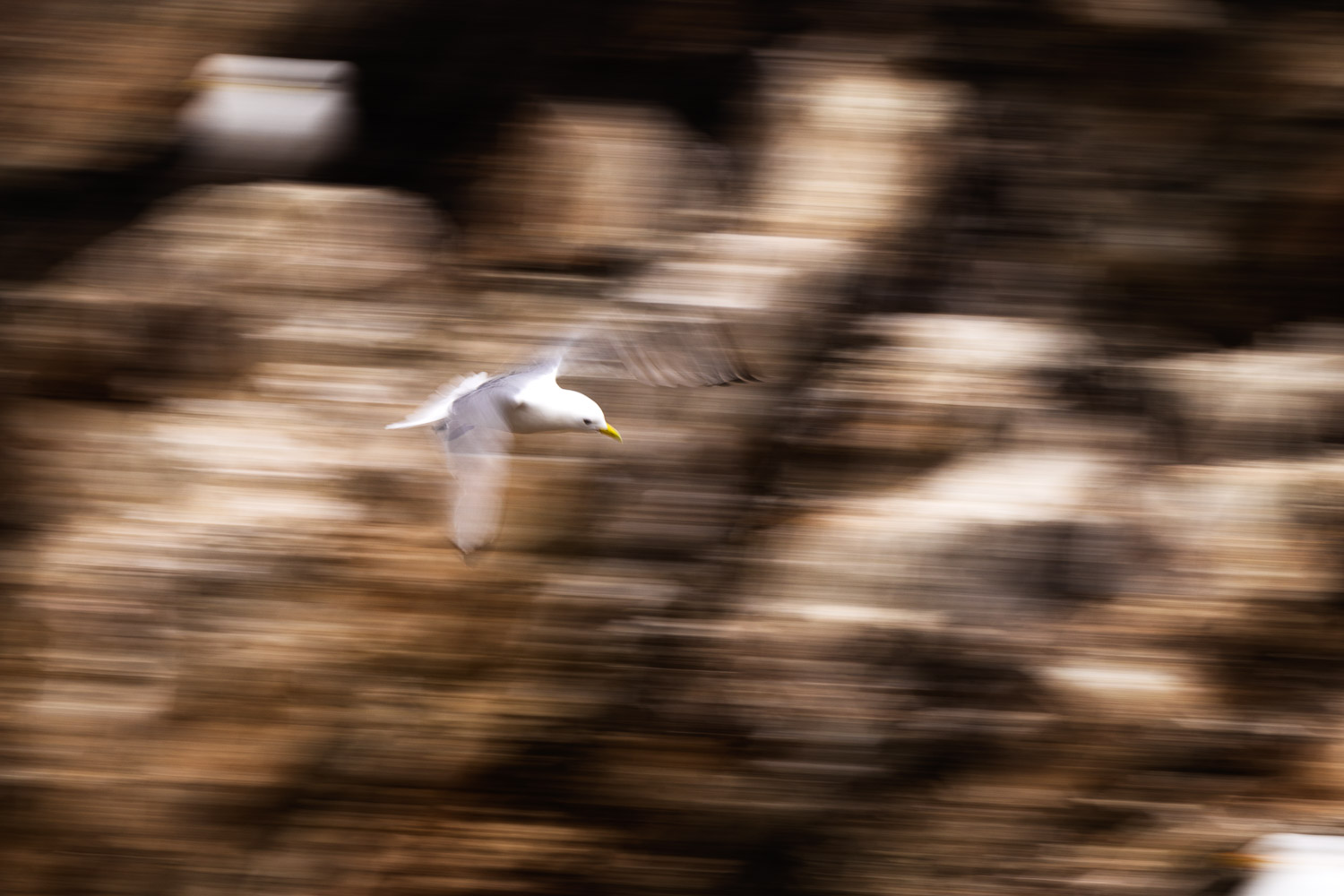
The Black-legged kittiwake is one of the bird species you can photograph almost everywhere in Svalbard. They can be seen flying around in the harbour in Longyearbyen, in every fjord system across the archipelago, and even up in the pack ice. There can also be hundreds, or even thousands, of them at the most north-eastern point of Svalbard — Kræmerpynten on Kvitøya — where they can be observed at sea or resting in large groups on the glacier. These birds are hard to miss, even if you only stay close to Longyearbyen.
One of the most incredible birding moments in Svalbard is observing and photographing large gatherings of Black-legged kittiwakes in front of active glaciers. Thousands of gulls — sometimes joined by ivory gulls, Arctic terns, and glaucous gulls — can form large "mosquito swarms" of birds flying in big circles. They feed on small fish, krill, and amphipods that are stirred up by glacier calvings and tidal currents. With the blue colours of the glacier in the background, these moments can be overwhelming and are highly photogenic.
When travelling on an expedition ship in the pack ice, it is common to be followed by Black-legged kittiwakes and Ivory gulls feeding on fish that come to the surface as the ship pushes through ice floes. These situations offer some of the best opportunities for photographing kittiwakes "dive-bombing" the surface for small fish that have been hiding under the ice.
Black-legged kittiwakes can be photographed from March to October. Peak activity early in the season occurs in May and June, when birds fight for mates and nesting sites, often resulting in intense aerial battles. Later in July, when hungry chicks require food, adult birds are fully occupied with feeding duties and ongoing territorial disputes. In August, the chicks begin to fledge, and with each passing week, the number of kittiwakes around the cliffs drops significantly. By the beginning of September, most kittiwakes have left their breeding areas, though they may still be found in the fjords, feeding or resting on glacier ice.
Barnacle goose
Branta leucopsis
Population: 1,400,000 | Weight: 1.2–2.2 kg | Wingspan: 120–145 cm | IUCN Status: Least concern
The Barnacle goose is a medium-sized goose that breeds mainly in Greenland, Svalbard, and Novaya Zemlya. Most Barnacle geese breed in colonies on the tundra or small islands, but some pairs nest on high mountain cliffs to avoid predators such as Arctic foxes and Polar bears. Like all geese, the goslings are not fed by the adults; instead, the newly hatched goslings are led to the ground to feed themselves.
The Svalbard population of Barnacle geese has recovered from near extinction, with recent estimates placing the population at roughly 30,000–40,000 individuals.
Where and when to photograph Barnacle Goose
The most accessible breeding area for barnacle geese in Svalbard is Adventsdalen, just outside Longyearbyen. Sometimes the geese make their way into town to graze on open fields.
Barnacle geese can also breed quite high up on bird cliffs, surrounded by seabirds. These geese can be observed and photographed from a distance when sitting close to the nest, or feeding on the green grass below the cliffs. Usually, there are not many barnacle geese around bird cliffs compared to the numbers breeding on the tundra or small islands.
Barnacle goose chicks normally leave the nests in late June and early July, and they tend to gather in large groups with the adults. Chicks are vulnerable to predation by Arctic foxes, and this may be one of the reasons why they gather and prefer to stay close to small lakes and ponds. With a rental car from Longyearbyen, it is possible to photograph these barnacle geese from the road into Adventsdalen and between the campsite and the sea towards Bjørndalen.
Geese in Svalbard (and elsewhere) are very vulnerable before the chicks have fledged and can fly. This normally occurs between mid-August and early September, meaning approximately two months outside the nest without the ability to fly. As a photographer visiting Svalbard, it is important to approach these birds with caution and respect, staying on the roads or remaining low in the terrain, allowing them to feed or rest without unnecessary stress. It can sometimes be surprising that large birds like geese are more skittish than other birds in Svalbard, so remember to be careful.
Brent goose
Branta bernicla
Population: 450,000 | Weight: 0.9–2.2 kg | Wingspan: 106–121 cm | IUCN Status: Least concern
The Brent goose (also called Brant goose in US) is smaller than both the Barnacle goose and the Pink-footed goose, which also breed in Svalbard. Several subspecies exist, and those breeding in Svalbard and Greenland form the rarest migrating goose population in the world (about 6,800 birds in 2013). Geese, unlike most birds, remain as a family for a whole year until the next breeding season, allowing the young to learn valuable survival skills.
The Svalbard population of the subspecies Light-bellied Brent Goose (Branta bernicla hrota) is estimated at approximately 4,000–6,000 individuals.
Where and when to photograph Brent Goose
The Brent goose is not a common bird in Svalbard. Occasionally, it can be seen and photographed in spring along the road through Adventsdalen, close to Longyearbyen, but to increase your chances you will most likely need to join a ship‑based expedition around Svalbard.
Brent geese breed in very small numbers in Svalbard, primarily in the Tusenøyane islands, with a few additional nesting areas along the western and northern coasts of Spitsbergen. Very few visitors to Svalbard have the opportunity to visit brent goose breeding sites, as they are difficult to locate and landings in Svalbard are restricted.
The best time to photograph Brent geese is from late May, when they arrive at their breeding sites, and later in July and August, after the chicks have fledged and may be seen swimming in family groups along the coastline. Even on a photographic expedition around the archipelago, sightings of Brent geese are rare, so they should be considered a bonus rather than an expectation.
Common Eider
Somateria mollissima
Population: 2,000,000 | Weight: 0.8–3.0 kg | Wingspan: 80–110 cm | IUCN Status: Near Threatened
The Common eider is a large (50–71 cm) sea duck seen throughout Svalbard. They are usually seen and photographed at sea or in flight, often in small flocks of 2–10 birds. Eider down is considered one of the most insulating materials in the world and was once an important resource. In 1914, 2,451 kg of eider down was exported from Svalbard to mainland Norway, equivalent to the down from 82,000 nests. Today, only small-scale down collection occurs in Svalbard.
Where and when to photograph Common Eider
The Common eider is the most numerous duck species in Svalbard and is easy to see and photograph close to Longyearbyen. A colony of approximately 50–100 pairs breeds in a small area between the first two dog yards — named "Hundegården" — in Adventsdalen, just outside the town. This breeding site is within a 10–15 minute walking distance from the Svalbard Museum. It is important to stay on the side of the road (outside the logs) to avoid disturbing the nesting ducks. This area is also popular for Arctic foxes, which frequently try to steal their eggs.
Common eiders are excellent subjects to photograph in flight, although they fly quite fast. One way to increase the odds of capturing sharp (or panned) flight images is to stand on the road 10–30 metres away from the breeding site and photograph them as they fly in and out of the nesting area. Some birds may also rest or bathe in nearby ponds before flying back to the nest. A tripod with a video head for smooth panning makes flight photography much easier when using large telephoto lenses.
Outside Longyearbyen, there are good chances to see and photograph Common eiders at sea along the coast, especially in the fjords. They tend to be quite shy and are not easy to approach by Zodiac for photography.
The best time for photographing Common eiders is June and July, when they are nesting or have small chicks. In July, August, and September, the eiders will most likely be at sea foraging or resting, meaning you will need to be on a boat or ship to have a chance to photograph them. Some common eiders can also be found at sea close to Longyearbyen along the road between the town and the airport, or in the harbour area.
Common ringed plover
Charadrius hiaticula
Population: 500,000 | Weight: 0.5–0.8 kg | Wingspan: 35–41 cm | IUCN Status: Least Concern
The Common ringed plover is a small wader, notable for its broad black breast band. It breeds in north-eastern Canada, Greenland, Iceland, Scandinavia, Svalbard, and Arctic Russia. In Svalbard, it breeds mainly in western Spitsbergen and on Bjørnøya, with a population estimated between 300 and 750 pairs, arriving towards the end of May or early June.
Where and when to photograph Common ringed plover
The Common ringed plover is mainly found on the western coasts of Spitsbergen (and on Bjørnøya). This shorebird is not as common as the purple sandpiper, but it can frequently be seen close to Longyearbyen – on the mudflats and the "beach" in front of the town, along rivers and streams, and on small ponds on the tundra.
The best time to photograph the Common ringed plover is during their breeding period between June and August, when they can be seen along the road towards Adventsdalen or Bjørndalen (close to the campsite). Outside Longyearbyen they can sometimes be seen along the shore, but usually only in pairs or small groups.
The Common ringed plover is not very shy if you sit or lie down on the ground and remain still. Standing up or walking towards the birds is not the recipe for experiencing these shorebirds at your desired photographic range.
Dunlin
Calidris alpina
Population: 5,000,000 | Weight: 0.3–0.8 kg | Wingspan: 38–43 cm | IUCN Status: Least Concern
The dunlin is a small, slender wader, more delicate than the purple sandpiper. It breeds in a circumpolar range across the Arctic and north temperate regions, with several geographically isolated subspecies. Dunlins in Svalbard belong to the Calidris alpina arctica subspecies, which also breeds in north-eastern and southern Greenland.
Although one of the world’s most abundant waders, dunlins breed in small numbers in Svalbard – about 100–300 breeding pairs.
Where and when to photograph Dunlin
The Dunlin breeds in small numbers on Bjørnøya and in western Spitsbergen, especially in the Isfjorden and Kongsfjorden areas. It can be seen and photographed close to Longyearbyen, mainly along the road through Adventsdalen. Dunlins can be found on the tundra, and not only along ponds, shorelines, and mudflats. Dunlins often stay in small groups of 2–5 birds and share the same feeding habitats as the purple sandpiper and common ringed plover. It is possible to observe and photograph all three breeding shorebird species in Svalbard, just outside the town.
The best time to see and photograph Dunlins is in June – August, when they are breeding. They typically arrive in Svalbard in late May and migrate south in mid-August, so they remain in the Arctic for only about three months.
Glaucous gull
Larus hyperboreus
Population: 1,000,000 | Weight: 1.0–2.7 kg | Wingspan: 132–170 cm | IUCN Status: Least Concern
The Glaucous gull is the largest gull in Svalbard, with pale grey upper wings and a white underside. It has a circumpolar, high Arctic breeding distribution and breeds throughout most of Svalbard.
In Svalbard, they are widespread but show stark, localized declines, with populations on Bjørnøya and Hopen dropping as much as 65% since the 1980s. With about 5000 breeding pairs estimated in the region, the Glaucous gull are considered "Near threatened" on the Norwegian Red List.
The glaucous gull is larger than the great skua and is a specialized predator of bird chicks and eggs. When auks are jumping from the bird cliffs, Glaucous gulls can swallow whole chicks very efficiently. Glaucous gulls can also attack and kill adult kittiwakes and guillemots in the bird cliffs or on the ground / ice, which makes them one of the top predator in the high Arctic.
Where and when to photograph Glaucous Gull
Glaucous gulls are found all along the coast of Svalbard and in the pack ice, wherever there is anything to eat or scavenge. They are specialised predators and will mainly be found where there are other birds around.
Bird cliffs will always have Glaucous gulls patrolling along the cliffs or waiting in the area for potential birds to attack and kill. Kittiwakes and guillemots have serious territorial fights, and losing birds might be weakened or injured and easier to kill. Especially when a Glaucous gull has attacked a bird on the water surface, it can offer good photo opportunities from a Zodiac. Pay attention to other approaching gulls that might want to steal the carcass.
Active glacier fronts are a magnet to Black-legged kittiwakes, Arctic terns, Ivory gulls and other seabirds feeding in the area. Glaucous gulls will normally be around, sitting on top of an iceberg or on the glacier front, waiting for the right moment to attack a bird. They will normally not try to steal food from other seabirds in flight — like the skuas — but rather focus on attacking resting or wounded birds.
In the drifting sea ice and pack ice, the Glaucous gull will often be found where there is a carcass available. When polar bears manage to kill a seal, there will soon be Glaucous gulls and ivory gulls fighting for the fat-rich leftovers. When a dead whale is found in the pack ice, it can attract many gulls who have a reliable food source for weeks or months.
Glaucous gulls are one of the birds that you can see and photograph in Svalbard most of the year, from March to October. The highest activity is usually around bird cliffs in June, July and August, where they can be seen frequently and where they might be nesting themselves.
Great Skua
Stercorarius skua
Population: 30,000 | Weight: 1.2–1.5 kg | Wingspan: 125–140 cm | IUCN Status: Least Concern
The Great skua is a large, dark brown bird, bigger than the three other skua species found in Svalbard. It is a relatively recent arrival, with the first confirmed breeding in Svalbard on Bjørnøya in 1970. Great skuas are extremely aggressive near their nests and will physically strike any intruder, even scaring away polar bears.
The Great skua population, is facing a severe decline due to avian influenza (H5N1) after having a stable population for decades. While historically estimated at 16,300–17,200 pairs (30,000–35,000 mature individuals), recent surveys show massive, rapid population drops, with UK numbers in 2023 down by 76% from previous estimates.
Where and when to photograph Great Skua
Great Skua is easiest to see and photograph along the coastline of Spitsbergen close to bird cliffs or other areas with high seabird populations. Some Great skuas also breed as far north as northern parts of Nordaustlandet.
Best time to photograph Great Skuas in Svalbard is from late May to August, with peak activity in June.
Ivory Gull
Pagophila eburnea
Population: 45,000 | Weight: 0.5–0.7 kg | Wingspan: 108–120 cm | IUCN Status: Near Threatened
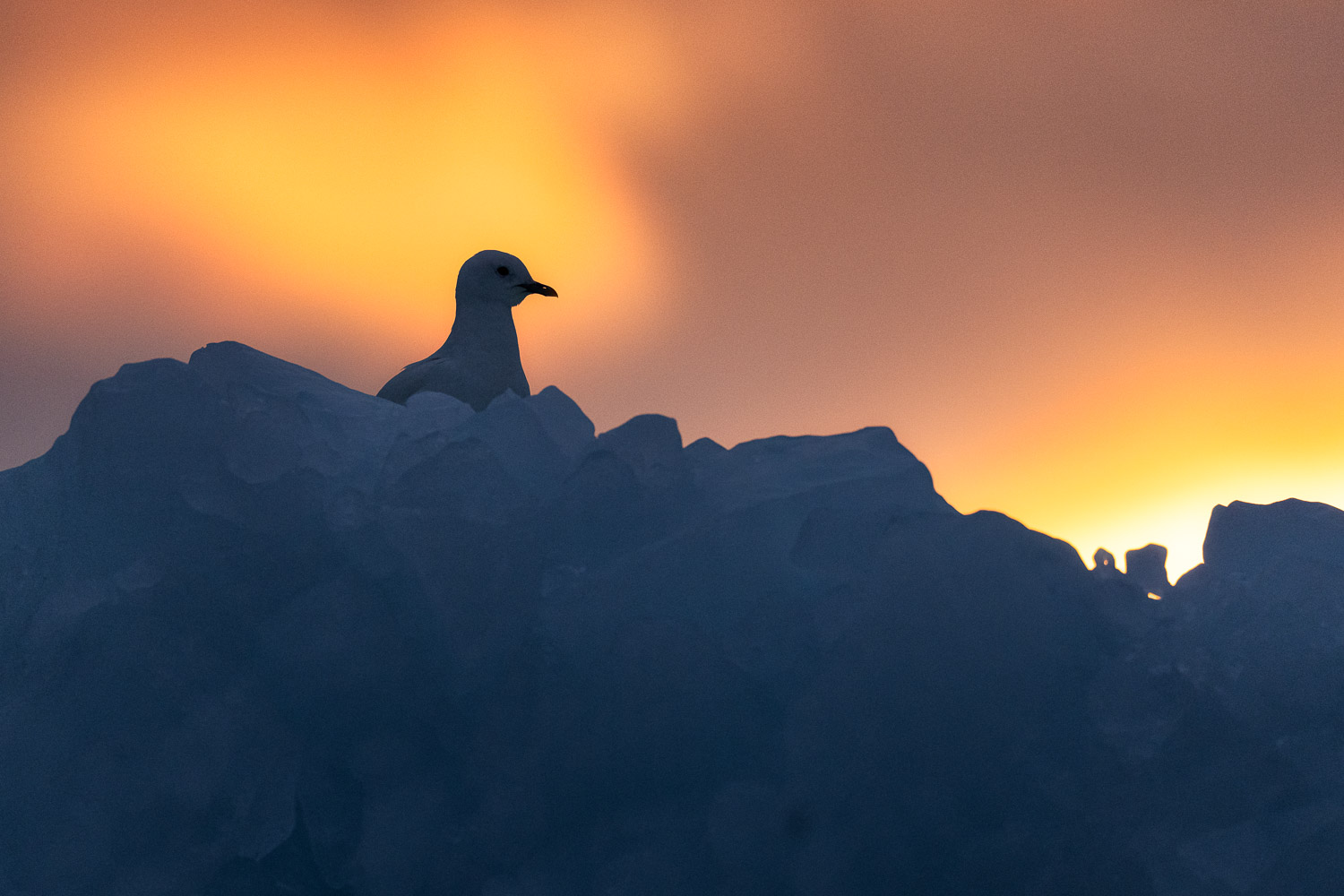
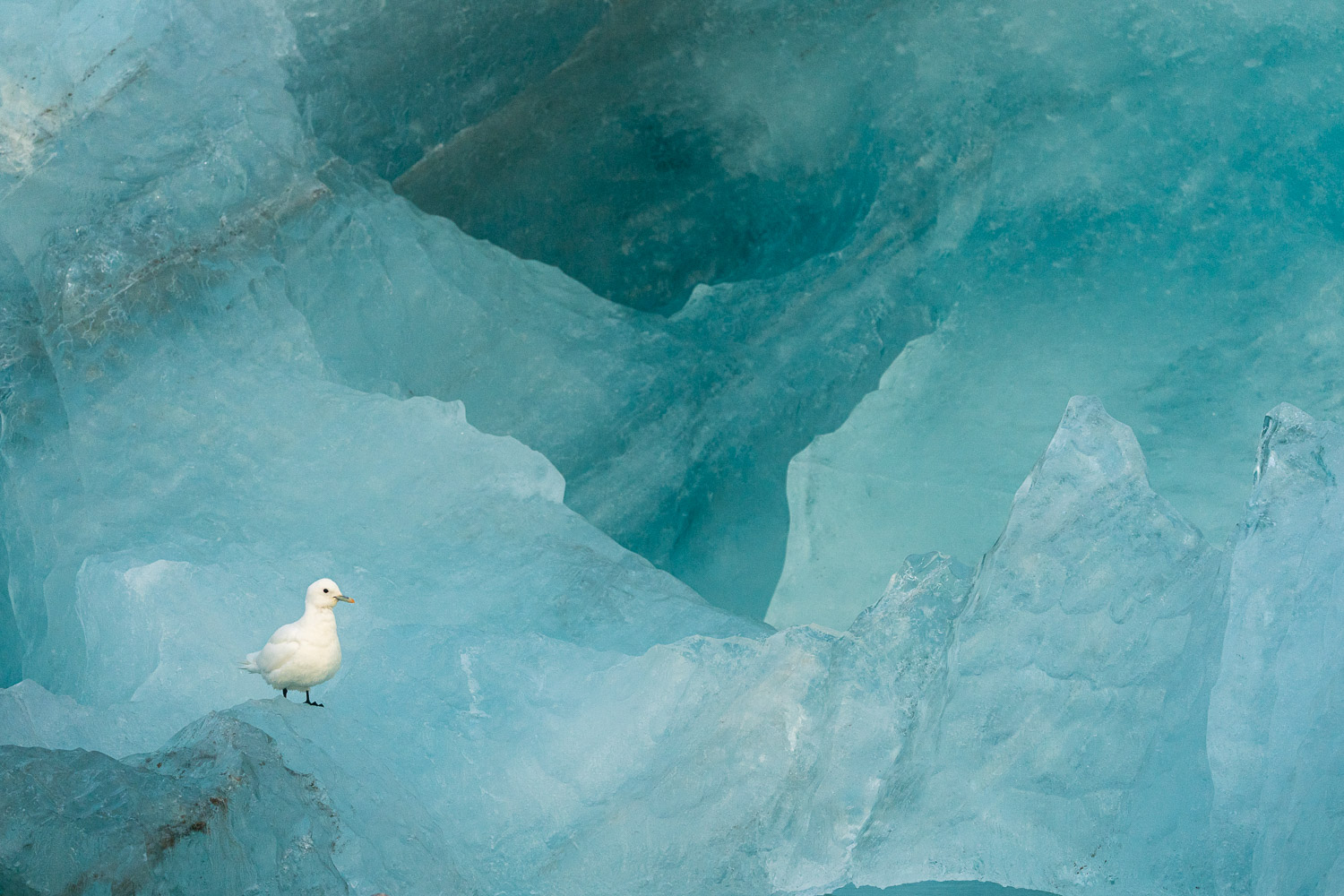
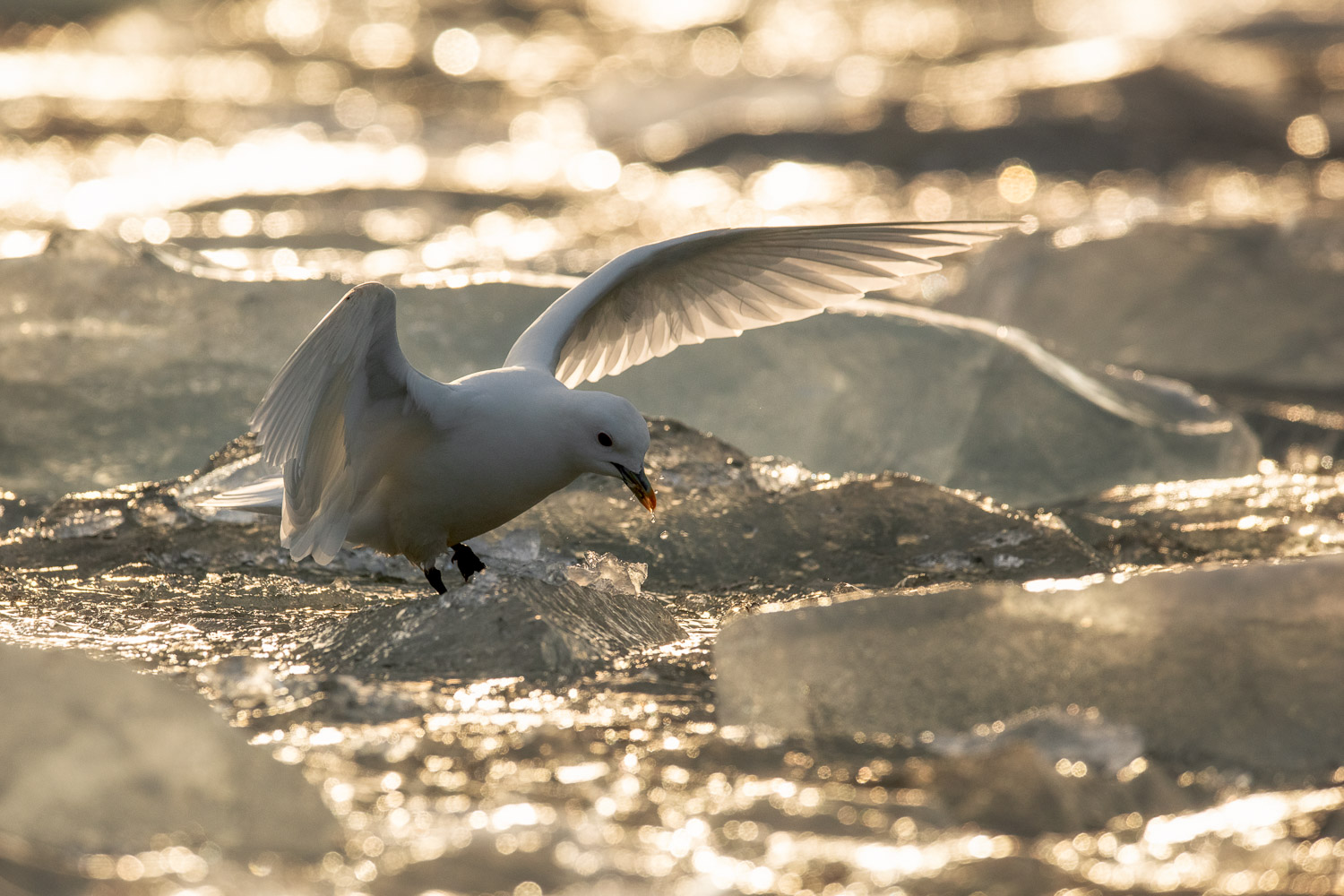
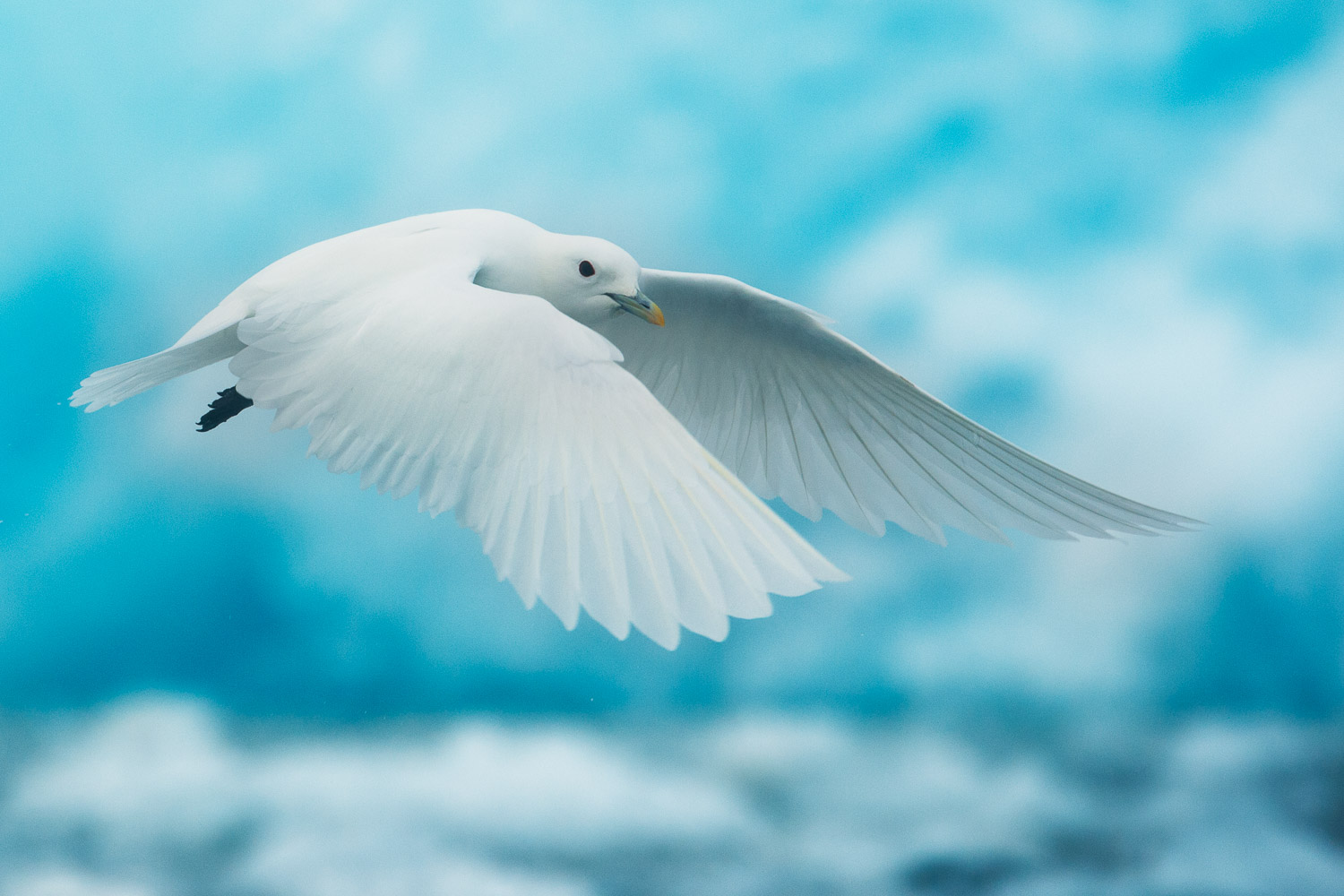
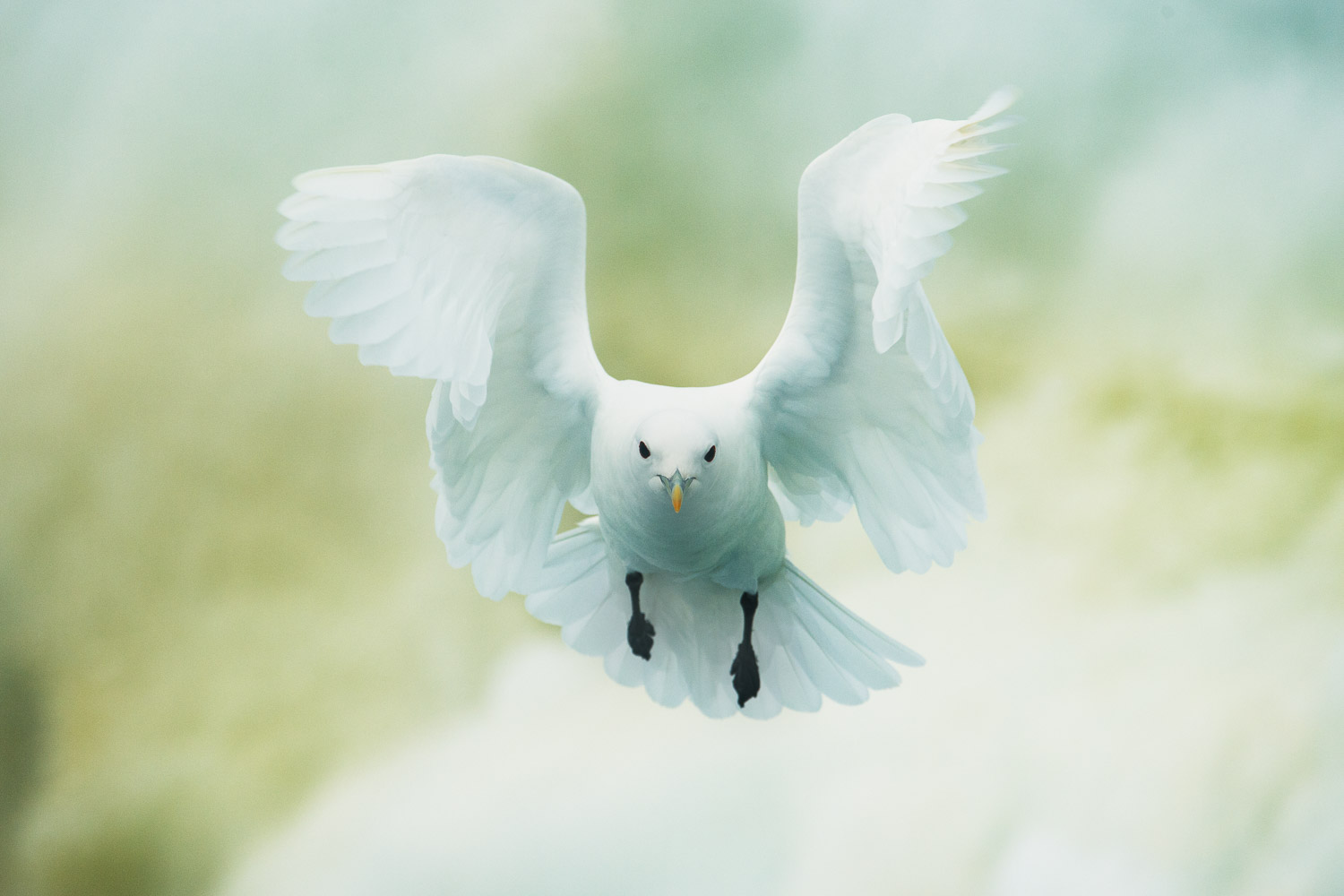
Many bird photographers have the Ivory gull at the top of their wish list when visiting Svalbard. This medium-sized gull is one of the most beautiful birds in the region, with chalk-white plumage, black legs, and a yellowish bill. Ivory gulls are often found near sea ice, glaciers, and blue icebergs, providing a stunning backdrop for photography.
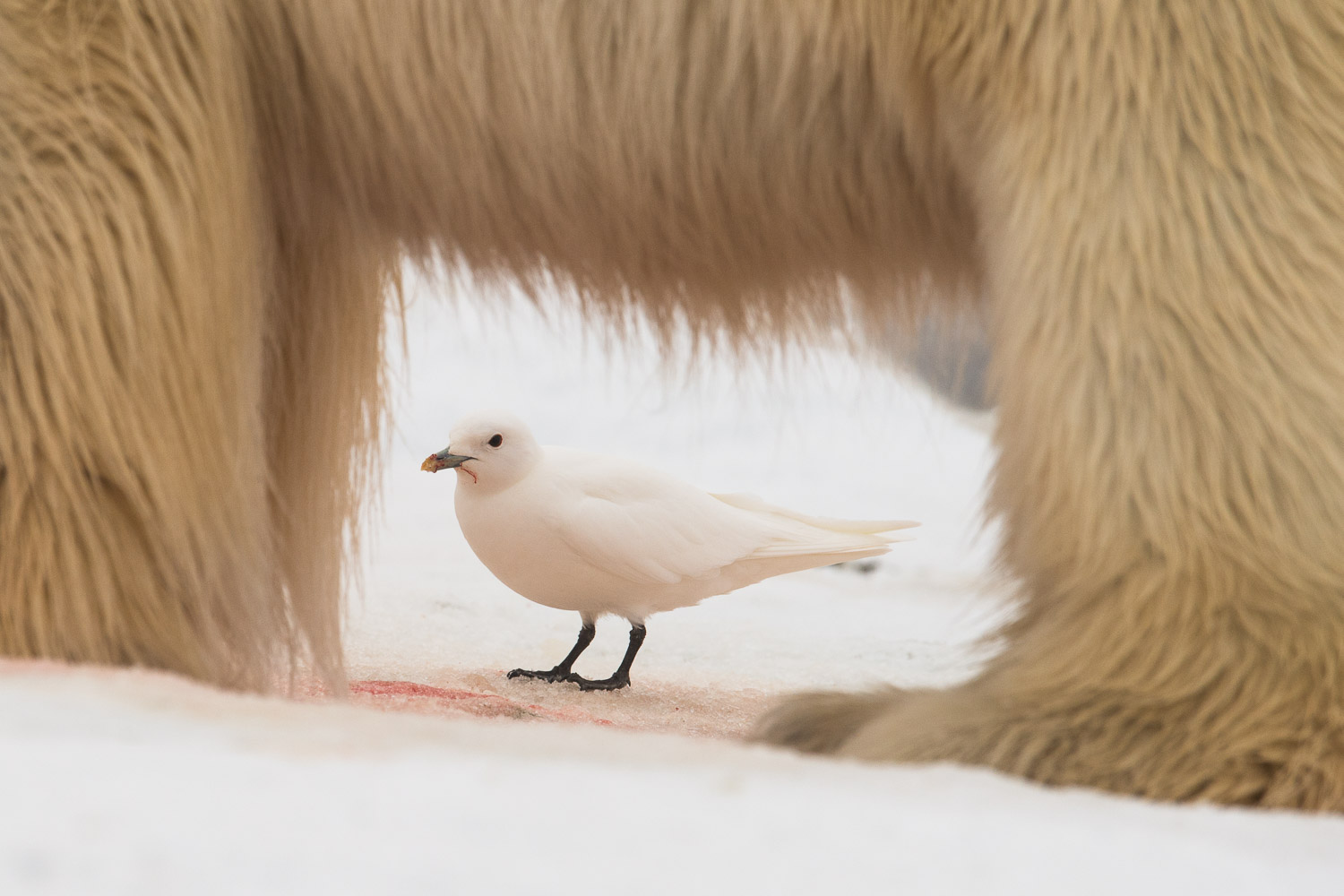
Ivory gulls migrate only short distances and can be observed in Svalbard for most of the year. By mid-March, they are found in the drifting sea ice, feeding on small fish and crustaceans. They are opportunistic and may scavenge on dead seals and porpoises killed by polar bears, often seen side-by-side with bears on fresh kills.
Most Ivory gulls in Svalbard breed in colonies on inaccessible old nunataks (mountain peaks protruding through glaciers). The species is among the least studied gulls in the world, with an estimated global population (in 2018) of 38,000–52,000 mature individuals.
If you join an 8–10 day photo expedition to the pack ice and glacier fronts, you have a high chance of observing and photographing Ivory gulls. The peak time is June to August, but they are also commonly seen in March, April, May, September, and October.
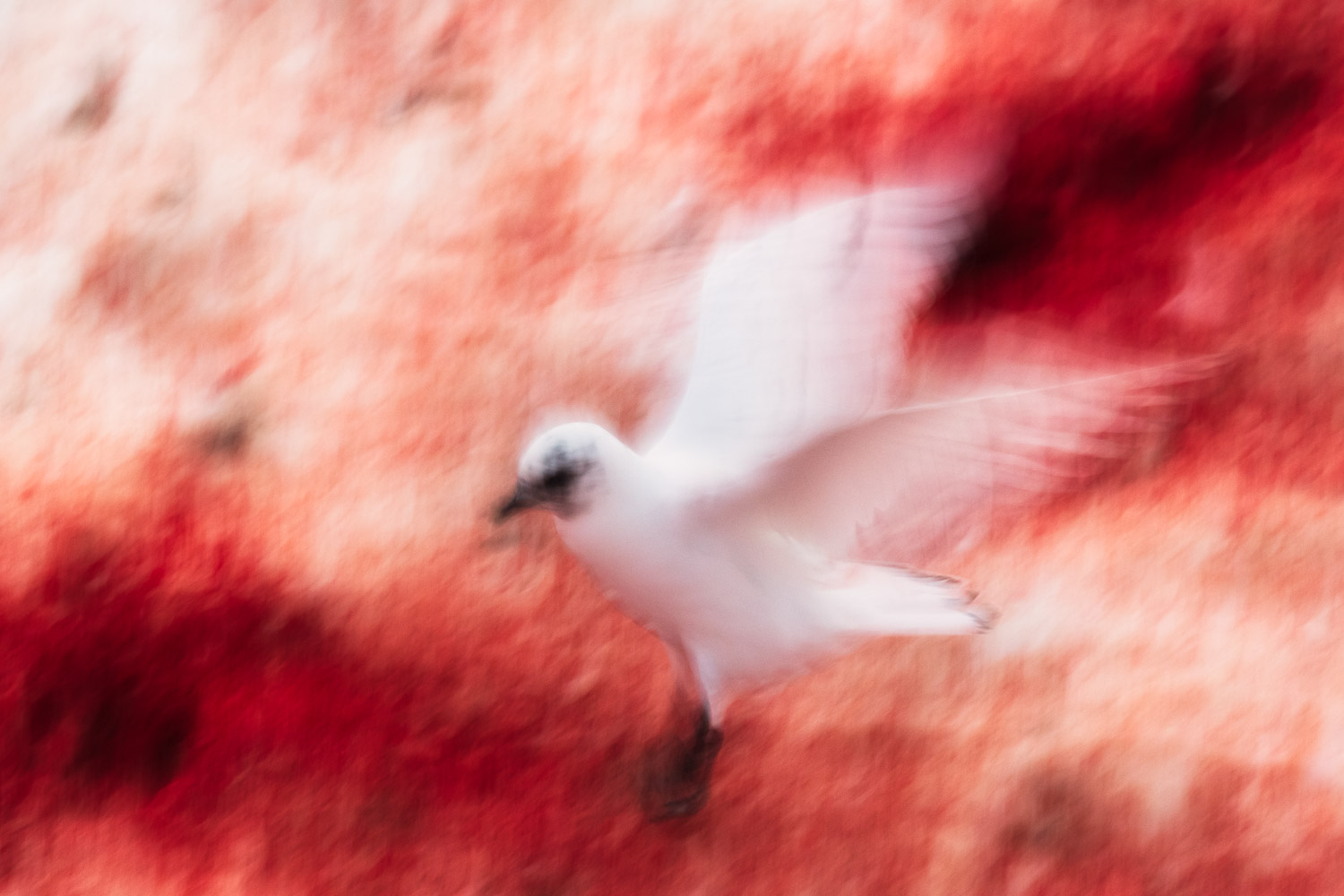
Where and when to photograph Ivory Gull
Ivory gull are most likely found in areas with sea ice or glacier ice. Up in the pack ice with drifting sea ice is the best area for Ivory gulls where they are searching for food at sea (in between ice floes) or on top of the sea ice. When joining a ship expedition to the pack ice, it is common to have flocks of Black-legged kittiwakes and Ivory gulls feeding on small fish surfacing when the ship is pushing ice floes.
Ivory gulls in the pack ice will search for any seal carcass or leftovers from polar bears. A successful polar bear with a seal kill will most likely be surrounded with Ivory gulls and Glaucous gulls within few minutes. Polar bears play a crucial role in ivory gull survival, providing scavenging opportunities on seal kills.
Ivory gulls are often seen in fjords with active glaciers. They can both be feeding in the slush ice for small fish, macro-zooplankton, and crustaceans, or they can rest on icebergs. Photographing white Ivory gulls in front of blue icebergs is one of the greatest photo opportunities you can have as a photographer in the Arctic.
The Latin name "Pagophila" means "ice-lover" and perfectly describes the habitat Ivory gulls are specialized to survive in. If there is glacier ice or pack ice in an area there might be chances to see and photograph Ivory gulls. To reach these areas it is highly recommended to participate on a ship expedition heading for the ice.
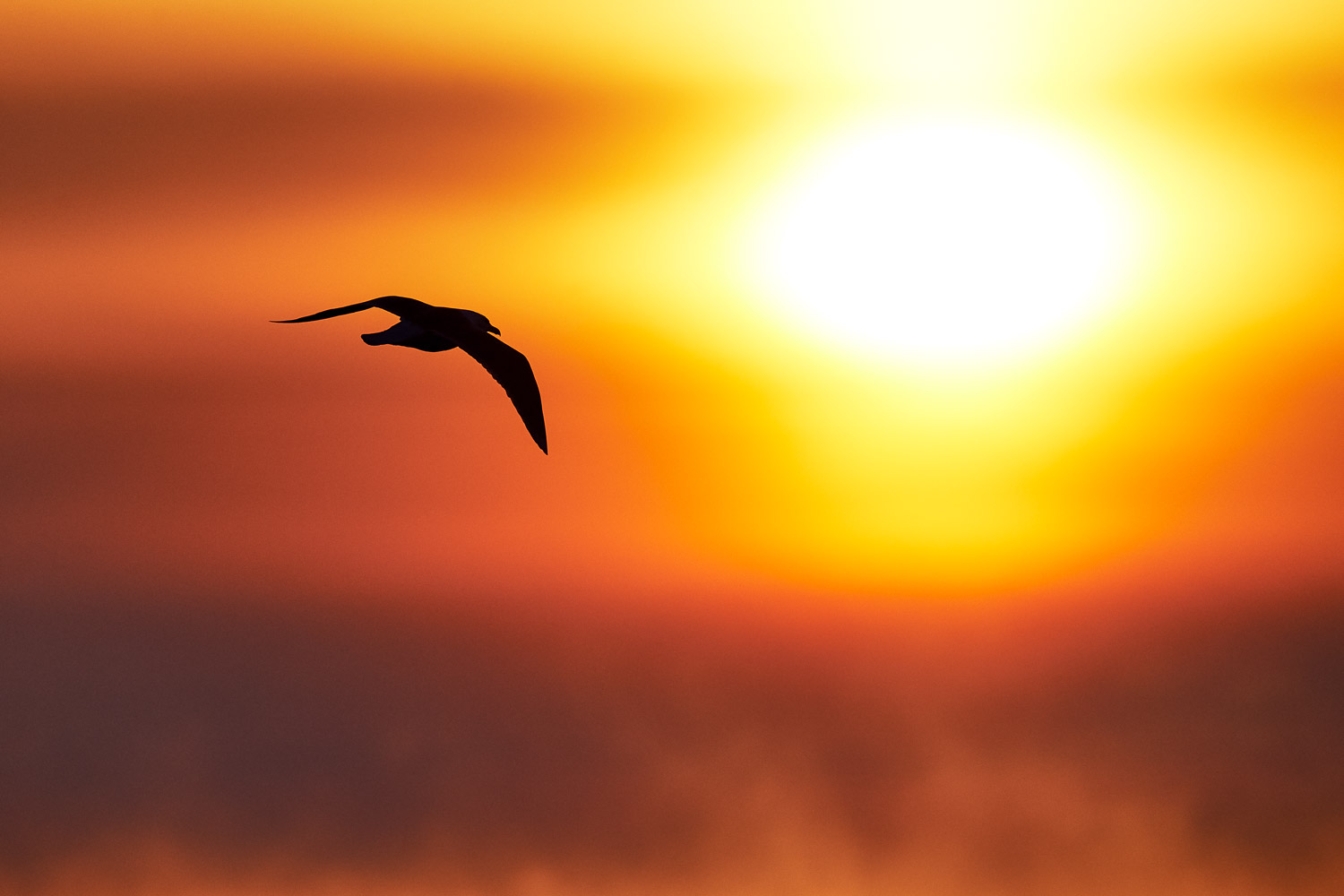
Ivory gulls can be seen and photographed in Svalbard from mid-March to October. It is especially magical to photograph these gulls in the pack ice in -20°C in March and April with magical light and frosty haze. Peak season for photographing Ivory gulls would be from June to August when more areas around Svalbard are accessible, and they are in breeding mode. Later in September and October the autumn light can be magical with orange or red colors.
King eider
Somateria spectabilis
Population: 850,000 | Weight: 0.9–2.2 kg | Wingspan: 86–102 cm | IUCN Status: Least Concern
King eiders generally have a more northerly distribution than Common eiders, but sometimes form mixed groups. The King eider is slightly smaller and more compact than the Common eider, but the male is one of the most colourful birds in the Arctic, with an orange, green, and blue head and a red bill. The female resembles the common eider female but has a more rounded head and shorter bill.
Where and when to photograph King Eider
King eiders are one of the most beautiful Arctic birds to photograph. They are easiest to photograph on the western coast of Spitsbergen – also close to Longyearbyen.
In Longyearbyen, they are frequently seen on small ponds along the road into Adventsdalen, where it might be possible to photograph them quite close if you are sitting or laying down (in the mud or wet tundra). At sea, they can form groups of 10-20 birds along the coast toward Longyearbyen airport or in Bjørndalen. Often they mix with Common eiders.
From an expedition ship or Zodiac, it is possible to photograph King eiders in fjords, when they are swimming, resting on ice floes for flying around. They might be quite shy at sea, and it is important to not chase groups on King eiders and force them to fly.
King eiders arrive in Svalbard by the end of April, where they can form big migratory flocks. By the end of May most of the birds have broken away from the flock to start breeding on the tundra. Later in summer they form new flocks, often close to shore, before the autumn migration south to northern parts of Norway (Troms and Finnmark).
Little Auk
Alle alle
Population: 40,000,000 | Weight: 0.1–0.2 kg | Wingspan: 34–38 cm | IUCN Status: Least Concern
The Little auk is the only North Atlantic alcid that feeds almost exclusively on zooplankton. As zooplankton is relatively nutrient-poor, little auks must consume around 80% of their body weight each day. They are the smallest and most numerous of the auks, with over one million pairs breeding in Svalbard across more than 200 colonies. The world’s largest known colony is at Thule, Greenland, with about 30 million breeding pairs.
Where and when to photograph Little Auk
Little auks can be photographed along the coast of Svalbard — mainly in the western parts of Spitsbergen — where there are mountains, as well as out in the pack ice. They are quite tolerant of photographers, but as always, it is important to maintain a respectful distance to avoid disturbing the birds.
The easiest access to Little auks in Svalbard is in Bjørndalen (a 20-minute drive from Longyearbyen), where they have a small breeding colony on the steep scree slopes. It is not advisable to walk too close to the colony due to loose stones, which can both cause injury and damage the entrances to the birds' nests. Birds from this colony can be photographed as they fly in and out, usually in groups. In summer, when walking through Longyearbyen, you can often hear their distinctive call — sounds like light laughter — echoing from the surrounding mountains.
In the drifting sea ice, Little auks can be seen swimming or diving between ice floes, or resting on the ice itself. They usually form small groups and are a common sight in areas of broken, drifting ice.
The best time to photograph Little auks is from April to the beginning of September, with peak activity during the breeding season in June.
Long-tailed Duck
Clangula hyemalis
Population: 3,500,000 | Weight: 0.5–1.1 kg | Wingspan: 65–82 cm | IUCN Status: Vulnerable
Long-tailed ducks often benefit from breeding near aggressive species such as the Arctic tern, which offer some protection from predators. They are among the deepest-diving ducks, reaching depths of 60 metres, and spend more time underwater than any other duck. Unlike most ducks, which have two moulting seasons per year, the Long-tailed duck has three, making its plumage highly variable.
Where and when to photograph Long-tailed Duck
Long-tailed ducks can be seen and photographed mainly in the western parts of Spitsbergen. Around Longyearbyen there are two main options, with Isdammen – the local freshwater reservoir – and the ponds close to the closest dog yard as the main area to look for them. Another area is the freshwater ponds from the camp yard (close to the airport) and a few hundred meters toward Bjørndalen. Both areas will hopefully give opportunities to photograph the Long-tailed duck especially during the early Arctic summer when they have prime breeding plumage.
Best time to photograph Long-tailed ducks is from late May to mid-June when they are very active.
Long-tailed Skua
Stercorarius longicaudus
Population: 1,000,000 | Weight: 0.2–0.4 kg | Wingspan: 102–117 cm | IUCN Status: Least concern
The Long-tailed skua is the smallest and most slender of the Arctic skuas, with a graceful flight similar to a large tern. In breeding plumage, it is unmistakable due to its extremely long tail. In Svalbard, it is encountered annually in small numbers along the coastal tundra. The scarcity of small rodents (except in a few areas) likely explains its rarity in Svalbard.
Where and when to photograph Long-tailed Skua
The Long-tailed skua is a rare bird in Svalbard, breeding on coastal tundra. They can be seen in some fjords in Spitsbergen (like Kongsfjord and Ekmanfjord) and Nordaustlandet, but never more that 1–4 birds if you are in their breeding area. At sea they might sit on small icebergs waiting for intercepting seabirds with some food to steal – similar to the Arctic skua.
Best time to photograph Long-tailed skuas is during the breeding season from June to August.
Northern Fulmar
Fulmarus glacialis
Population: 25,000,000 | Weight: 0.4–1.0 kg | Wingspan: 102–112 cm | IUCN Status: Least concern
The Northern fulmar is one of the most numerous seabirds in Svalbard, nesting on steep coastal cliffs. They often return to the same nesting sites each year and have the longest incubation period of any Svalbard bird - seven weeks. It takes a further eight weeks from hatching for the chick to fledge.
The Northern fulmar is probably the most photographed bird in Svalbard. It is a faithful companion for boaters, gliding effortlessly over the ocean and often following expedition ships. Even in mid-March, when few other birds are present, Northern fulmars can be photographed at sea. They provide excellent photo opportunities at sunrise, sunset, or during the golden hours of the midnight sun, gliding behind or alongside ships.
Where and when to photograph Northern Fulmar
Northern fulmars are easy to photograph in Svalbard, especially if you participate on a ship-based expedition. The fulmars can follow ships at sea gliding behind or on the side of ship, sometimes very close. This can provide multiple photo opportunities.
In some fjords in western Spitsbergen the Northern fulmars can gather in flocks of 100+ birds flying low above the surface, or resting on sea (when it is no wind). In more open water they are especially numerous in areas where big whales are feeding, foraging together with other seabirds.
Northern fulmars are also common to see up in the pack ice. Most often you will see them gliding just above the ice floes, or sometimes landing to feed on something on the surface. Even in winter or late autumn the Northern fulmars are visiting the pack ice.
You can photograph Northern fulmars almost all time in Svalbard when there is light enough, meaning from mid-March to mid-October. Peak season would be from late May to August, when they are breeding in coastal cliffs, and are most numerous in costal areas.
Pink-footed Goose
Anser brachyrhynchus
Population: 550,000 | Weight: 1.8–3.4 kg | Wingspan: 135–170 cm | IUCN Status: Least concern
The Pink-footed goose is the largest of the three goose species nesting in Svalbard. Its pink legs can be hard to spot at a distance or in poor light, but its body is quite distinct from the Barnacle goose and Brant geese. Pink-footed geese are often seen feeding on the tundra or beneath bird cliffs, but they are not easy to photograph, as they are easily disturbed and will fly off even from a few hundred metres away.
Where and when to photograph Pink-footed Goose
Pink-footed geese can be seen and photographed around Longyearbyen, Adventsdalen and coastal tundra mainly on Spitsbergen. They are the most numerous goose species in Svalbard and can form large groups on the tundra.
Pink-footed geese arrive Svalbard in late May and early June and are easy to find on the tundra close to Longyearbyen – in Adventsdalen or near the airport. Later in June and July they will be less visible during breeding / hatching, before they form large groups of moulting in late July. During this moulting period the adults cannot fly and they are vulnerable for stress and close encounters. They might form large groups just outside Longyearbyen in the Isdammen area. In September they migrate south.
Pomarine Skua
Stercorarius pomarinus
Population: 1,000,000 | Weight: 0.5–0.9 kg | Wingspan: 110–138 cm | IUCN Status: Least concern
The Pomarine skua is the second largest skua species in the Arctic, after the Great skua. Adults are recognised by their broad, club-shaped, long tail feathers, which are twisted at the ends. The Pomarine skua does not breed in Svalbard but is regularly observed along the coast and in surrounding waters, especially in areas with glacier or sea ice.
Where and when to photograph Pomarine Skua
Pomarine skuas are breeding in high Arctic tundra in Russia, Canada and Alaska, where their breeding success is highly dependent on the lemming cycle. Juvenile and adult birds are quite common to see around Svalbard, usually at sea and in coastal areas of Hinlopen, Nordaustlandet, Kvitøya, and in the drifting pack ice — not so often along the western coast of Spitsbergen. During a 8–10 days ship-based expedition you are almost guaranteed to see and photograph Pomarine skua, especially on trips including the northeastern parts of Svalbard.
The best time to photograph Pomarine skuas is between June to September, with peak activity in late August and September.
Purple sandpiper
Calidris maritima
Population: 250,000 | Weight: 0.1 kg | Wingspan: 42–46 cm | IUCN Status: Least concern
The Purple sandpiper is a small shorebird, slightly larger than the Dunlin, and is the most common wader in Svalbard. It breeds on relatively dry tundra across most of the archipelago and is usually found around inland ponds or in the intertidal zone, feeding on small crustaceans, insects, and other invertebrates. The Purple sandpiper is one of the easiest birds to photograph in Svalbard, as it is not shy and is easily approached by Zodiac when feeding along the shoreline.
Where and when to photograph Purple sandpiper
Purple sandpipers can be seen and photographed along the coastal rocky shores of the main islands. The easiest approach to photograph these small shorebirds is to visit the ponds around "Hundegården" and into Adventsdalen, or near the camp site toward Bjørndalen. Especially in early summer there will usually be a few birds to photograph in these areas.
With a Zodiak it is possible to photograph Purple sandpipers at low tide when they are foraging in the rocks and kelp almost in the water. With some waves it can provide interesting pictures of birds surrounded with splashing water.
Best time to photograph Purple sandpipers is in late May and early June when they prepare for the breeding season and can be found on mudflats, small ponds or on the tundra. Later in autumn they will gather along the coast, making these quite tame birds nice for photography.
Razorbill
Alca torda
Population: 2,000,000 | Weight: 0.5–0.9 kg | Wingspan: 60–69 cm | IUCN Status: Least concern
The Razorbill usually breeds in temperate and low-Arctic coastal regions of the North Atlantic and is quite rare in Svalbard. The total breeding population in Svalbard is estimated at about 100 pairs, the majority on Bjørnøya. Razorbills from Svalbard most likely winter off southern Norway.
Where and when to photograph Razorbill
Razorbills in Svalbard are rare, and your best chance is to look for them in Bellsund and Krossfjorden. They are best spotted along sea cliffs during breeding season, in similar areas where you can find Black guillemots. Your best chance to visit these areas is with a ship-based expedition.
June and July is the prime breeding season for Razorbills, where they can be seen at cliff nesting sites. However, they nest in small numbers, so don't expect to see them in Svalbard – except if you have a chance to visit Bjørnøya further south. Later in the season it might be possible to see Razorbill at sea.
Red phalarope
Phalaropus fulicarius
Population: 10,000,000 | Weight: 0.04–0.06 kg | Wingspan: 41–44 cm | IUCN Status: Least concern
The Red phalarope, or Grey phalarope, is a small wader similar to the Red-necked phalarope. It breeds in Arctic regions of North America, Europe, and northern Siberia. In Svalbard, Red phalaropes breed across most of the archipelago, with the highest densities on Spitsbergen, Tusenøyane, and Bjørnøya.
Red phalaropes have “reversed” sex roles: the female performs courtship displays and defends the territory, while the male incubates the nest and rears the young. They can mainly be photographed at sea or in small inland ponds, where they swim in circles to bring food to the surface.
Where and when to photograph Red phalarope
Your best chance to photograph Red phalaropes is on freshwater tundra ponds, in similar areas as you can find Dunlin and Purple sandpiper. Around Longyearbyen the best areas are in Adventsdalen and close to the airport. Hopefully you will find a few birds in these areas.
During a ship-based expedition it is also possible to find Red phalaropes at sea in costal areas – often between small islands – where they might form small groups. Feeding birds will swim in quick circles feeding on the surface.
Best time for photographing Red phalarope is in June and July when they are breeding.
Red-necked phalarope
Phalaropus lobatus
Population: 5,000,000 | Weight: 0.02–0.05 kg | Wingspan: 31–41 cm | IUCN Status: Least concern
The Red-necked phalarope, also known as the Northern phalarope, is slightly smaller than the Red phalarope, with a thinner bill and red colouring only around the throat and neck. It breeds in a circumpolar range in boreal, sub-Arctic, and Arctic zones, near wet marshes and ponds.
Where and when to photograph Red-necked phalarope
In Svalbard, the Red-necked phalarope is less abundant and has a more southern distribution (Bjørnøya and the west coast of Spitsbergen) than the Red phalarope. However, they might be seen in Adventdalen, close to Longyearbyen, on tundra ponds and lakes
Best time to photograph Red-necked phalaropes is from mid-June to July, when they have breeding behaviour and courtship.
Red-throated diver
Gavia stellata
Population: 400,000 | Weight: 1.2–1.9 kg | Wingspan: 106–120 cm | IUCN Status: Least concern
The Red-throated diver is the smallest of the world’s four diver species. It is easily recognised in flight by its long neck, which is held outstretched and slightly arched downwards, with the head slightly upturned.
They prefer nesting on small, shallow freshwater ponds, lagoons and bogs, usually on islands or near the coast.
Where and when to photograph Red-throated diver
The Red-throated diver breeds throughout Svalbard, with the highest nest densities in western Spitsbergen, on Bjørnøya, and within Tusenøyane. Close to Longyearbyen, there are a few pairs breeding in Adventdalen, where at least one of them is seen close to the road.
During a ship-based expedition it is also possible to see and photograph Red-throated divers in coastal areas of Spitsbergen, and all the way east to Storøya. Most likely you will see them flying toward their nesting site or fishing at sea. The distance will usually be much longer than the birds breeding in Adventsdalen.
Best time to photograph Red-throated divers is during their peak breeding season from June to August. Most birds arrive in May, and will stay in the Svalbard archipelago until end of September or beginning of October.
Ross's gull
Rhodostethia rosea
Population: 50,000 | Weight: 0.14–0.25 kg | Wingspan: 108–120 cm | IUCN Status: Least concern
Ross’s gull is the smallest gull in Svalbard, almost the size of an Arctic tern. The adult’s summer plumage is distinctive, with pale grey wings, a white-pink body, and a neat black neck ring. The species mainly breeds in north-eastern Siberia and the southern Taymyr Peninsula in Russia.
In autumn, these birds lose much of their pink body colour and black neck ring, but display a dark “W” pattern on the upper side of the wings in flight. For keen birders and photographers, Ross’s gull is likely among the most elusive bird to see and photograph in Svalbard, but sightings are rare and almost exclusively in autumn.
Where and when to photograph Ross's gull
Sabine’s gull
Xema sabini
Population: 450,000 | Weight: 0.13–0.23 kg | Wingspan: 81–87 cm | IUCN Status: Least concern
Sabine’s gull is a highly sought-after species for birders and photographers visiting Svalbard. It has a dark head and a slightly forked tail. In flight and general body shape, it resembles a tern, being more slender than the kittiwake and with proportionally narrower, longer wings. Sabine’s gulls nest in tundra areas, especially on small islands with freshwater ponds.
Where and when to photograph Sabine’s gull
In Svalbard, Sabine’s gull is a rare but regular breeder on Moffen, Lågøya, Kvitøya, Isfjorden, Storfjorden, and a few other areas. These areas are only accessible with expedition ships, but some of these areas are protected with distance rules. Best chance to photograph Sabine's gulls is just outside the protected areas, where it is allowed to approach the beach where they might be without violating any laws.
Sabine's gulls can also feed with other gulls or terns in front of glaciers, or freshwater rivers, where there are nutrition whirled up to the surface. These areas might be possible to visit during a Zodiac trip on a ship-based expedition to remote areas in Svalbard.
June to August is the breeding season for Sabine's gulls and is the best chance to at least see these rare birds in Svalbard. Pay attention to juvenile birds that often are confused with juvenile Black-legged kittiwakes, that also have a bold black "W" visible across the top of their wings.
Snow Bunting
Plectrophenax nivalis
Population: 29,000,000 | Weight: 0.03–0.04 kg | Wingspan: 32–38 cm | IUCN Status: Least concern
The snow bunting is the most common passerine species in Svalbard. It is often found near settlements but also breeds among auks in the bird cliffs around Spitsbergen. Like many Arctic species, it has perfectly adapted black and white plumage. The snow bunting is the world’s most northerly breeding passerine and has its own alarm call for Arctic foxes in Svalbard. Remarkably, snow buntings have even been observed at the North Pole.
Where and when to photograph Snow Bunting
Snow buntings are found around Longyearbyen where they are nesting in the slopes. These birds also like to breed below bird cliffs where there are lots of nutrition.
Snow bunting males arrive Svalbard in late March, during the cold Arctic winter. Females arrive later in May, when courtship begins. June and July is peak time to photograph the buntings when they are busy finding all the food for hungry chicks.
Svalbard ptarmigan
Lagopus muta hyperborea
Population: 8,000,000 | Weight: 0.5–1.2 kg | Wingspan: 55–66 cm | IUCN Status: Least concern
The Svalbard ptarmigan is a subspecies of the rock ptarmigan found elsewhere in Europe, but the Svalbard form has some unique features. Up to 40% of its body weight in late autumn is fat. Around 1 July, the Svalbard ptarmigan weighs only about half as much as it does in early winter, highlighting the energy demands of winter and the courtship season. The Svalbard ptarmigan is the only land bird present in Svalbard year-round.
Where and when to photograph Svalbard ptarmigan
Svalbard (Rock) ptarmigan is quite common around Longyearbyen settlement, in Adventsdalen and surrounding slopes. Frequently they fly down to the tundra below to easier find food, where they can form small groups walking on the ground. From Longyearbyen both Adventsdalen and Bjørndalen would provide good photographic opportunities for ptarmigans close to the roads.
Since Svalbard ptarmigan is present all year, the can be photographed in mid-March when the light is coming back, until mid-October when the Arctic darkness is slowly take over. Males are vocal in March and April securing their territory before the females arrive. Photographing white ptarmigans in winter is very nice since they are more active, and the light and winter landscape can be extraordinary. Later in summer then change to a darker plumage.
Thick-billed Murre
Uria lomvia
Population: 20,000,000 | Weight: 0.7–1.5 kg | Wingspan: 64–81 cm | IUCN Status: Least concern
One of the greatest experiences for photographers visiting Svalbard is spending time near one of the large bird cliffs. With tens of thousands of seabirds flying around, the spectacle is overwhelming - not only the first time you witness it.
The Thick-billed murre (Brünnich’s guillemot) is a compact, robust bird, with around 14,000 feathers compared to about 6,000 in larger gulls. Thick-billed murres breed on steep cliffs, laying their single egg directly on the rock without building a nest. The egg is asymmetrically shaped, with one end much more pointed than the other, so it rolls in circles rather than falling off the ledge.
Where and when to photograph Thick-billed Murre
The best place to photograph Thick-billed murre is close to one of the large bird cliffs in the archipelago. The prime destination is Alkefjellet bird cliff where the number som birds are overwhelming. Flying birds in and out of the cliffs are massive – like a swarm of insects. On the surface, birds are resting or washing of bird shit from their neighbours, forming groups of hundreds of birds. These bird cliffs are only accessible with Zodiacs from expedition ships.
Thick-billed murres can also be photographed in flight to or from the pack ice where they feed on small fish, squid and crustaceans. They are usually forming groups of 10–100 birds, that can be nice to photograph with great landscape in the background, or panning with slow shutter speed.
Best time to photograph Thick-billed murre is during their breeding season from June to August where they are gathering in the bird cliffs. If possible to visit bird cliffs in May it can offer unique photographic opportunities with birds sitting in the cliffs surrounded by snow and ice.
By the end of the breeding season the chicks jump from the cliffs last week of July or beginning og August. This can be spectacular to watch and photograph when the parents try to help the chick to reach the water. The chicks are not 100% safe when they reach the water. Glaucous gulls, Great skua and other predators are watching the happening and eat as many birds then can. Surviving chicks swim away from the bird cliffs and have about two month foraging before they need to migrate south.
Best Camera Gear for Arctic Bird Photography in Svalbard
When travelling to the remote wilderness of the Arctic, it is important to bring the right equipment cameras and lenses to capture your desired bird images. Below is a list of important camera features and recommended lenses.
By packing thoughtfully and choosing high-quality camera gear, you will be well-equipped to capture unforgettable moments and the unique beauty of Arctic birds in Svalbard, all while protecting both your equipment and the pristine environment.
Seasons for Arctic Bird Photography
Are you interested in photographing Arctic birds in Svalbard? WildPhoto Travel is a quality photo expedition company, with tons of experience from Svalbard and the Arctic. Click on any of the images below to explore more about different seasons for Arctic bird photography in Svalbard.
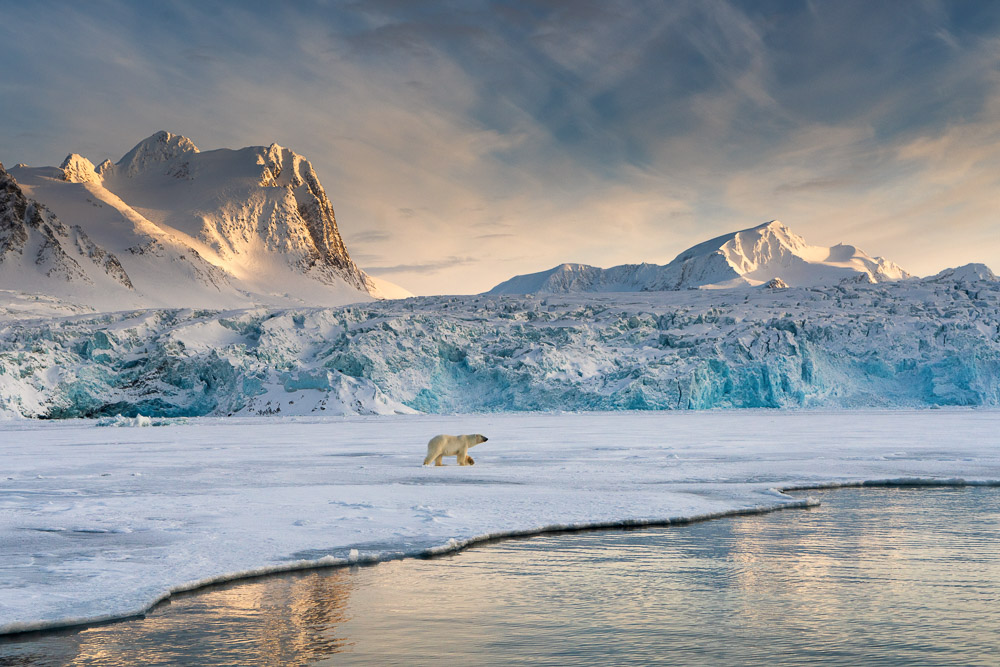
Svalbard Winter Extreme
Photo Expeditions to Svalbard in March and early April with amazing light conditions.
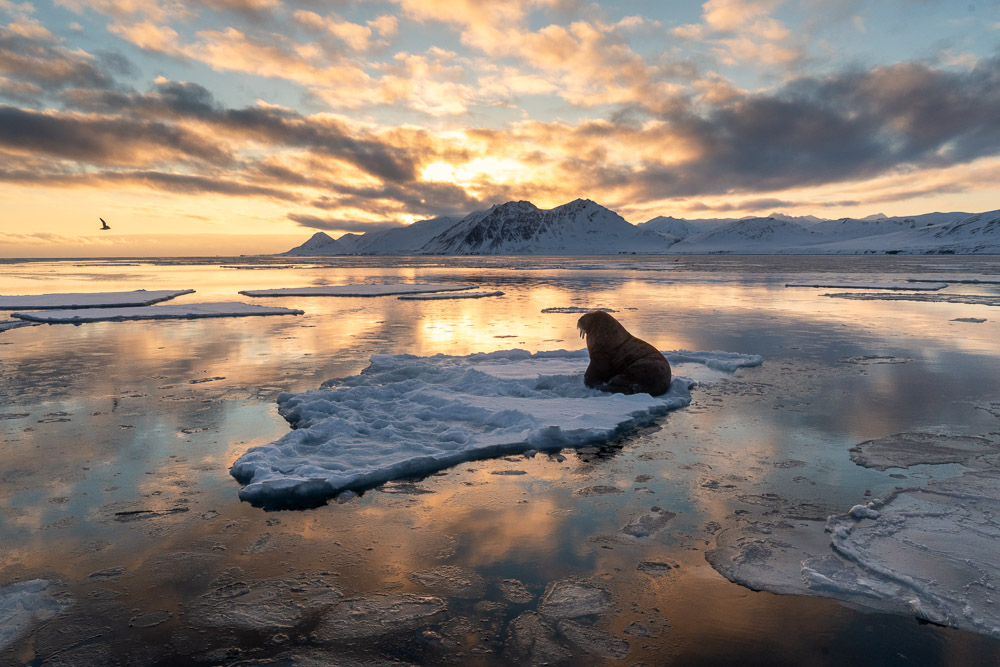
Svalbard Winter Glow
Photo Expeditions to Svalbard in April and May, celebrating the return of the Midnight Sun.
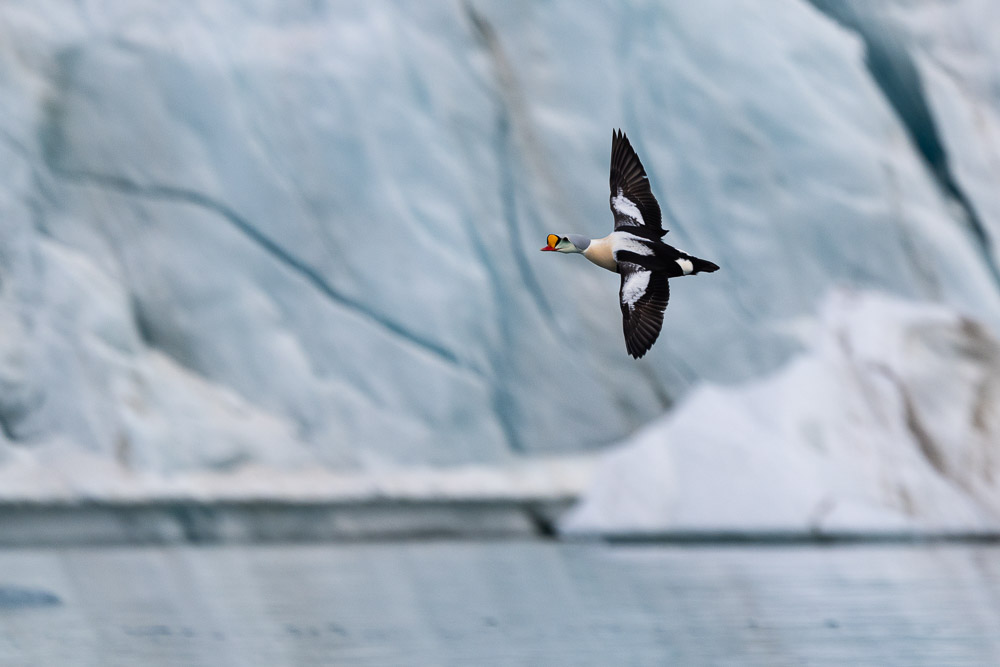
Svalbard Spring Awakening
Photo Expeditions to Svalbard in May and June when Arctic birds and wildlife are preparing for the Summer.
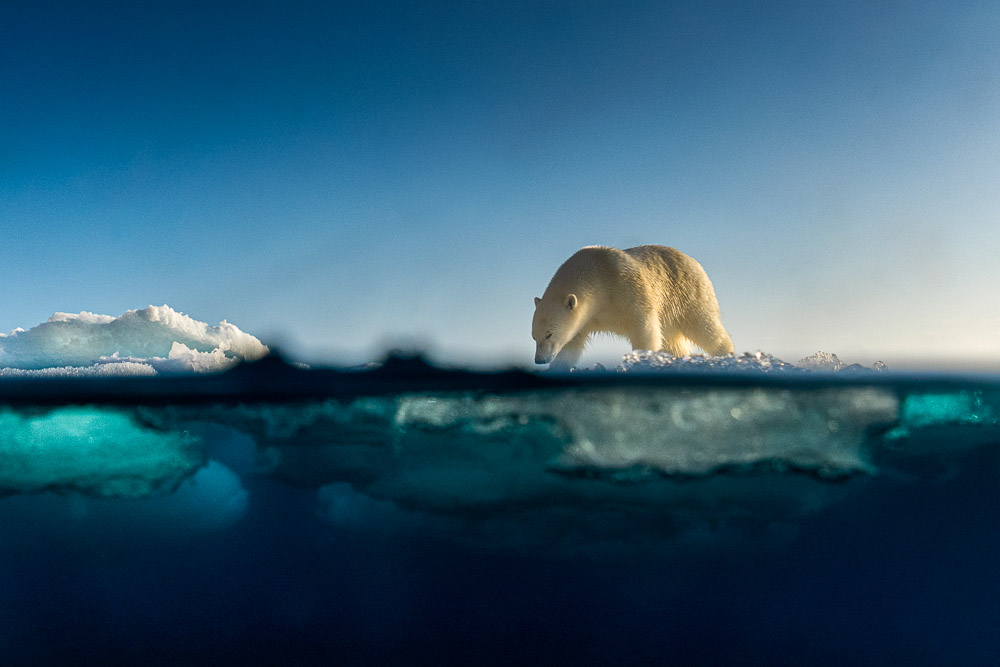
Svalbard Summer Dream
Photo Expeditions to Svalbard in July and August enjoying Summertime in the Arctic.
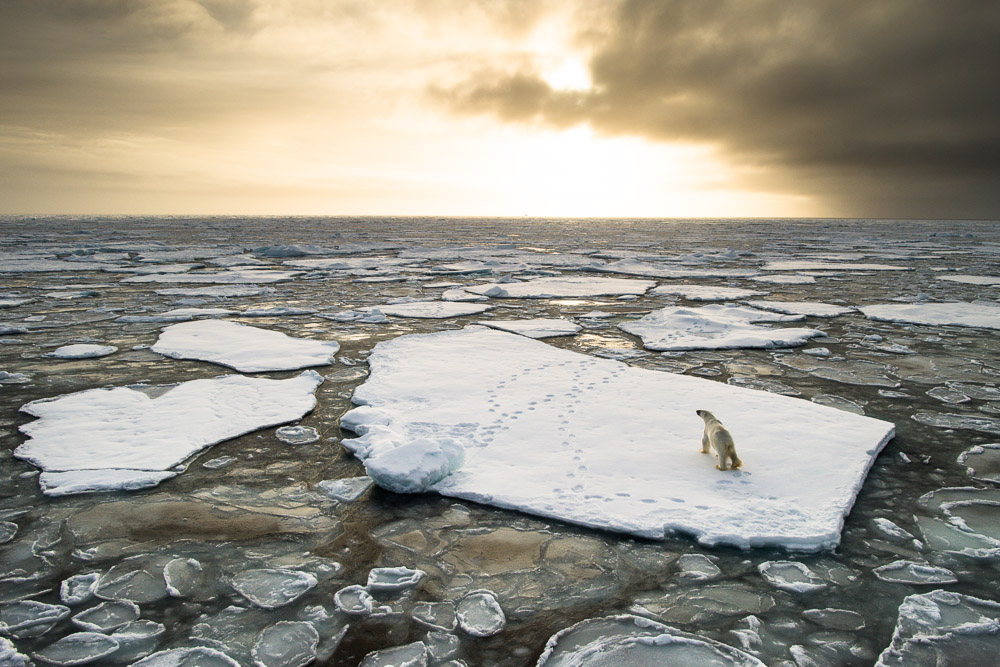
Svalbard Autumn Magic
Photo Expeditions to Svalbard in September and October with Magic Autumn Light.

Svalbard Below Surface
Underwater Photography & Snorkeling Expeditions to Svalbard in June.
Learn More
Below is a selection of other WildPhoto Expert Tips related to bird and wildlife photography that you might find interesting.