


Expert tips
Penguins
Of the South
King penguin
How to Photograph Penguins in Antarctica and South Georgia

Penguins are among the world's most fascinating and beloved birds, captivating photographers and wildlife enthusiasts with their charismatic personalities and remarkable adaptations. Antarctica and South Georgia are two of the best destinations for penguin photography, with six distinct species offering great photographic opportunities.
This guide provides important information for planning your next penguin photography trip to Antarctica or South Georgia.

Ole J Liodden | Published: May 5, 2025 | 5 min read
Last Update: Apr 28, 2026
Penguin Species of Antarctica and South Georgia
Below, you will find an alphabetical overview of the six penguin species – Adélie, Chinstrap, Emperor, Gentoo, King and Macaroni penguin – that breed in Antarctica and/or South Georgia. Each species is accompanied by detailed descriptions, distribution maps and graphics to help you plan where and when to photograph penguins.
Adélie Penguin
Pygoscelis adeliae
Population: 10,000,000 | Weight: 3.8–8.2 kg | Length: 70–73 cm | IUCN Status: Least Concern
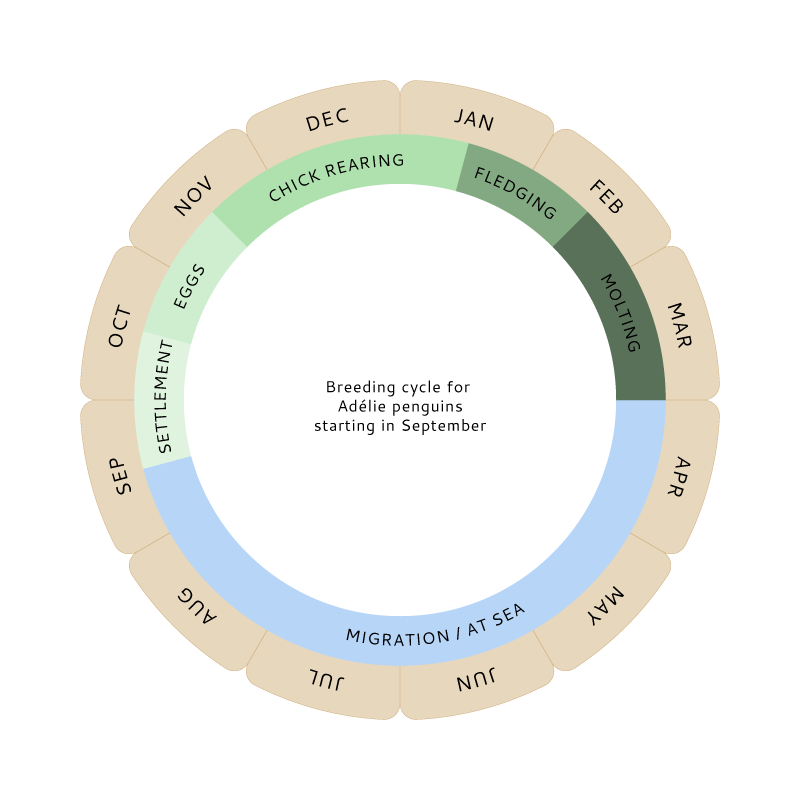
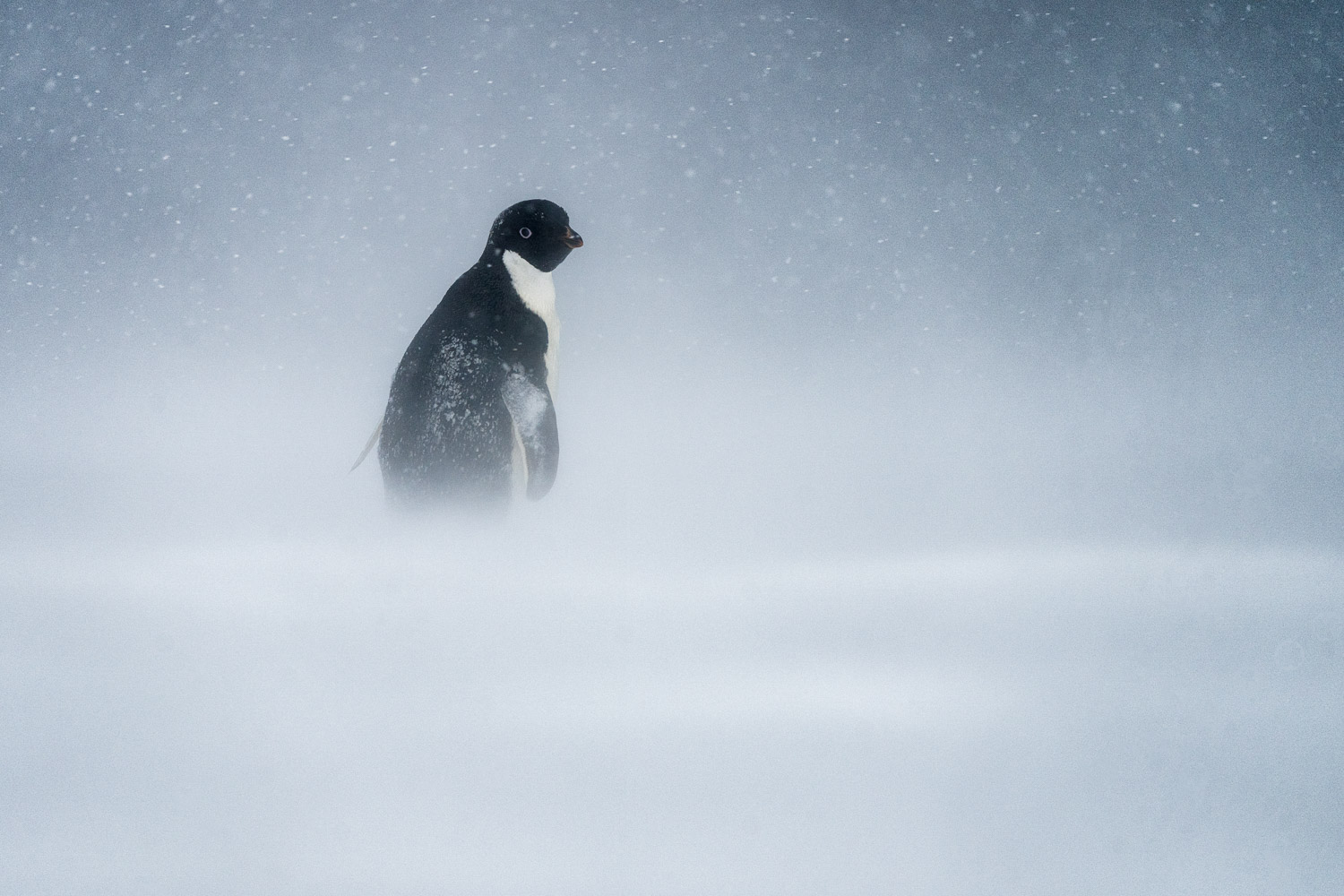
The Adélie penguin (Pygoscelis adeliae) was named after Adélie Land by the French explorer Jules Dumont d’Urville in 1840. These medium-sized penguins, with males slightly larger than females, typically weigh between 3.8 kg and 5.8 kg, depending on the stage of the breeding season. Their annual cycle is closely synchronised with the Antarctic summer, as Adélie penguins return to land between September and October to begin breeding.
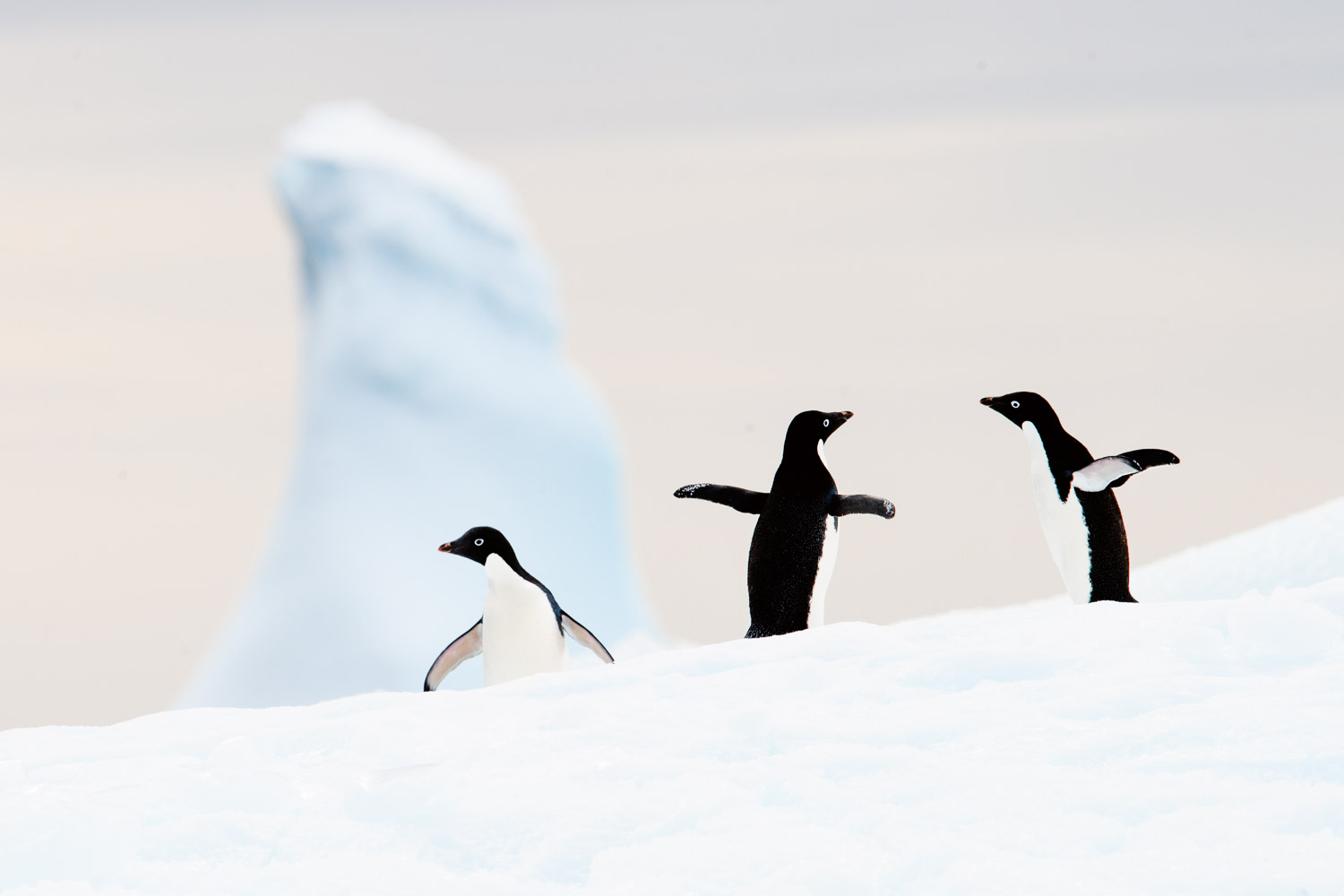
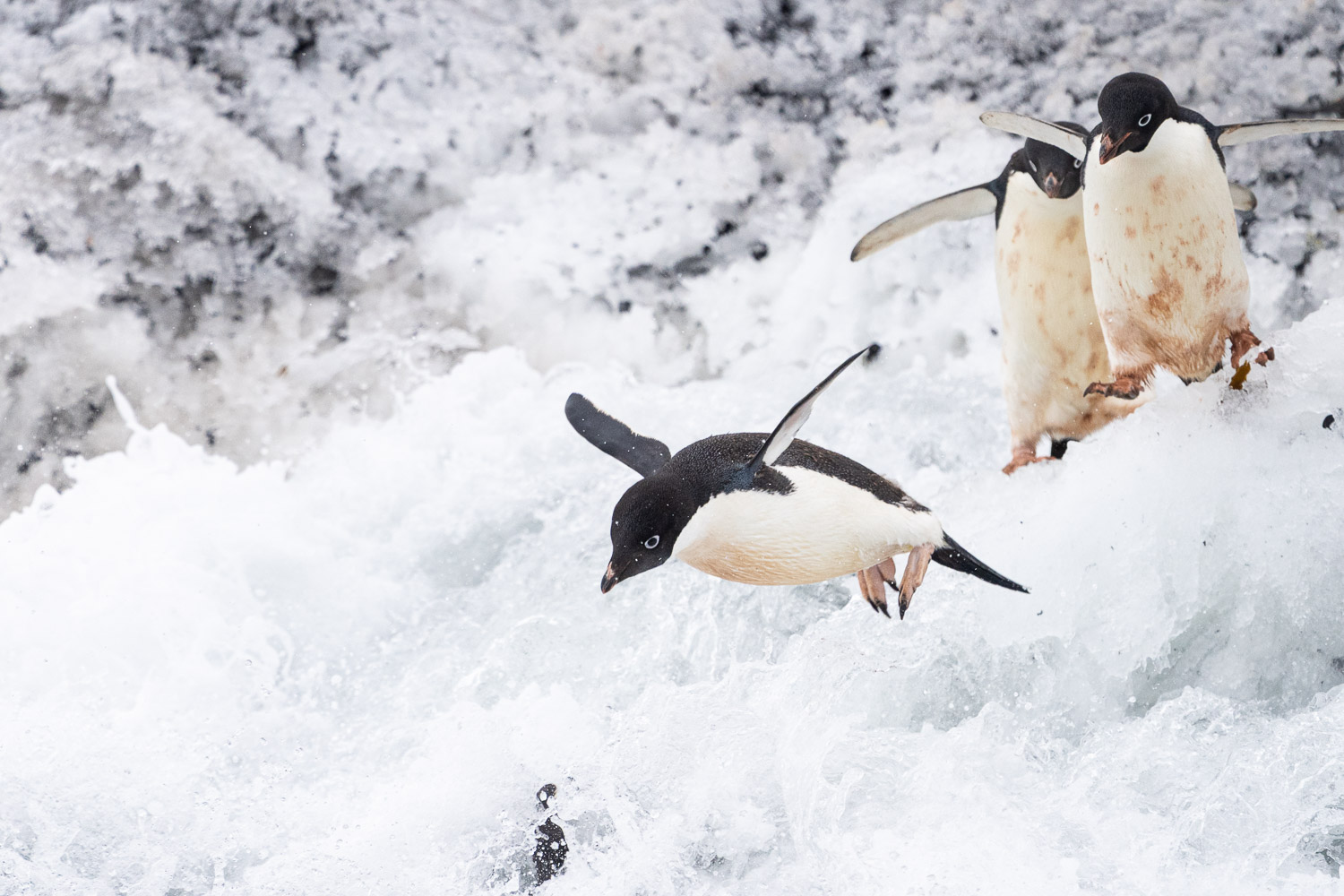
Unlike some other penguin species, the Adélie penguin’s classic black and white plumage lacks the exotic crests of Macaroni and Rockhopper penguins or the colourful throat patches seen in King and Emperor penguins. However, this simple plumage provides excellent camouflage — black backs blend with the dark ocean depths when viewed from above, while white bellies match the bright sea surface when seen from below, helping to protect them from predators and aiding in hunting prey.
With an estimated 2.5 million breeding pairs across the Antarctic continent, Adélie penguins are among the most abundant penguin species. When observing or photographing Adélie penguins, it is essential to maintain a respectful distance, avoid disturbing nests, and never interfere with their natural behaviour.
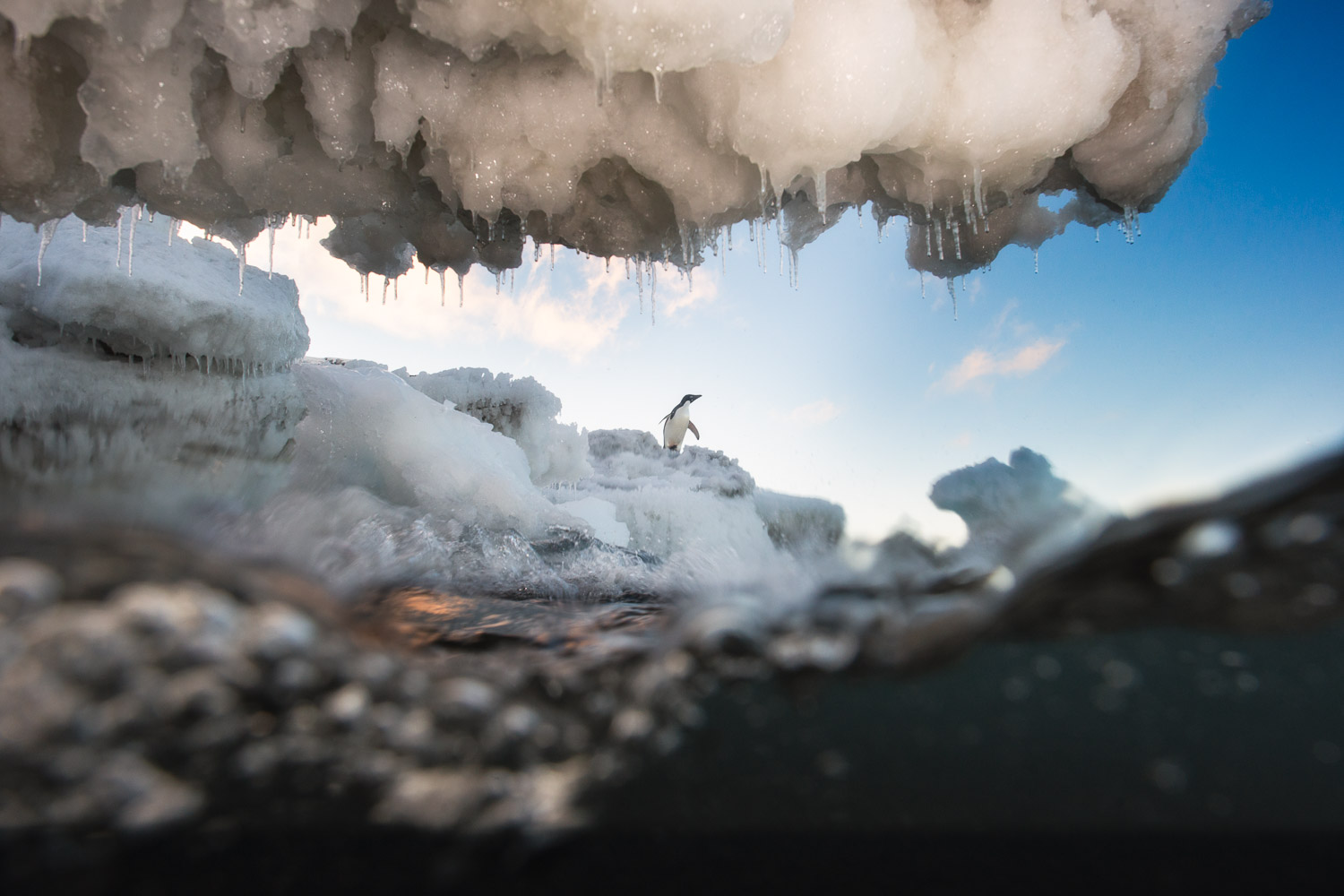
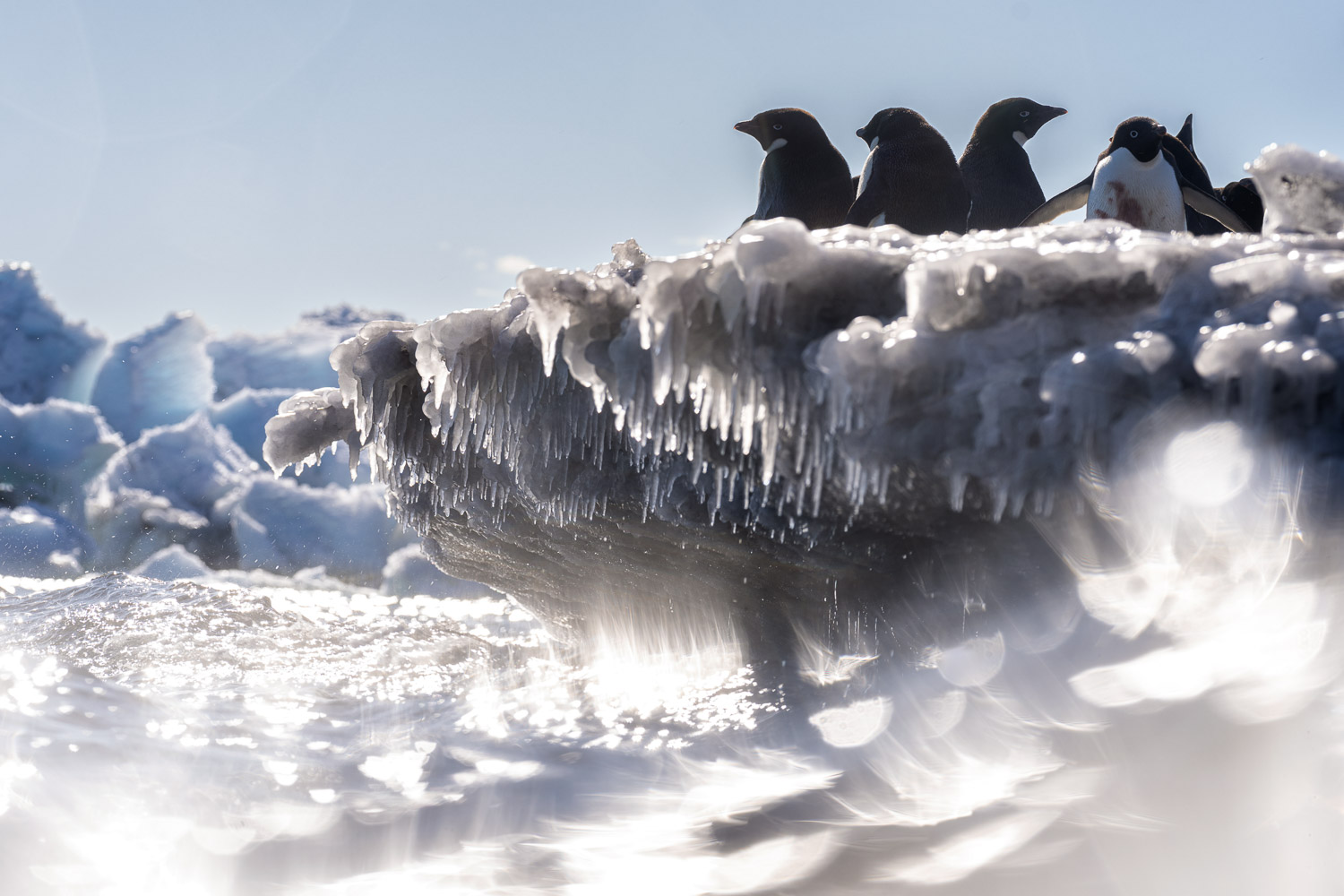
Adélie penguins are highly dependent on sea ice for foraging, resting, and breeding, making their populations particularly vulnerable to the impacts of climate change. By understanding their behaviour, ecology, and the challenges they face, you can create powerful images that not only highlight the unique beauty of Adélie penguins but also help raise awareness for their conservation.
Where to photograph Adélie penguins
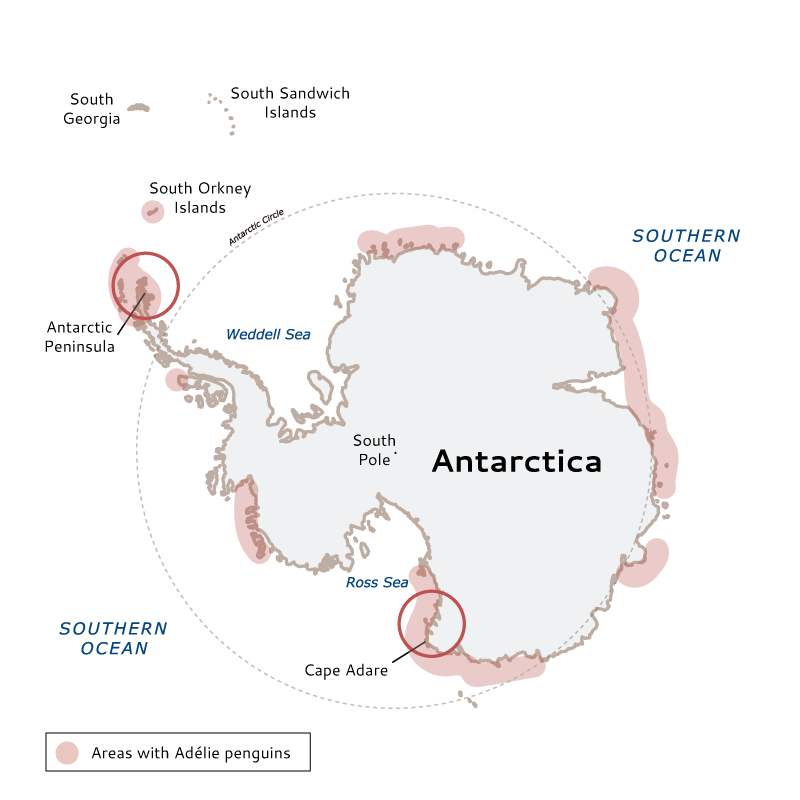
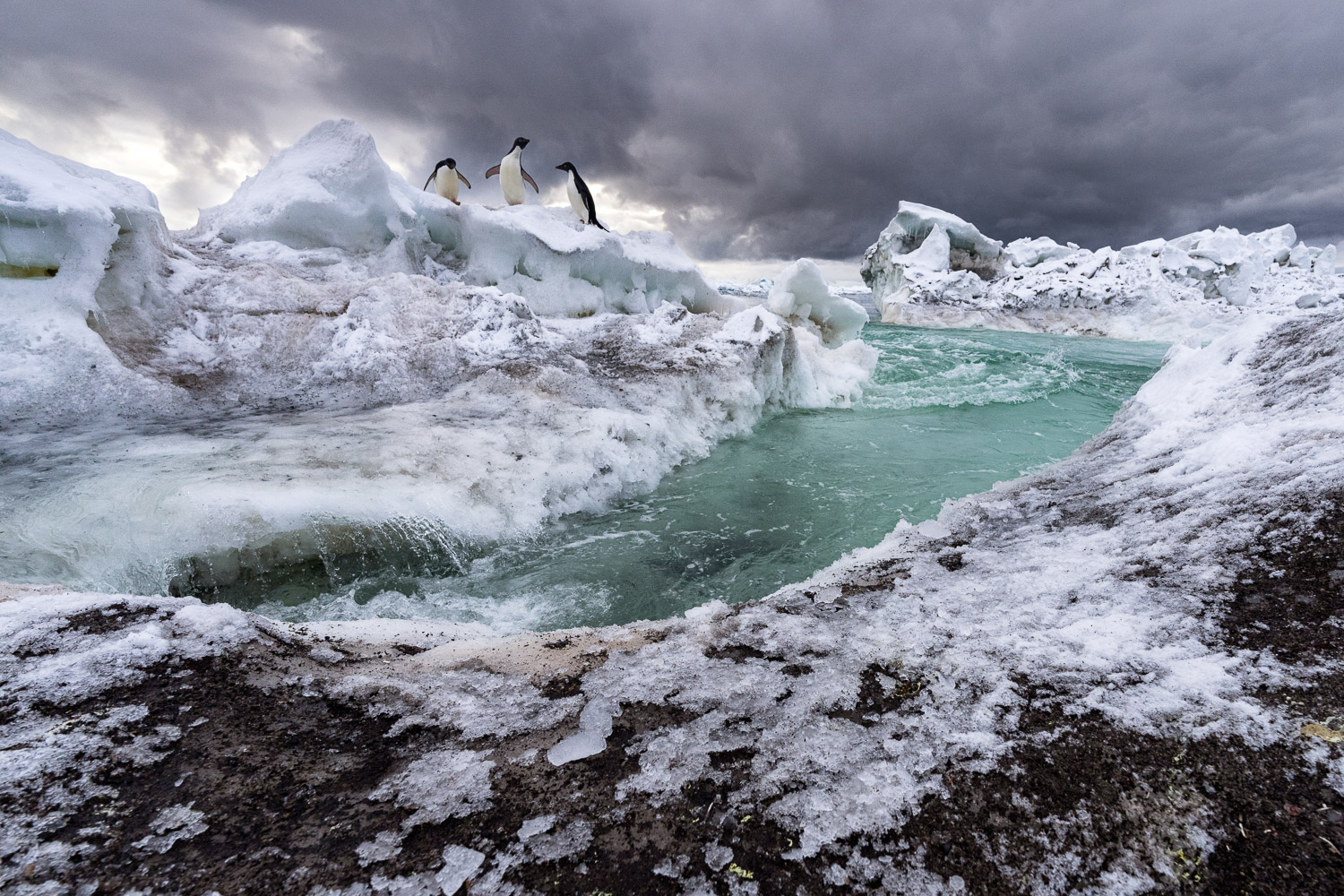
Cape Adare, in the Ross Sea region, is home to the largest Adélie penguin colony in Antarctica, with over 250,000 breeding pairs. Cape Adare’s remote setting and dramatic landscape provide a truly spectacular backdrop for wildlife photography.
Antarctic Peninsula also offers excellent opportunities to photograph Adélie penguins. Paulet Island, located in the Weddell Sea, is one of the biggest Adélie colonies in the area, with over 100,000 pairs in the peak season.
Both Antarctic Peninsula and Ross Sea are best visited as part of an organised photo expedition cruise, as access is limited and regulated to protect the environment.
When to photograph Adélie penguins
After spending months at sea, Adélie penguins return to their breeding colonies between September and October. This settlement period is especially lively with nest building and courtship — offering great opportunities for wildlife photography. Egg-laying typically begins in October, extending into November.
For photographers, the best time to visit Adélie penguin colonies depends on your preferred subject. October and November offer pristine snowy landscapes and vibrant activity with nest building and courtship displays. From late November onwards, it’s possible to photograph chicks, though colonies may be muddier and the penguins dirty. Each stage of the Adélie penguin life cycle presents unique opportunities for unforgettable wildlife photography in Antarctica.
Antarctica
Spring 2027
17 NOV - 02 DEC 2027 15 Days
from USD 17,995 per person
Chinstrap Penguin
Pygoscelis antarcticus
Population: 8,000,000 | Weight: 3.2–5.3 kg | Length: 68–76 cm | IUCN Status: Least Concern
Chinstrap penguins are among Antarctica's most distinctive and photogenic species, instantly recognizable by the thin black line running under their chin that gives them their name. Standing 68-76 cm tall and weighing 3-5 kg, these medium-sized penguins possess an almost comical appearance that makes them irresistible subjects for Antarctic wildlife photography. Their expressive faces, combined with their bold black and white plumage create compelling portrait opportunities that capture both their personality and the pristine Antarctic environment.
What makes chinstrap penguin photography particularly rewarding is their incredibly active and social nature. These energetic birds are excellent climbers, often nesting on steep rocky slopes that provide dramatic backgrounds. Their colonies are typically smaller and more accessible than other penguin species, allowing photographers to capture intimate behavioral moments, from courtship rituals and nest-building activities to the tender moments of chick care.
Where to photograph Chinstrap penguins
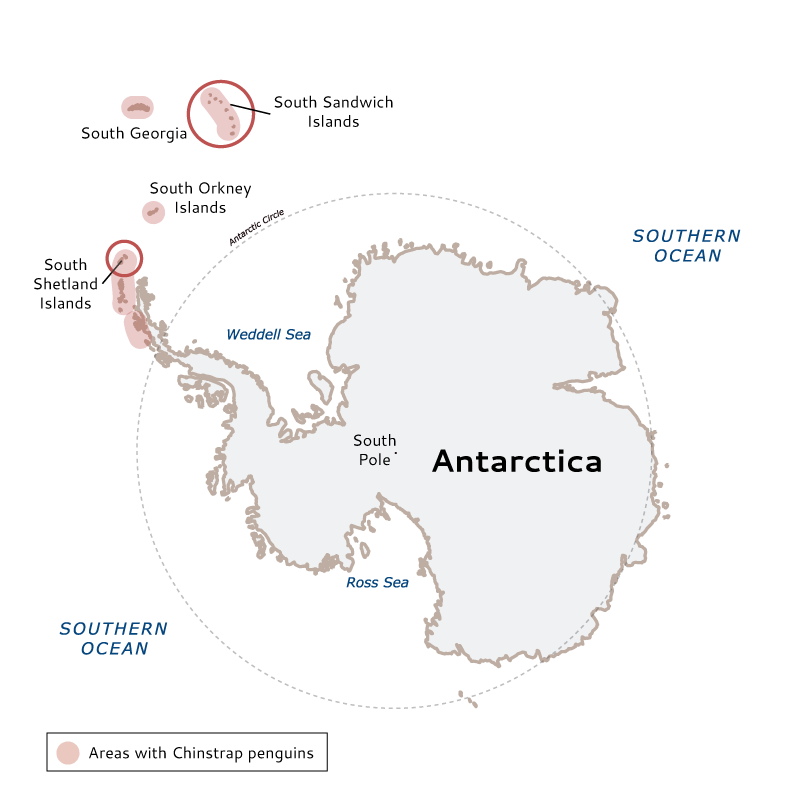
Chinstrap penguins are primarily located on the Antarctic Peninsula, south to 64° S, and on South Shetland, Orkney and South Sandwich Islands:
South Shetland Islands represent the premier destination for Chinstrap penguin photography, hosting some of Antarctica's largest and most accessible colonies. Islands like Deception Island and Half Moon Island offer great opportunities to photograph Chinstraps in diverse settings, from volcanic landscapes to pristine beaches. The relatively mild climate and ice-free areas during summer months provide easy access for expedition vessels to their breeding sites.
South Sandwich Islands provide a more remote and pristine setting, where Chinstrap penguins nest in spectacular volcanic environments. These islands offer unique opportunities to capture Chinstraps against dramatic backdrops of active volcanoes, steaming beaches, and rugged coastlines.
When to photograph Chinstrap penguins
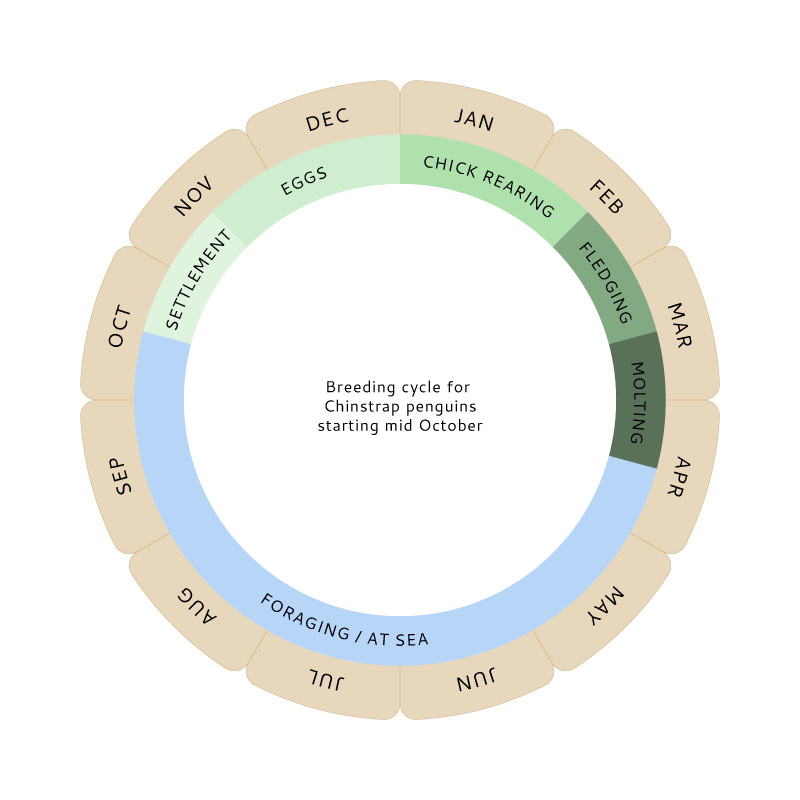
The Chinstrap penguin breeding season begins in mid-October when adults return to establish territories and begin courtship. This period offers excellent opportunities to experience and photograph territorial displays, courtship behaviors, and the dramatic arrival of thousands of penguins to their breeding colonies.
From mid-November through December, the focus is on egg laying and incubation. Both parents share incubation duties, creating touching scenes of dedication and partnership. After hatching, the following weeks are busy, with fluffy chicks requiring constant care from their parents. This stage provides photographic opportunities, from feeding scenes and protective parental behavior to the adorable growing chicks.
Antarctica
Spring 2027
17 NOV - 02 DEC 2027 15 Days
from USD 17,995 per person
Emperor Penguin
Aptenodytes forsteri
Population: 595,000 | Weight: 22.7–45.4 kg | Length: 110–120 cm | IUCN Status: Near Threatened
Emperor penguins represent the ultimate target of Antarctic wildlife photography. Standing up to 122 cm tall and weighing up to 45 kg, these magnificent birds are the largest penguin species and Antarctica's most iconic residents. Their striking black and white plumage, accented by golden-yellow neck patches, creates stunning contrast against the pristine Antarctic landscape.
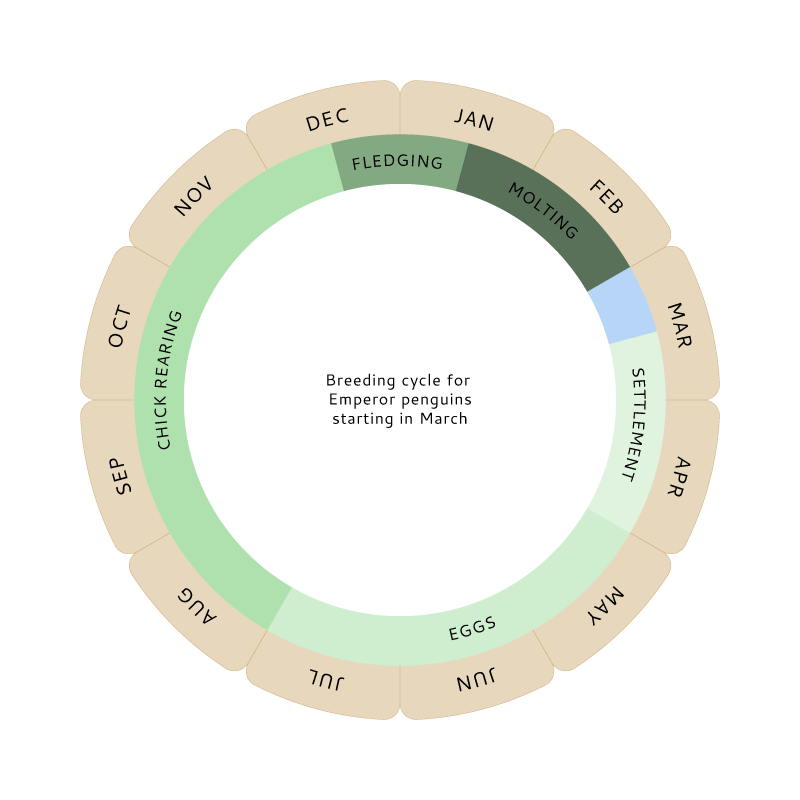
Unlike other penguin species, emperors breed during Antarctica's extreme winter, creating extraordinary scenes of parental dedication as they huddle together protecting their chicks from temperatures reaching -40°C. Their calm, curious nature allows for intimate close-up portraits, while their dramatic breeding colonies offer spectacular compositions with shorter telephoto lenses and wide-angles, showcasing the raw beauty of Antarctica.
Where to photograph Emperor penguins
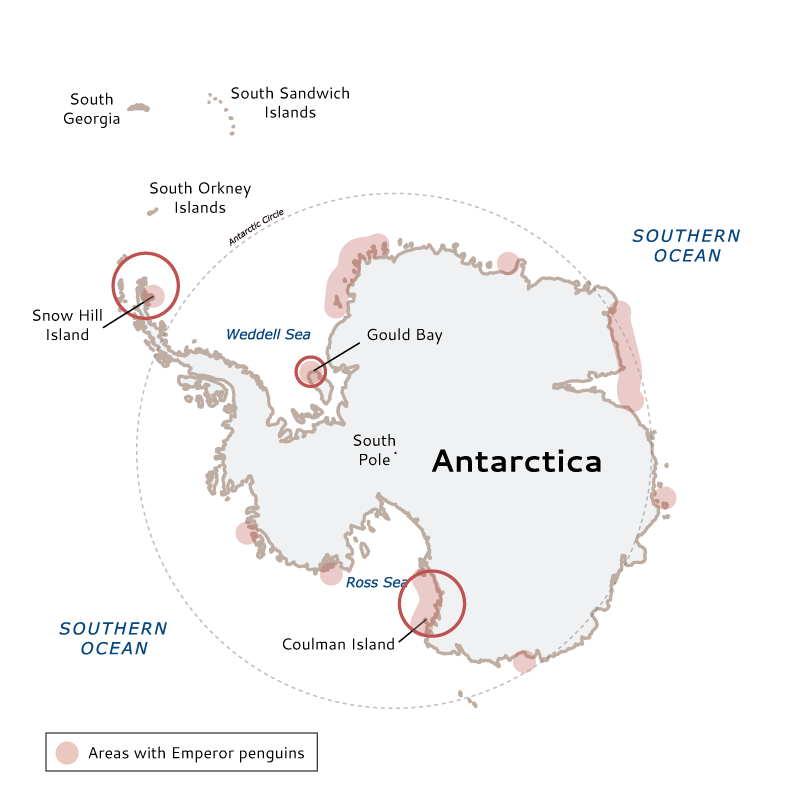
Emperor penguins breed exclusively on the Antarctic continent, strongly dependent on the sea ice. Three locations (as shown on the map) standing out as the world's premier destinations for capturing these remarkable birds:
Snow Hill Island, Weddell Sea is the most northern Emperor penguin colony at 64° S and the most accessible emperor penguin colony. Located off the Antarctic Peninsula, this site offers helicopter access to the breeding colony with thousands of adults and fluffy gray chicks.
Gould Bay, Weddell Sea is the most southern Emperor penguin colony at almost 78° S and hosts one of Antarctica's largest emperor penguin colonies. This location offers exceptional opportunities for both intimate portraits and stunning colony shots.
Coulmann Island, Ross Sea provides access to a thriving emperor penguin colony in one of Antarctica's most pristine regions. The Ross Sea's remote location means fewer visitors and more natural penguin behavior, ideal for capturing authentic wildlife photography moments.
When to photograph Emperor penguins
Emperor penguin photography timing is critical, with October and November representing the optimal window for capturing these Antarctic icons. During this period, sea ice remains stable and accessible near breeding colonies, while penguin chicks have developed their distinctive fluffy gray plumage that creates compelling photographic subjects. The young penguins are large enough to be active and curious but still retain their adorable gray down feathers. Adults are actively feeding and caring for chicks, creating dynamic behavioral photography opportunities.
Gentoo Penguin
Pygoscelis papua
Population: 600,000 | Weight: 4.5–8.5 kg | Length: 70–90 cm | IUCN Status: Least Concern
Gentoo penguins are easily recognised by their reddish-orange bill, bright orange feet, and a distinctive white patch above each eye that joins across the crown. Females are slightly smaller than males, with an average length of around 80 cm and a weight of approximately 5 kg. Gentoo penguins can begin breeding as early as two years of age.
Gentoo penguin colonies are typically small, rarely exceeding a few hundred breeding pairs. As colony numbers increase, they tend to break up into smaller subcolonies. Their preferred nesting sites are low coastal plains close to sandy or shingle beaches, offering easy access to the ocean. During the breeding season, large amounts of guano accumulate around the nests, prompting colonies to shift slightly each year while maintaining established routes to the sea.
Gentoo penguins invest equally in raising both chicks and are capable of successfully rearing large numbers in seasons of plentiful food. In years of abundance, even weaker or deformed chicks may survive to fledging. However, during periods of food scarcity, competition between chicks intensifies and only the strongest are likely to survive. Adults are often observed running through the colony, closely followed by hungry chicks — a behaviour thought to help ensure that the most vigorous chicks are fed.
Where to photograph Gentoo penguins
Gentoo penguins are found in colonies on the Antarctic Peninsula and several sub-Antarctic islands. A 2020 population study estimated the global Gentoo penguin population at 432,144 breeding pairs, with around 30% located in the Falkland Islands, another 30% on the Antarctic Peninsula, and 25–30% in South Georgia, as the main breeding areas.
The western Antarctic Peninsula is particularly renowned for Gentoo penguin photography, with colonies at locations such as Neko Harbour, Danco Island, Petermann Island, and Port Lockroy. This region’s dramatic scenery — featuring icebergs and jagged mountains — provides a spectacular backdrop for photographing Gentoo penguins in their natural habitat. Don’t forget to use your wide-angle lens to include this landscape in your penguin images!
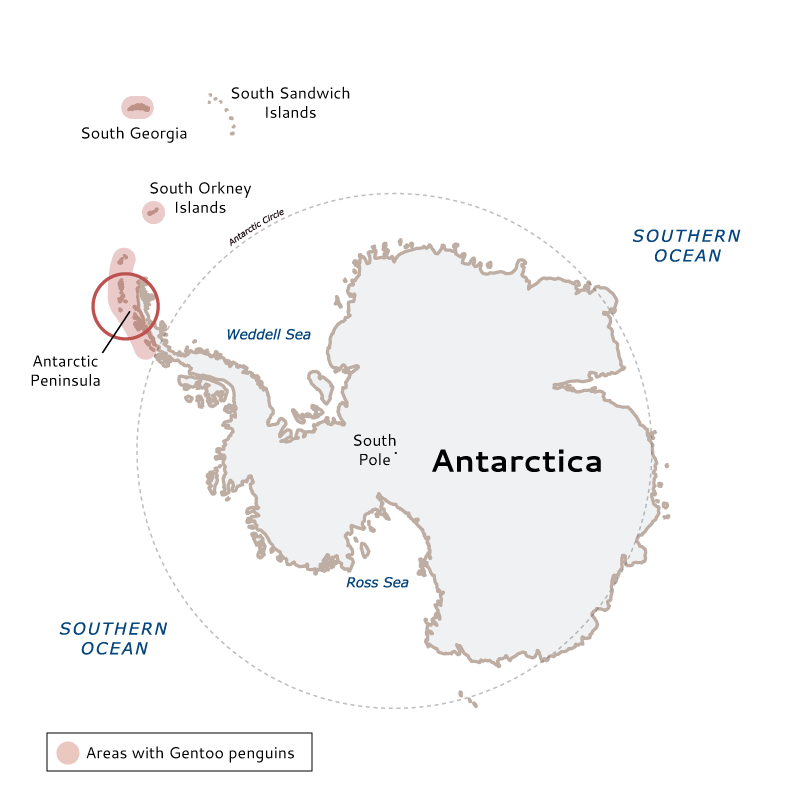
When to photograph Gentoo penguins
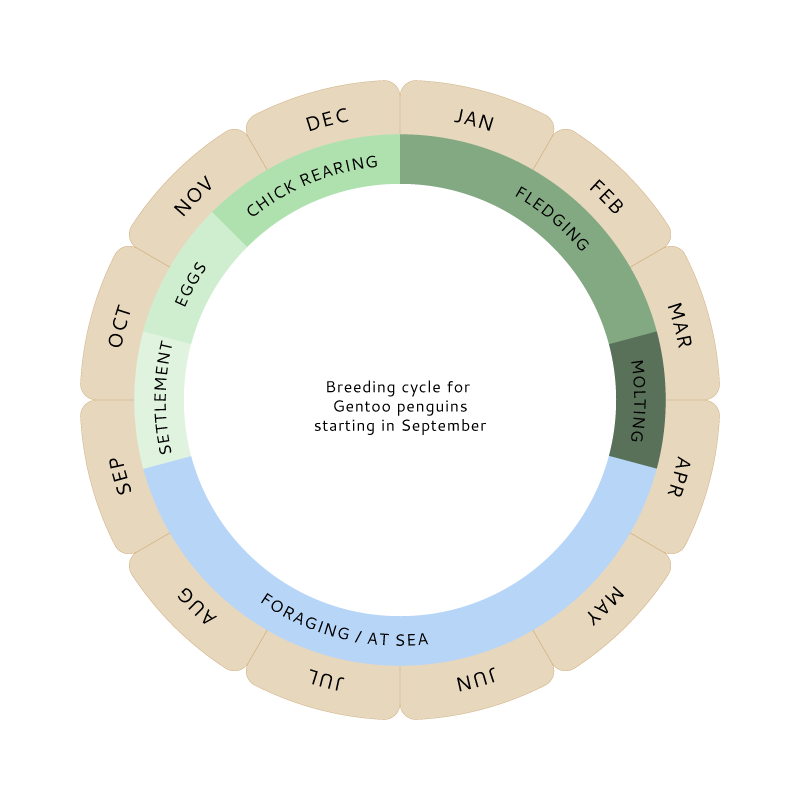
Gentoo penguins begin their breeding season in late September or October in southern regions such as the Antarctic Peninsula. In Antarctica and South Georgia, egg-laying is usually completed by late October, with each pair laying two eggs. Chicks remain in the nest until they develop their downy plumage at around three to four weeks old. During this period, both parents take turns brooding and feeding the chicks. After the brooding stage, chicks leave the nest to join large crèches, which allows both parents to forage at the same time.
The pristine snow and clean colonies provide excellent photographic opportunities in the beginning of the breeding season. From late November until mid-March, it is possible to photograph Gentoo penguin chicks and observe a wide range of behaviour.
Antarctica
Spring 2027
17 NOV - 02 DEC 2027 15 Days
from USD 17,995 per person
King Penguin
Aptenodytes patagonicus
Population: 4,500,000 | Weight: 9.3–18 kg | Length: 70–100 cm | IUCN Status: Least Concern
King penguins are among the most iconic and widely recognized penguin species, frequently featured in wildlife documentaries, scientific literature, and popular media. Their elegant black-and-white plumage and upright posture make them look like true kings of the Southern Ocean. As the second-largest penguin species, king penguins are a focal point for tourists, photographers and penguin researchers.
The proximity of King penguin colonies to the Antarctic Polar Front is crucial, as this region provides abundant food resources. Their primary diet consists of small schooling pelagic fish, especially lanternfish (myctophids), which are vital for chick rearing and adult survival. King penguins are exceptional divers, typically foraging at depths of 100 to 200 meters, but capable of reaching depths up to 440 meters. Only Emperor penguins surpass them in diving ability.
From a conservation perspective, king penguins are currently classified as a species of Least Concern, with most populations stable or increasing. Historical exploitation by the sealing industry in the 19th and early 20th centuries led to severe declines, but populations have rebounded significantly since the cessation of commercial harvesting.
Where to photograph King penguins
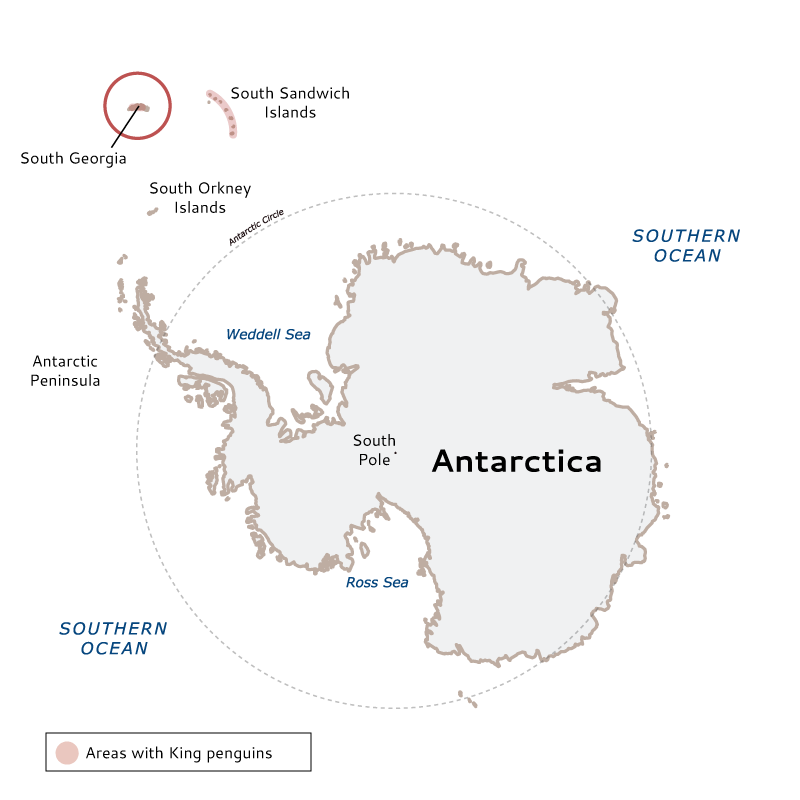
King penguins breed on sub-Antarctic islands between 45° and 55° South latitude. Key breeding sites include the Falkland Islands and South Georgia in the South Atlantic, several islands in the Southern Indian Ocean, and some smaller locations in the southwestern Pacific. The largest recorded King penguin colony was on Crozet Island in the Indian Ocean, which in the 1980s supported around 500,000 breeding pairs. However, this colony has declined by 88% over the past 35 years.
Today, South Georgia is regarded as the stronghold of King penguins, with Salisbury Plain hosting the largest colony at approximately 250,000 pairs. Other significant colonies in South Georgia include St Andrews Bay and Gold Harbour.
When to photograph King penguins
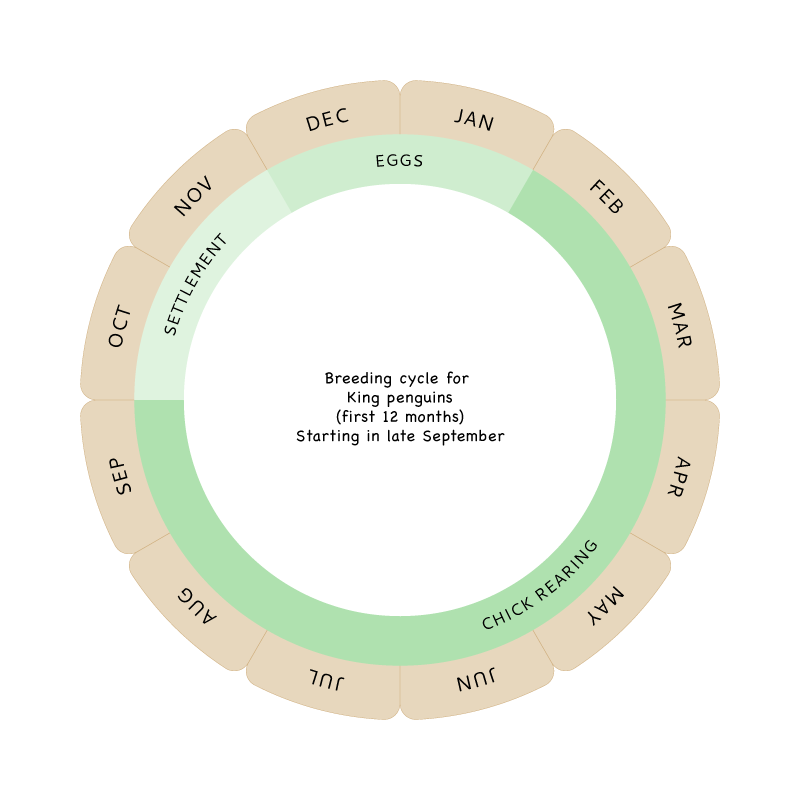
King penguins have the longest breeding cycle of any penguin species, lasting about 14–16 months. This extended period is largely due to the winter fasting endured by chicks, which can last up to five months. During this time, chicks gather in large crèches, covered in distinctive brown down. The return of an adult with food is a dramatic event, often accompanied by the chick’s unique vocalizations to attract its parent’s attention. This fascinating behavior can be observed year-round in established colonies.
The breeding cycle begins between September and November, when king penguins return to colonies for a molt. The first arriving penguins are usually unsuccessful in breeding the previous season. Molting birds usually aggregate in mid-October along the rivers, with easy access to freshwater. This can create excellent photo opportunities, with water, penguins, and impressive mountains in the background. Successful breeders will arrive later and molt from late November. During 30 days of molting, they lose close to 50% of their body mass.
South Georgia
Snow Kings
26 SEP - 12 OCT 2026 17 Days
from USD 14,795 per person
Macaroni Penguin
Eudyptes chrysolophus
Population: 18,000,000 | Weight: 3.3–6.4 kg | Length: 70 cm | IUCN Status: Vulnerable
The Macaroni penguin is the largest species among the crested penguins. With a bluish-black head and upperparts contrasting sharply against its white underparts, the Macaroni penguin stands out in the colony. Its most distinctive feature is the vibrant golden-yellow crest, which extends from the centre of the forehead and sweeps elegantly above the eyes — an unmistakable detail that adds a splash of colour to photographs, especially in the soft light of the sunrise. While female Macaroni penguins are slightly smaller than males, both sexes display similar plumage. Juveniles, in contrast, lack the vivid crests.
The diet of the Macaroni penguin consists mainly of crustaceans, squid, and fish. During the chick-rearing season, adults can be observed making daily foraging trips at sea before returning to their nests before nightfall. These penguins usually dive to depths between 15 and 70 metres, although some have been recorded diving as deep as 100 metres. Most dives last less than two minutes.
The combination of their striking appearance and dynamic behaviour makes the Macaroni penguin a popular subject for photographers.
Where to photograph Macaroni penguins
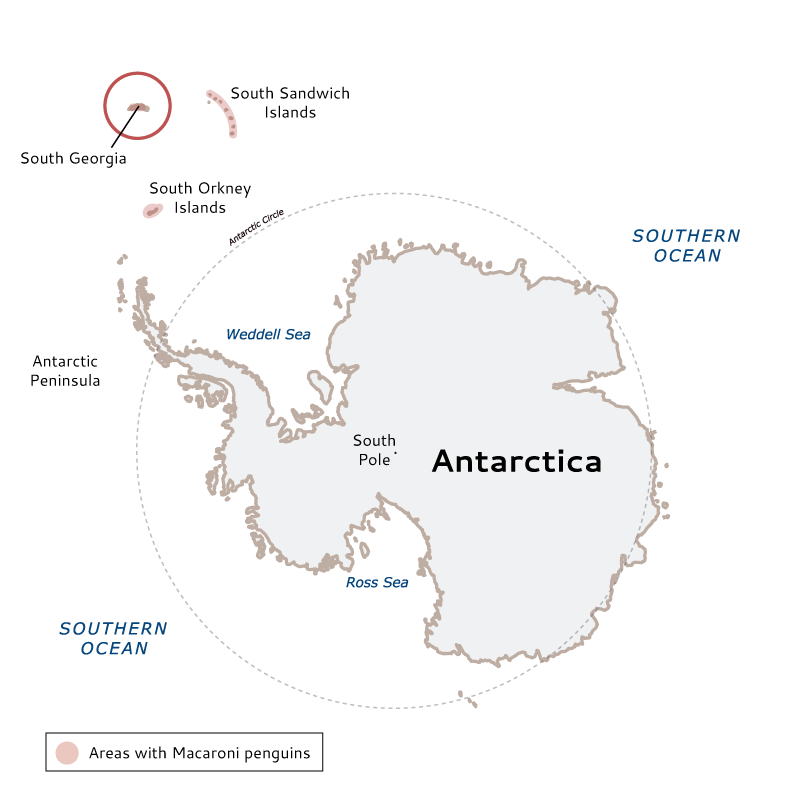
The Macaroni penguin is the most abundant penguin species globally, with an estimated population exceeding 6.3 million breeding pairs. Major breeding colonies are located on the islands of South Georgia, Crozet, Kerguelen, Heard, McDonald, Prince Edward, and Bouvetøya. Other smaller colonies can be found in the South Shetlands, South Orkneys, and on islands off the coast of southern Chile.
Macaroni penguins breed in dense colonies on rocky coasts and low cliffs. This setting, with its great surrounding landscape, can provide excellent penguin photo opportunities. Cooper Bay is one of the most popular Macaroni penguin colonies in South Georgia.
When to photograph Macaroni penguins
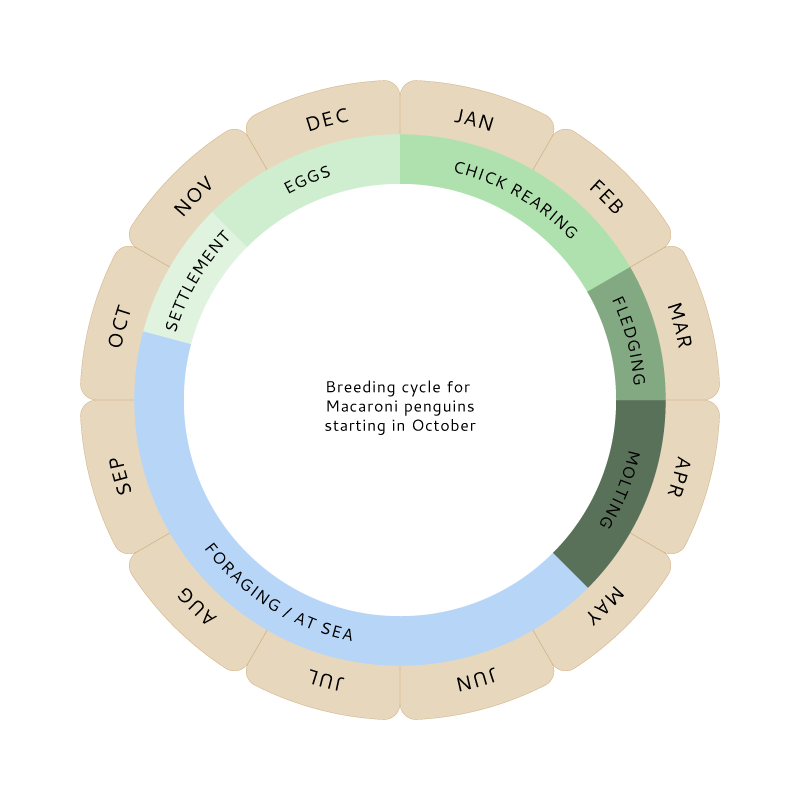
Macaroni penguins arrive at the breeding sites in October. Each pair lays two eggs, typically four to five days apart. Incubation lasts approximately five weeks and is divided into three roughly equal shifts. Both parents share incubation duties during the first shift. The male then goes to sea while the female completes the second shift alone. Upon the male’s return for the third shift, the female departs to sea and does not return until the chicks have hatched. Regardless of their time at sea, Macaroni penguins always return to land during daylight hours.
The early season is a great time for photographing Macaroni penguins when there are still chances of snow and clean birds. It might also be great to photograph them later in the season when the chicks are fed with the parents, and there is more activity both in the colonies and at the beaches.
South Georgia
Snow Kings
26 SEP - 12 OCT 2026 17 Days
from USD 14,795 per person
Best Camera Gear for Penguin Photography
When embarking on a photo expedition to Antarctica or South Georgia, selecting the right camera gear is essential. With the ongoing risk of avian flu, strict biosecurity protocols are in place, including rules against sitting or placing camera gear directly on the ground. As a result, you will need to carry your cameras and lenses at all times or use a tripod to keep your equipment off the ground, making careful packing and equipment choice more important than ever. Below are recommendations for the best camera gear to bring, ensuring you are well-prepared to photograph penguins in their natural habitat while respecting the biosecurity guidelines.
By packing thoughtfully and choosing versatile, high-quality camera gear, you will be well-equipped to capture unforgettable moments and the unique beauty of penguins in Antarctica and South Georgia, all while protecting both your equipment and the pristine environment.
Learn More
Below is a selection of other WildPhoto expert tips that may be useful when planning a penguin photography expedition.